Masoom Sanyal
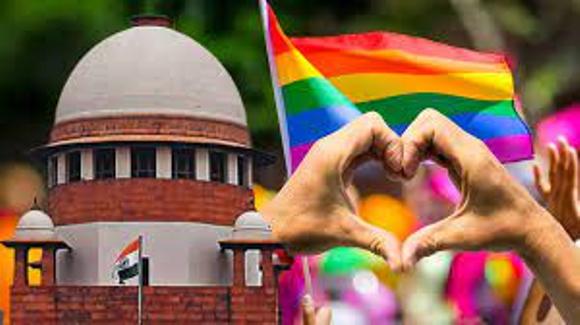
A Constitution bench of the Supreme Court of India has taken up the case of Supriyo @ Supriya Chakraborty v. Union of India, relating to marriage equality in India where several writ petitions have been filed seeking marriage equality for LGBTQIA+ individuals in India. The arguments in the present case have been concluded and the Apex Court has reserved its judgement. During the pendency of the case, the Bar Council of India (“BCI”) had resolved to request the Supreme Court to not adjudicate on the issue of marriage equality and released a statement saying that the same should be left to be determined by legislative exercise, simultaneously asserting that the matter is of a “highly sensitive” nature and has “social, religious, and cultural” connotations. According to BCI, this issue required widespread consultation and should be dealt with by the legislature instead of the judiciary, as it is the legislature that is truly reflective of the will of the people. Earlier, the Law Minister had expressed similar sentiments, and although he shied away from expressing it in as direct terms as the BCI, he emphasized on the need for a “discussion” on the issue, further adding, “people want their chosen representatives to debate.”
One of the arguments before the Supreme Court in the present case is reflective of the stance of the BCI, the Law Minister, and many others; that the issue of marriage equality should be determined by a legislative exercise and that Parliament is the right forum to decide upon this issue. The Solicitor General, appearing for the Respondents i.e., the Union of India, argued that the question is not about right to privacy or right to dignity but rather about the conferment of a socio-legal status, i.e., marriage to a different class of individuals, and the primary question was whether that can be done by a Court at all in the first place? Another argument that has been made is that statutes relating to marriage etc. use words like “man” and “woman”, and “husband” and “wife”, which are reflective of clear legislative intent and leave no scope for interpretation. Accordingly, it has been argued that it is not upon the Court to replace legislative intent by judicial wisdom by engaging in an interpretative exercise.
PUBLIC OPINION vs. CONSTITUTIONAL ETHOS
An underlying theme which can be seen in this debate is a theme not entirely new – that of public opinion, and more specifically, public morality clashing against constitutional ethos. It has happened often in India that the public views have clashed with constitutional values and principles, and almost always the courts have leaned towards preserving the constitutional ethos. In the landmark case of Navtej Singh Johar, a similar underlying theme could be observed, where the Court had leaned towards upholding the constitutional values, thus, declaring homosexuality to be legal. Similarly, in the Sabarimala Case, there had been a public outcry against the Court choosing to enter into an issue as personal and connected to religious sentiments as entry into a temple. However, the Court held that constitutional morality was above public morality and struck down the custom prohibiting the entry of menstruating women in the temple. It is clear, therefore, that the Court has never shied away from upholding the fundamental rights of individuals over public opinion to the contrary. The Court has hardly ever allowed itself to be swayed by public opinion when it comes to protection of fundamental rights of individuals. The reasoning behind this is simple, India is not merely a democracy, it is a constitutional democracy, and in a constitutional democracy, highest regard is held for the rights of the individuals.
SUPREME COURT AS THE FINAL ARBITER TO DETERMINE THIS ISSUE
The Solicitor General has misconstrued the debate by arguing that the real question is about conferment of a socio-legal status. It is not about whether the Court can confer such a status, as he seeks to assert. The real question is whether such discrimination, not conferring such a status, on the basis of the sexual orientation of the individual reasonable and constitutionally permissible? Whether denial of such rights to those individuals result in violation of their fundamental rights under Article 14, 15, and 21?
Therefore, what is to be determined here is that whether the rights of the petitioners have been violated by denial of legal recognition of their matrimonial union?
RIGHT TO MARRY
The Supreme Court has previously held that “the State is duty bound to protect the fundamental rights of its citizens; and an inherent aspect of Article 21 of the Constitution would be the freedom of choice in marriage.” It is established that every person has the right to marry to person of his or her choice. Therefore, the statute must be read in such a manner that is in harmony with the fundamental rights of the citizens – an interpretative exercise which the Supreme Court can definitely undertake.
RIGHT AGAINST DISCRIMINATION
The non-recognition of non-heterosexual marriages is also violative of the Article 15 and Article 14. Article 15 guarantees the right against discrimination on the basis of “religion, race, caste, sex, place of birth or any of them.” It is important that the Supreme Court herein gives an expansive interpretation to the term “sex” to include “sexual orientation” instead of just biological sex of an individual. Article 14 guarantees “equality before law” and “equal protection of laws” to all persons. An exception to Article 14 is existence of ‘intelligible differentia’ between groups. Article 14 does not suggest that all must be treated equally, but that similar persons must be treated in a similar manner. In other words, intelligible differentia means a difference that is capable of being understood. In the same vein, the differentia must have a rational nexus to the object sought to be achieved. It is submitted that although there exists an intelligible differentia between heterosexual and non-heterosexual couples, there is no reasonable nexus or a legitimate aim to be found. In such a case, the Supreme Court must read the statute in such a way that the fundamental rights of the petitioners are protected and upheld.
RIGHT TO DIGNITY
The right to dignity is inherently embedded in Article 21. It requires the State to treat everyone with equal regard, concern and respect. The petitioners submitted that the state cannot treat certain individuals as if they are “less worthy by virtue of their ascriptive characteristics.” Therefore, every person has the right to be treated with dignity. The denial of the recognition of non-heterosexual marriages denies the right to dignity guaranteed under Article 21 to all citizens. Such non-recognition implies that the non-heterosexual individuals are in some peculiar manner “less worthy” than heterosexual individuals, and therefore cannot enjoy the same rights as them owing to their sexual orientation.
RECOGNISING MARRIAGE EQUALITY – EXAMPLES FROM AROUND THE WORLD
The Supreme Court of the United States, had in the landmark case of Obergefell v. Hodges, held that the right to marry is a fundamental right and it was guaranteed to same-sex couples under the Due Process Clause and the Equal Protection Clause of the Fourteenth Amendment of the US Constitution. In the USA as well, the question was one of fundamental rights and the Supreme Court by a 5-4 Verdict held that non-recognition of non-heterosexual marriages was violative of the fundamental rights of the citizens.
Similarly, in 2022, the Constitutional Court of Slovenia held that prohibition of same-sex marriage violated the Constitution. In 2018, the Constitutional Court of Costa Rica had ruled in favour of legalizing same-sex marriage. In 2017, the Austrian Supreme Court also held that prohibition of same-sex marriage was discriminatory, paving way for recognition of same-sex marriage in that country. Finally, Taiwan’s Constitutional Court had also ruled in 2017 that same-sex marriage prohibition was unconstitutional, making Taiwan the first country in Asia to recognize same-sex marriages.
Therefore, there are ample precedents from around the world whereby the constitutional courts have taken a lead in determining the issue of marriage equality instead of waiting for the policymakers to enact a legislation to that effect, since the question of marriage equality concerns the fundamental rights of individuals.
CONCLUSION
On the basis of the foregoing discussion, it is submitted that the question here is not one of conferment of a socio-legal status of marriage but of protecting the rights of the petitioners, and by extension, every citizen of the country who recognize themselves to be a part of the LGBTQIA+ community. If the Court refuses to exercise its judicial power and leaves the matter for legislative determination, it would be failing in its duty to uphold the fundamental rights of the petitioners, for whose protection the petitioners have approached it under Article 32 of the Constitution, often called the “Soul of the Indian Constitution”.
In conclusion, the Supreme Court is the correct forum to determine this issue, as it is an issue that concerns the fundamental rights of the LGBTQIA+ individuals. To suggest that the legislature should determine this issue is to deny the fundamental rights of these individuals until the legislature passes a bill amending the Special Marriages Act or recognizing non-heterosexual marriages. Moreover, it is submitted that if indeed the legislature intends to pass such a law, nothing prohibits it from doing so after the Supreme Court has rendered its judgement. However, it should be nobody’s case to suggest that only the legislature is empowered to determine this issue and that the Supreme Court should not decide upon it.
The author is a second-year student at Gujarat National Law University
Image Credits: Live Law
 Constitutional Law Society
Leave a comment