Stigma, Status and the State: Why Sub-Classification Fails The Test of Substantive Equality

Last month, the Supreme Court asked the Centre to submit an affidavit along with Action Taken Report detailing steps taken to implement its August 1, 2024 judgment permitting sub-classification with SCs for reservation purposes and extending creamy layer principle to SCs. This marks a tremendous shift in Indiaโ€™s reservation jurisprudence from two-decade old E.V. Chinnaiah v. State of Andhra Pradesh. While Chinnaiah had held that SCs cannot be sub-divided and constitute a legal monolith, in Davinder Singh, the court empowered the states to do so. The courtโ€™s rationale says that sub-classification constitutes โ€œtinkering with benefitsโ€ rather than โ€œtinkering with the listโ€. The author proposes that the real solution of the problem is rooted in โ€œspecial careโ€ obligations under DPSPs arguing for targeted developmental actions instead of sub-classification of a unified political identity.

The Economics of Free Speech: Revisiting Free Speech in the Digital Age

Tanya Sara George Introduction โ€œI disapprove of what you say, but will defend to the death your right to say it.โ€ -Evelyn Beatrice Hall As vehemently argued by John Stuart Mill, the freedom of speech and expression are the only central facilitators for the search for truth and knowledge. This freedom is an integral facet... Continue Reading →

Tussle of Equality in National Awards

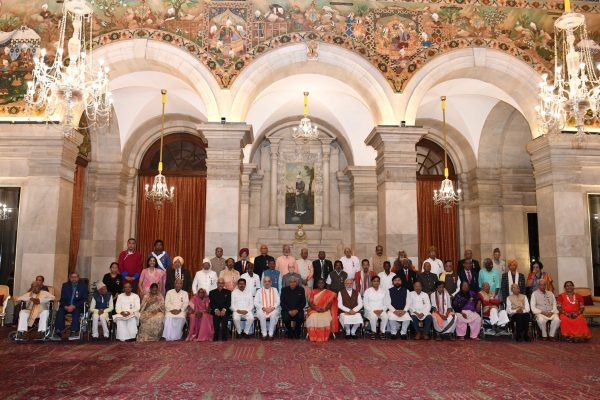
The Supreme Court in Balaji Raghavan upheld National Awardsโ€™ validity, ruling they arenโ€™t โ€œtitlesโ€ under Article 18(1). However, applying the proportionality test reveals flaws โ€“ opaque selection risks bias, undermining equality. Reforms for transparency and inclusivity are needed to align awards with the Constitutionโ€™s egalitarian ethos.

Expanding Article 21: The Implied Incorporation of Substantive Due Process and its Challenges

This article explores Supreme Court's implied incorporation of due process within Article 21. Though the text of Article 21 merely mentions โ€˜procedure established by law,โ€™ the author argues that the recognition of unenumerated rights can be justified through historical intent and the relationship between Fundamental Rights and DPSPs. The author however also shows the challenges with such an approach like excessive judicial discretion, lack of hierarchy among rights, and conflation of Articles 14, 19, and 21.

Contradictions Unfolded: A Dive into Delimitation Dilemmas

Haryanaโ€™s 2024 elections exposed key delimitation challenges within Indiaโ€™s electoral framework. This article examines vote-share disparities, the North-South seat imbalance post-2026 delimitation, and judicial oversight in constituency mapping. Highlighting the Kishorechandra judgmentโ€™s implications, it advocates for autonomous delimitation, equitable representation, and judicial consistency to uphold democratic fairness and electoral integrity.

Speakerโ€™s Inaction No Longer Immune: Telangana High Courtโ€™s Purposive Lens on Judicial Review Over Speakerโ€™s Delay in Anti-Defection Pleas

In its recent verdict, the Telangana High Court directed the Telangana Legislative assembly speaker to decide the disqualification petitions pending against the defecting Bharatiya Rashtra Samiti (BRS) MLAs into the ruling Congress Party within four weeks. The judgment, Kuna Pandu Vivekanand v. State of Telangana, pronounced by a Single-judge bench of Honโ€™ble Justice Vijaysen Reddy underscored that a complete abdication of judicial review concerning the inaction of speaker, as a constitutional functionary, is an anathema and repugnant to the greater democratic values. This article analyses this judgement.

One Giant Leap for Intersectionality: Analysis of M. Sameeha Barvin v Joint Secretary

The concept of intersectionality continues to elude judges. While the concept has been applied in a few Supreme Court judgements such as Patan Jamal Valli and Navtej Johar, it is still not easy to understand โ€˜howโ€™ courts should apply intersectionality. In this article, the Author focuses on the M. Sameeha Barvin v Joint Secretary case from the Madras High Court that throws light on intersectionality. The Author argues that the case acts as an instructive manual on how courts can apply intersectionality in matters of discrimination.

The Delhi Water Crisis Case: Activism or Overreach?

The Supreme Court gave a landmark decision in the Delhi water crisis case. The Author attempts to decode certain aspects of the judgement, focusing on its directive to release Yamuna river water amid acute scarcity in the capital. It examines the legal intricacies surrounding the Court's jurisdiction, the implications for water management, and the dynamics of inter-state water disputes. Central to the discussion is the debate over whether the Court's intervention signifies judicial activism or exceeds its constitutional mandate. By analyzing these complexities, the Article underscores the judiciary's role in ensuring equitable outcomes and protecting fundamental rights in critical public interest matters.

Up ↑