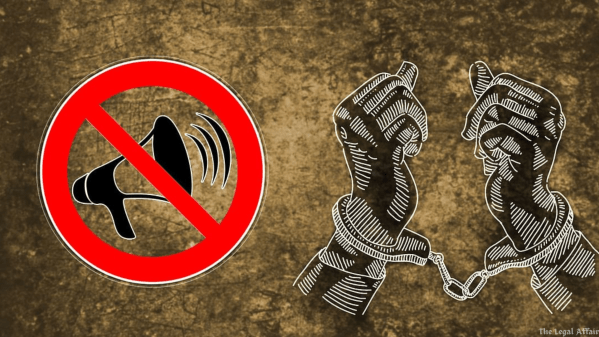
This blog piece examines the implications of Section 152 of the Bharatiya Nyaya Sanhita, India's new sedition law, which replaces "Government established by law; with the amorphous concept of 'India'. It critiques the potential for increased censorship and arbitrary interpretation, posing threats to free speech and democratic dissent.
Reforming Special Leave Petitions: A Two-Tier Approach to Streamline the Supreme Court’s Workload
The blog analyzes the inefficiencies arising from frivolous Special Leave Petitions (SLPs) in India's Supreme Court, proposing a two-tier system featuring a quasi-judicial panel to assess SLPs, thereby enhancing efficiency while preserving the Court's power.
Threats to Fundamental Rights in the Digital Era: Analysing Rule 4(2) of IT Rules 2021
This blog ais to analyse Rule 4(2) of the IT Rules, 2021 which mandates identification of the first originator of information. Wherein, It threatens user’s privacy, free speech, and intermediary’s immunity by breaking end-to end encryption, promotes chilling effects, creates arbitrary state actions and violates international principles. Thus, the need of reforms is necessary to balance regulation with fundamental rights in the digital age.
Beyond the Speaker’s Discretion: Expanding Judicial Review in Disqualifications
This article argues for expanding judicial review of political defection cases in India, where speakers’ partisan decisions have undermined the Tenth Schedule’s democratic purpose. It contends that substantive judicial intervention is constitutionally necessary to safeguard democracy, despite challenges to the separation of powers doctrine.
Pardon the interruption: Silencing of judicial review by §472(7) of BNSS, 2023 [Part II]
This two-part essay examines Section 472(7) of the Bhartiya Nagarik Suraksha Sanhita, 2023, which seems to bar judicial review of constitutional pardon powers of the executive. It highlights how the provision undermines constitutional principles, including separation of powers, rule of law, and fundamental rights. The first part discusses the current, pre-BNSS, judicial and constitutional framework, emphasizing the need for a limited judicial review to prevent executive arbitrariness. The second part critiques the new provision and proposes a harmonized interpretation to preserve judicial oversight and safeguard democratic principles against executive overreach.
Pardon The Interruption: Silencing Of Judicial Review By §472(7) Of BNSS, 2023 [Part I]
This two-part essay examines Section 472(7) of the Bhartiya Nagarik Suraksha Sanhita, 2023, which seems to bar judicial review of constitutional pardon powers of the executive. It highlights how the provision undermines constitutional principles, including separation of powers, rule of law, and fundamental rights. The first part discusses the current, pre-BNSS, judicial and constitutional framework, emphasizing the need for a limited judicial review to prevent executive arbitrariness. The second part critiques the new provision and proposes a harmonized interpretation to preserve judicial oversight and safeguard democratic principles against executive overreach.
Justice at a Crossroads: The Promise & Peril of Judicial Privatization in India
Imagine a justice system where the snake of briskness in business is forever strolling on the crosshairs of the crocodile of justice's sobriety. That is the imagination invoked with the privatization of justice: the makings of a once-in-a-lifetime overhaul of the justice administration system. The question would then be whether, on grounds of judicial inefficiency, such a bold step would offer the key to a resolution or would only serve to open the box of Pandora anew. At the frontier of corporate innovation and justice, this essay analyses India's judicial privatization—looking at how, at one level, privatization holds out prospects for a sea change in efficiency and creativity, and at another level, there are the critical risks of corruption and inequality—along with present global insights and safeguards for this transformative shift.
Ave Rex Populi: The Horizons of Presidential Immunity in Trump v. United States
The recent judgement of the SCOTUS in Trump v. United States (2024) has caused quite a stir in both legal and political circles. This article attempts to balance the perspectives by investigating what the judgement has to say on points of law, and what lessons India can learn from it.
India’s Fiscal Federalism: Challenges and Path Forward
This article examines the constitutional architecture governing the regulation of state borrowing in India by studying Article 293 of the Indian Constitution. It looks at court decisions and fiscal federalism as well as using examples such as the Kerala case to underscore the extent of the control of the central government on matters related to borrowing. The article then turns to a discussion on striking an optimal balance between state financial autonomy and national economic stability.
On the line between judicial activism and judicial legislation
Judicial activism can be broadly perceived as judicial interpretation and review of statutes or other state action. Judicial legislation, on the other hand, lays down new in case of a legislative insufficiency. The relation and conflict between the two can be studied in the context of the call for a liberal interpretation of the Special Marriage Act, applicability of judicial review in money bills or even in the electoral practice of freebies and whether it is akin to a corrupt practice.
Growth in Technology and Misinformation: A Rising Concern to Electoral Integrity in India
This article analyses the proliferation of misinformation in light of growth in technology and its implications on the erosion of the democratic process. It highlights the constitutional aspects involved and the vacuum in the current regulatory framework. The article proposes reforms to counter the challenges posed by the digital era.
Freebies In Electoral Democracies: A Necessary Change Withheld by Major Challenges?
For a while now, an eternal debate has existed on the issue of freebies and welfarism. Their nature is so close that it becomes impossible to differentiate between the two and draw a clear line of demarcation. While welfare policies are deemed to be irreplaceable and for the goodwill of society, freebies are understood to be vicious and a method of manipulation used to win political support at the expense of fiscal prudence. Freebies or welfare policies as may be referred to by both sides of the argument undoubtedly have political, economic and social implications. The question that then arises is whether their benefits exerted on society are sufficient to overcome the looming dangers that hide behind the veil of welfare. As this discussion reaches the Supreme Court, this blog highlights a few challenges that lie ahead.