Till date, marital rape is not considered a crime in India. Through the article, the Author aims to explain why the judiciary needs to urgently intervene and declare marital rape as unconstitutional. Taking the marital status of the perpetrator and the victim as a defence, the consent of a woman to sexual intercourse has been repeatedly de-prioritised by various High Courts in recent times. Further, the Author analyses some cases to show how consent cannot be easily detected, but a look into the totality of the circumstances helps determine the same. Lastly, the Author provides suggestions for dealing with marital rape as an offence.
Conserving Dialects: Bridging the Gap Amidst Law and Fact
Every person's life is shaped and defined by their use of language. It is a haven for culture and educational systems in addition to being an effective communication tool. Life's many activities and components are derived from one's mother tongue. By providing people and communities with the requisite skills, that have been accruing and developing over centuries, language helps them in becoming accustomed to their surroundings. The last few decades have borne witness to the disappearance and even extinction of some of these minority languages as a consequence of a lack of adequately formulated provisions and discrimination. The Article aims to decipher the philosophy of Commissions meant to protect linguistic minority rights and the repercussions it has on the education sector of vulnerable sections, especially the tribal people. It also contains certain recommendations in order to combat the problem of the endangerment of languages in hopes of safeguarding India's rich cultural heritage.
The Delhi Water Crisis Case: Activism or Overreach?
The Supreme Court gave a landmark decision in the Delhi water crisis case. The Author attempts to decode certain aspects of the judgement, focusing on its directive to release Yamuna river water amid acute scarcity in the capital. It examines the legal intricacies surrounding the Court's jurisdiction, the implications for water management, and the dynamics of inter-state water disputes. Central to the discussion is the debate over whether the Court's intervention signifies judicial activism or exceeds its constitutional mandate. By analyzing these complexities, the Article underscores the judiciary's role in ensuring equitable outcomes and protecting fundamental rights in critical public interest matters.
Unraveling the Chief Election Commissioner and the Other Election Commissioners Act, 2023: Implication and Challenges
The recent enactment of the Chief Election Commissioner and other Election Commissioners (Appointment, Conditions of Service, and Term of Office) Act, 2023 has gathered significant attention and controversy, particularly due to its apparent contradiction with a recent Supreme Court judgment. This article provides a comprehensive analysis of the Act, highlighting its significant provisions and exploring its legal and constitutional implications. By examining the Act in detail, the article explains the potential repercussions of the legislation and its alignment, or lack thereof, with constitutional principles. This analysis is essential to understand the broader impact of the Act on the electoral framework and democratic processesย inย India.
Breaking Bonds: Analysing the Supreme Court’s Verdict in Association for Democratic Reforms v. Union of India
The Supreme Court gave an historical verdict that ended the brief but significant era of the Electoral Bonds Scheme. This article aims to clarify the arguments presented by all parties involved and offers an accessible interpretation of the court's judgment. It also aims to delineate suggestions that may be considered as the next step in the overall mission of conducting free and fair elections in the world's largest democracy.
Javed Ahmad v. State of Maharashtra: The Intriguing Nexus Between Art. 21 and the Right to Dissent
The right to freedom of speech and expression under Art.19(1)(a) of the Constitution, one of the three stars in the โGolden Triangleโ of the Constitution, occupies a climacteric position in the Indian constitutional discourse. However, this right has always been linked to Art.19 of the Constitution, and seldom has this been seen in onjunction with oneโs right to life and personal liberty under Art.21. In a recent decision of the Supreme Court, such an intriguing nexus between Art.21 and the right to dissent is brought up. Based on this decision, the article seeks to analyse the possibility and the pertinence of such a nexus.
Turning Gavels into Papal Ferula: Unravelling the essential religious practices doctrine
The article examines the Essential Religious Practices Doctrine in India, tracing its evolution, implications, and critiques. It explores how the doctrine, first derived with the intention to protect religious practices with secular and economic connotations, has evolved into an anathema for religious freedom, empowering the Court to decide peopleโs faith for them. Analysing its impact, the article suggests alternative approaches, emphasizing individual rights and deference to religious groups. It argues for reconsideration of the ERP doctrine due to its potential to undermine religious freedoms and the judiciary's authority, emphasizing the need for the same.
Wading Through the Fog – Discretionary Clubbing of Cases in India and the Right to a Fair Trial
The article delves into the contentious issue of case transfer and clubbing within the Indian judicial system, highlighting concerns of impartiality and procedural fairness. Justice Hilary Charlesworth underscores the need to eliminate non-legal considerations influencing judgments, echoing international human rights standards. Divergent judgments and discretionary powers raise alarms of potential violations of Article 21 of Indiaโs Constitution and ICCPR Article 14. Drawing insights from international jurisprudence, the article advocates for well-defined criteria to govern case consolidation, ensuring judicial economy and alignment of interests. Upholding procedural fairness is imperative to mitigate arbitrariness and uphold human rights standards in Indiaโs legal landscape.
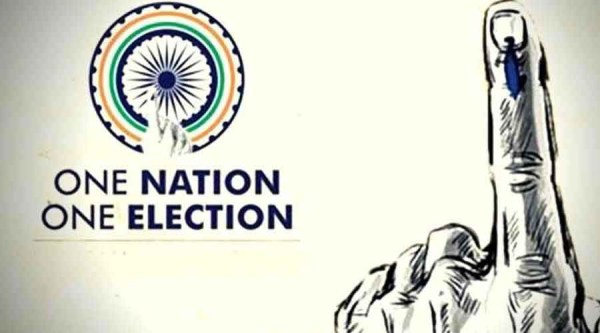
Diverse Realities, Single Ballot: Examining the Limitations of One Nation One Election
The main idea behind โOne Nation, One Electionโ (ONOE) is to hold elections for both the Lok Sabha and state assemblies together every five years. Reports present that states often have 5 to 7 elections separately throughout the year, leading to disruptions in the development and governance processes. The group supporting this principle states that frequent elections create a disturbed legislative schedule which further affects the smooth functioning of parliamentary proceedings. However, the authors advocateagainst the idea of ONOE. The ONOE reform could result in an intensified and overwhelming campaign season, overshadowing critical regional issues amidst the far-reaching national concerns. The potential sidelining of regional voices and local concerns in comparison with the mainstream national discourse will adversely impact voter engagement and representation.
Uniform Civil Code: Delayed but still Necessary
The discourse over the Uniform Civil Code (hereinafter UCC) was rekindled post its inclusion in the manifesto of BJP for 2019, andhas intensified as we near the 2024 elections. The long-awaited dream of realizing the UCC seems to be in touching distance now, which was once subjected to much clamor and contestation in the Constituent Assembly (CA). The judicial and political environment is more favorable presently than ever before. The article is written with the twin motive to explain why the UCC has remained unenforced for so long; and the need for enforcing it today, while looking at the contemporary successful examples of UCC
The Best of No Worlds: The Digital Personal Data Protection Act 2023
Before the commencement of the Digital Personal Data Protection Act, 2023, data protection was a concern of a patchwork of other laws including the Information Technology Act. The entire point of introducing a singular separate organic body of law regarding data protection was to reduce the unconsented digital footprint remaining after a person goes offline so as to protect that data from all hands, regardless of the owner of the hands and their purpose. Not only does the Act provide no provision for the automatic deletion of personal data, but it also detaches the state from any such obligation as well.
Unconstitutionality of RCR: An Opportunity to Democratize ‘Marriage’
The author examines the constitutionality of the Restitution of Conjugal Rights and the Stateโs intrusion into private familial spheres. Beyond gender discrimination, RCRโs conception of marriage perpetuates inequality. It advocates for a reevaluation of this interpretation, not to negate expectations of intimacy within marriage but to challenge the legal enforcement of sexual relations as a conjugal right. The ongoing plea against the constitutionality of RCR offers an opportunity for the judiciary to redefine conjugal rights and reshape the institution of marriage.