Is the Constituent Assembly Still Supreme? Revisiting the Bar of Article 329

The Constituent Assembly encapsulated the separation of power in numerous provisions to prevent the eclipse of liberties of the citizens. In this architecture, certain provisions like Article 329 stand as near-impenetrable walls, barring judicial scrutiny of electoral and delimitation matters. These provisions which once vanguard the liberties of citizens, now safeguards potential arbitrariness from challenge. The author interrogates this constitutional paradox and navigates the tension between reverence for founding texts and the evolving demands of constitutional morality.

Unpacking the Generic Drug Prescription Debate: Public Interest or Constitutional Overreach?

The Supreme Court recently mulled a mandate to prescribe generic medicines. This Article examines the constitutional validity of such a mandate, highlighting the effect of this law on the public considering the current infrastructure. Ultimately, it calls for a more nuanced approach in balancing the Directive Principles of State Policies and the Fundamental Rights.

โ€˜Hard Look Reviewโ€™ and Data Privacy โ€“ Providing an alternative to the Proportionality Test

Proportionality test has been used quite often in Indian constitutional law jurisprudence. In the absence of a clearly defined rule or standard, courts resort to proportionality standards, that is, balancing individual interests against broader public or state interests. This article will argue that while proportionality has been the dominant lens through which courts evaluate data privacy infringements, procedural doctrines like the hard look review can serve as a complement to proportionality tests.

Let Them Be Children: Religion, Coercion, and the Constitutional Duty to Protect Childhood

The article explores how children in India are often subjected to religious coercionโ€”both at home and in educational settingsโ€”under the guise of cultural or parental authority. Through constitutional provisions, case law, and international conventions like the UNCRC, the piece argues for a more robust legal and policy framework to uphold children's rights to autonomy, dignity, and cognitive development. It delves into issues such as Bal Diksha, the quality of education in religious institutions like madrasas and gurukuls, and the urgent need for the State to fulfil its parens patriae role. The piece also makes forward-looking recommendations to ensure that religious freedom does not come at the cost of childrenโ€™s welfare.

Lost in Translation: The Constitutional Case Against Hindi Imposition

In recent years, the Union Governmentโ€™s push for Hindi in governance and education, particularly through the National Education Policy, has triggered constitutional concerns. Though framed as promoting multilingualism, the policy's implementation effectively coerces non-Hindi speakers, especially in Tamil Nadu, into linguistic assimilation. This article argues that such imposition violates fundamental rights and fails the proportionality test outlined in Puttaswamy, undermining Indiaโ€™s federal structure and commitment to linguistic diversity.

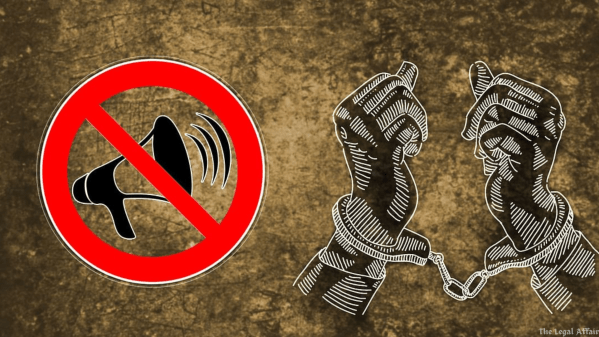
The Threat to Dissent: Kenya’s Assembly & Demonstration Bill 2024 and Lessons for India

This blog focuses on some of the controversial sections of the Kenyan โ€œAssembly and Demonstration Bill 2024โ€ and its effect on the right to peacefully assemble as provided by Article 37 of the Constitution of Kenya. It highlights three key concerns: the ban on wearing a mask during demonstrations, legal responsibility for the action of protest-related damage, and restrictions on meetings that can undermine the rights of others. The author draws parallels to similar challenges faced in India, particularly during anti-CAA and farmer protests, emphasizing the need for both nations to safeguard constitutional freedoms while balancing law and order.

The Doctrine of the Fruit of the Poisonous Tree: Relevance to the Digital Personal Data Protection Act, 2023 and the Right to Privacy

This article examines the "Fruit of the Poisonous Tree" doctrine in the Indian legal context, where courts have historically admitted illegally obtained evidence if deemed relevant. However, with the recognition of the right to privacy in K.S. Puttaswamy v. Union of India and the enactment of the Digital Personal Data Protection Act, 2023, there is a growing emphasis on protecting individual privacy over procedural leniency. This shift highlights the need for a well-defined legal framework that balances investigative authority with constitutional safeguards, ensuring that evidence obtained through unlawful means does not undermine fundamental rights and the rule of law.

Threats to Fundamental Rights in the Digital Era: Analysing Rule 4(2) of IT Rules 2021

This blog ais to analyse Rule 4(2) of the IT Rules, 2021 which mandates identification of the first originator of information. Wherein, It threatens userโ€™s privacy, free speech, and intermediaryโ€™s immunity by breaking end-to end encryption, promotes chilling effects, creates arbitrary state actions and violates international principles. Thus, the need of reforms is necessary to balance regulation with fundamental rights in the digital age.

Pardon the interruption: Silencing of judicial review by ยง472(7) of BNSS, 2023 [Part II]

This two-part essay examines Section 472(7) of the Bhartiya Nagarik Suraksha Sanhita, 2023, which seems to bar judicial review of constitutional pardon powers of the executive. It highlights how the provision undermines constitutional principles, including separation of powers, rule of law, and fundamental rights. The first part discusses the current, pre-BNSS, judicial and constitutional framework, emphasizing the need for a limited judicial review to prevent executive arbitrariness. The second part critiques the new provision and proposes a harmonized interpretation to preserve judicial oversight and safeguard democratic principles against executive overreach.

Up ↑