(Part 1) – Transfers of High Court Judges: Testing the viability of planting the seed of Transparency in the plant that is opaque procedure

This is the first part out of two parts of an article dealing with the transfer of judges within the Indian judiciary. It is divided into 2 sections. The first section delineates the evolution of jurisprudence on the procedure of transfer. The second section delves into the analysis of the problem and reasons behind the controversies surrounding transfers and weighing arguments that state the pros and cons of the disclosure of reasons.

Is Volksgeist Ready for recognition of Same-Sex Marriage in India?

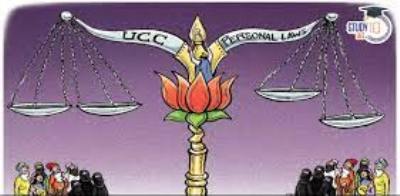
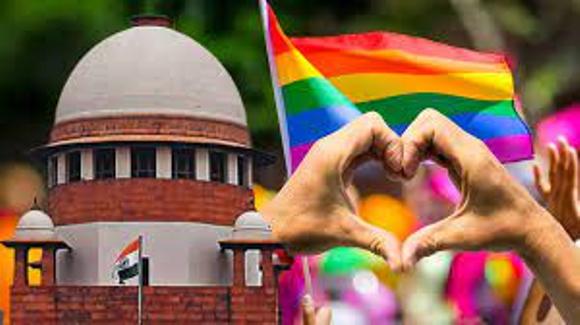
In this article, the author brings forth several arguments to display that even though, same sex marriage upholds equal rights of every citizen, owing to India's diverse public opinion landscape, the people are not entirely ready to deal with the issues that can arise as a result of such recognition. Numerous existing laws will require major amendments, a Uniform Civil Code must be in place and customary religious beliefs shall face conflict. So the author opines the need for such recognition but only when volksgeist is ready to accept it.

What is Obscene in India: Is the Community Standards Test the Best Answer?

In this piece, the author discusses the appropriateness of employing the community standards test as against the Hicklin's test or other tests, for objectively judging cases of obscenity in India. Its evolution, justifications, and shortcomings in terms of national standards, feasibility of the 'reasonable person' analysis and need for protection of artist's expression has been explored.

Unifying the Ballot: Why One Nation One Election is the way forward for India in 2024

The author, in this piece, makes a case for holding a single election in India instead of separate elections for the Centre and the States at different time periods. Advocating for One Nation One Election, they discuss the need, expenditure considerations, importance of national parties and good and bad governance considerations while implementing the same. They also opine on how ONOE can be implemented in India.

Wasiyat in Islamic Law: An Indian Quandary with no Constitutional Remedy

The author, in this piece, argues that the limitation imposed by Islamic law upon the absolute right over property of an individual has no constitutional remedy in India. The apparent alternatives to such rights are also highly restrictive. These arguments ramify into the need to have a fundamental right to choose which law shall apply to an individual in cases of devolvement of property.

Discussing various facets of Laws on Freedom of Speech and Expression: Whether anti-hate Legislation would be an effective way to combat Hate Speech or is it the Counter Speech which acts as a Catalyst?

The authors, in this piece, argue that counter speech is a more viable way to curb hate speech rather than resorting to outright censorship. A perspective on hate speech in a global level is provided that gives a view of how other countries deal with this issue, while arguing that anti-hate legislation that is enacted by most countries may not be the best solution to hate speech. Contours of the counter-speech mechanism are provided justifying it as the best solution.

Judges Appointing Judges – The Collegium Conundrum

The authors aim to identify the flaws in the current system of selection and appointment of judges but without searching for an ideal alternative approach, rather seeks to suggest amendments to the existing system. Major shortfalls identified are transparency, diversity, competence and conflict of interest followed by suggestions pertaining to criteria for selection and application process among others.

Marriage Equality: Why the Supreme Court is the Final Arbiter?

This article revolves around the premise of why the Supreme Court is the legitimate arbiter in deciding the case of marriage equality in the country and why, as contrasted by some political and legal entities, it can be the final arbiter to the same. The SC must not refrain from upholding constitutional democracy in India and this premise is one such area that demands the application of such democratic ideals.

The Elusive Parliamentary Underpinnings of the Constitutional Relationship between the President and the Council of Ministers

The author, in this piece, attempts to illustrate the various complexities afflicting the precise determination of the powers of the President in relation to his Council of Ministers. The current text of the Indian Constitution fails to embody a model of parliamentary democracy in regards to the powers of the President and therefore, a comprehensive alteration becomes necessary.

Up ↑