Battling Digital Disinformation: The Imperative of Fact-Checking in a Participatory Democracy (Part I)

Disinformation and misinformation has been earmarked as a ‘global risk’, causing ‘information pollution’ that adversely impacts decision making and socio-economic and political stability. In light of this, Part – I of this Article aims to expplain the imperative and constitutionality of the Fact-Check Unit (FCU) under Rule 3(1)(b)(v) of the IT Rules, 2021, through a comparative study. 

Bizarre Bail: The Rise of Unconventional Conditions in Indian Jurisprudence

This article attempts to explore the growing trend of unconventional bail conditions in Indian courts, focusing on two key cases: Frank Vitus v. Narcotics Control Bureau and Faizal v. State of Madhya Pradesh. It analyzes the latter on the basis of principles of fairness, proportionality, and justice established in the former, urging the judiciary to re-evaluate its approach.

Deliberation as a Constitutional Requirement: Examining the Judicial Review of Legislative Process in India (Part II)

This article, in two parts examines the constitutional implications of non-deliberative legislative processes in India, focusing on recent controversial laws like the electoral bonds scheme. It argues that deliberation is integral to parliamentary democracy and proposes that courts should be empowered to review legislative processes on grounds of non-deliberativeness to uphold constitutional values and improve democratic outcomes.

Consent to Die: A Right or a Risk?

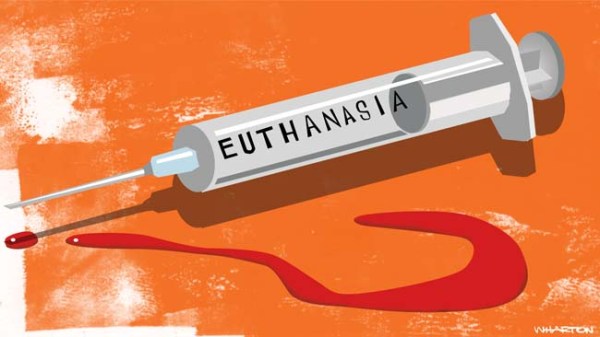
This article analyses the validity of consent given in euthanasia and Right to Die by discussing it through a philosophical and logical discourse. It also puts a spotlight on the lack of legislation and regulation on this regard, and analyses if Right to Die is a viable right.

Outlawing Marital Rape: A recurrently validated crime

Till date, marital rape is not considered a crime in India. Through the article, the Author aims to explain why the judiciary needs to urgently intervene and declare marital rape as unconstitutional. Taking the marital status of the perpetrator and the victim as a defence, the consent of a woman to sexual intercourse has been repeatedly de-prioritised by various High Courts in recent times. Further, the Author analyses some cases to show how consent cannot be easily detected, but a look into the totality of the circumstances helps determine the same. Lastly, the Author provides suggestions for dealing with marital rape as an offence.

Unraveling the Chief Election Commissioner and the Other Election Commissioners Act, 2023: Implication and Challenges

The recent enactment of the Chief Election Commissioner and other Election Commissioners (Appointment, Conditions of Service, and Term of Office) Act, 2023 has gathered significant attention and controversy, particularly due to its apparent contradiction with a recent Supreme Court judgment. This article provides a comprehensive analysis of the Act, highlighting its significant provisions and exploring its legal and constitutional implications. By examining the Act in detail, the article explains the potential repercussions of the legislation and its alignment, or lack thereof, with constitutional principles. This analysis is essential to understand the broader impact of the Act on the electoral framework and democratic processes in India.

Javed Ahmad v. State of Maharashtra: The Intriguing Nexus Between Art. 21 and the Right to Dissent

The right to freedom of speech and expression under Art.19(1)(a) of the Constitution, one of the three stars in the ‘Golden Triangle’ of the Constitution, occupies a climacteric position in the Indian constitutional discourse. However, this right has always been linked to Art.19 of the Constitution, and seldom has this been seen in onjunction with one’s right to life and personal liberty under Art.21. In a recent decision of the Supreme Court, such an intriguing nexus between Art.21 and the right to dissent is brought up. Based on this decision, the article seeks to analyse the possibility and the pertinence of such a nexus.

Wading Through the Fog – Discretionary Clubbing of Cases in India and the Right to a Fair Trial

The article delves into the contentious issue of case transfer and clubbing within the Indian judicial system, highlighting concerns of impartiality and procedural fairness. Justice Hilary Charlesworth underscores the need to eliminate non-legal considerations influencing judgments, echoing international human rights standards. Divergent judgments and discretionary powers raise alarms of potential violations of Article 21 of India’s Constitution and ICCPR Article 14. Drawing insights from international jurisprudence, the article advocates for well-defined criteria to govern case consolidation, ensuring judicial economy and alignment of interests. Upholding procedural fairness is imperative to mitigate arbitrariness and uphold human rights standards in India’s legal landscape.

The Best of No Worlds: The Digital Personal Data Protection Act 2023

Before the commencement of the Digital Personal Data Protection Act, 2023, data protection was a concern of a patchwork of other laws including the Information Technology Act. The entire point of introducing a singular separate organic body of law regarding data protection was to reduce the unconsented digital footprint remaining after a person goes offline so as to protect that data from all hands, regardless of the owner of the hands and their purpose. Not only does the Act provide no provision for the automatic deletion of personal data, but it also detaches the state from any such obligation as well.

Unconstitutionality of RCR: An Opportunity to Democratize ‘Marriage’

The author examines the constitutionality of the Restitution of Conjugal Rights and the State’s intrusion into private familial spheres. Beyond gender discrimination, RCR’s conception of marriage perpetuates inequality. It advocates for a reevaluation of this interpretation, not to negate expectations of intimacy within marriage but to challenge the legal enforcement of sexual relations as a conjugal right. The ongoing plea against the constitutionality of RCR offers an opportunity for the judiciary to redefine conjugal rights and reshape the institution of marriage.

Challenges and Prospects of Transgender Reservation: A Call for a Universal Approach

The article aims to address the issue of Transgender reservation. The Indian Constitution mandates affirmative measures for safeguarding the interests of vulnerable communities and preventing exploitation. Nevertheless, the author is of the opinion that legislative efforts regarding reservations for the transgender community have been fragmented and incoherent. The author suggests that it is now imperative to grant horizontal reservations for the transgender community. Furthermore, the author stresses the requirement for distinct reservations due to the unique challenges faced by the transgender community, advocating for horizontal reservation, that is flexible and self-adjusting. Finally, the article calls for acknowledging and upholding the legitimate claims of the transgender community to foster a fairer and more equitable society.

Unmasking Dark Patterns: Preserving Cognitive Liberty and Safeguarding Informational Privacy

The author, while recognizing the increased functioning of dark patterns to allude consumers, seeks to delve into the psychological intricacies associated with those and the data protection implications that arise from the employment of such designs. The article also provides an insight into how the Personal Data Protection Bill, 2023 can protect the data privacy rights of users whose choices are unethically manipulated.

Up ↑