Is the Constituent Assembly Still Supreme? Revisiting the Bar of Article 329

The Constituent Assembly encapsulated the separation of power in numerous provisions to prevent the eclipse of liberties of the citizens. In this architecture, certain provisions like Article 329 stand as near-impenetrable walls, barring judicial scrutiny of electoral and delimitation matters. These provisions which once vanguard the liberties of citizens, now safeguards potential arbitrariness from challenge. The author interrogates this constitutional paradox and navigates the tension between reverence for founding texts and the evolving demands of constitutional morality.

The Threat to Dissent: Kenya’s Assembly & Demonstration Bill 2024 and Lessons for India

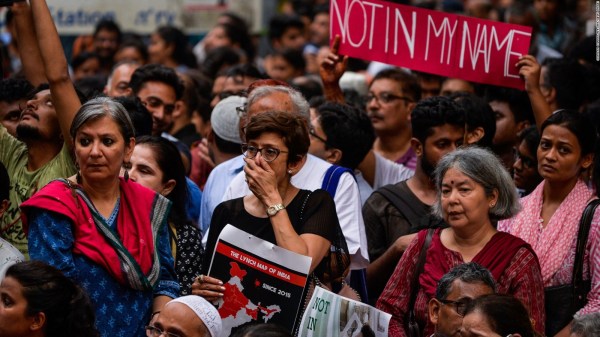
This blog focuses on some of the controversial sections of the Kenyan โ€œAssembly and Demonstration Bill 2024โ€ and its effect on the right to peacefully assemble as provided by Article 37 of the Constitution of Kenya. It highlights three key concerns: the ban on wearing a mask during demonstrations, legal responsibility for the action of protest-related damage, and restrictions on meetings that can undermine the rights of others. The author draws parallels to similar challenges faced in India, particularly during anti-CAA and farmer protests, emphasizing the need for both nations to safeguard constitutional freedoms while balancing law and order.

Expanding Article 21: The Implied Incorporation of Substantive Due Process and its Challenges

This article explores Supreme Court's implied incorporation of due process within Article 21. Though the text of Article 21 merely mentions โ€˜procedure established by law,โ€™ the author argues that the recognition of unenumerated rights can be justified through historical intent and the relationship between Fundamental Rights and DPSPs. The author however also shows the challenges with such an approach like excessive judicial discretion, lack of hierarchy among rights, and conflation of Articles 14, 19, and 21.

70 Years of Ram Jawaya Kapur:ย Analysing the Diminishing Influence of Indian Legislature in Contrast with โ€˜Executive Aggrandizementโ€™ in Constitutional Governance

This article critically examines India's diluted separation of powers, stemming from the *Ram Jawaya Kapur* (1955) ruling that favored executive efficiency over strict separation. It argues that this model, particularly with majority and coalition governments, leads to legislative undermining through mechanisms like bypassing parliamentary scrutiny (guillotine, reduced committee referrals). The article concludes by advocating for strengthening legislative oversight mechanisms to counter this "silent shift" towards executive aggrandizement.

Pardon the interruption: Silencing of judicial review by ยง472(7) of BNSS, 2023 [Part II]

This two-part essay examines Section 472(7) of the Bhartiya Nagarik Suraksha Sanhita, 2023, which seems to bar judicial review of constitutional pardon powers of the executive. It highlights how the provision undermines constitutional principles, including separation of powers, rule of law, and fundamental rights. The first part discusses the current, pre-BNSS, judicial and constitutional framework, emphasizing the need for a limited judicial review to prevent executive arbitrariness. The second part critiques the new provision and proposes a harmonized interpretation to preserve judicial oversight and safeguard democratic principles against executive overreach.

Pardon The Interruption: Silencing Of Judicial Review By ยง472(7) Of BNSS, 2023 [Part I]

This two-part essay examines Section 472(7) of the Bhartiya Nagarik Suraksha Sanhita, 2023, which seems to bar judicial review of constitutional pardon powers of the executive. It highlights how the provision undermines constitutional principles, including separation of powers, rule of law, and fundamental rights. The first part discusses the current, pre-BNSS, judicial and constitutional framework, emphasizing the need for a limited judicial review to prevent executive arbitrariness. The second part critiques the new provision and proposes a harmonized interpretation to preserve judicial oversight and safeguard democratic principles against executive overreach.

On the line between judicial activism and judicial legislation

Judicial activism can be broadly perceived as judicial interpretation and review of statutes or other state action. Judicial legislation, on the other hand, lays down new in case of a legislative insufficiency. The relation and conflict between the two can be studied in the context of the call for a liberal interpretation of the Special Marriage Act, applicability of judicial review in money bills or even in the electoral practice of freebies and whether it is akin to a corrupt practice.

Speakerโ€™s Inaction No Longer Immune: Telangana High Courtโ€™s Purposive Lens on Judicial Review Over Speakerโ€™s Delay in Anti-Defection Pleas

In its recent verdict, the Telangana High Court directed the Telangana Legislative assembly speaker to decide the disqualification petitions pending against the defecting Bharatiya Rashtra Samiti (BRS) MLAs into the ruling Congress Party within four weeks. The judgment, Kuna Pandu Vivekanand v. State of Telangana, pronounced by a Single-judge bench of Honโ€™ble Justice Vijaysen Reddy underscored that a complete abdication of judicial review concerning the inaction of speaker, as a constitutional functionary, is an anathema and repugnant to the greater democratic values. This article analyses this judgement.

Horizontal Application of Privacy Rights: A Constiutional Tort Framework

This post discusses the critical role of privacy rights in todayโ€™s digital landscape, emphasizing enforcement challenges due to privacyโ€™s dual recognition as a fundamental and common law right. Drawing on the Supreme Courtโ€™s recent Kaushal Kishor ruling, it advocates for a constitutional tort framework that allows horizontal application of privacy rights within a unified legal structure.

Deliberation as a Constitutional Requirement: Examining the Judicial Review of Legislative Process in India (Part II)

This article, in two parts examines the constitutional implications of non-deliberative legislative processes in India, focusing on recent controversial laws like the electoral bonds scheme. It argues that deliberation is integral to parliamentary democracy and proposes that courts should be empowered to review legislative processes on grounds of non-deliberativeness to uphold constitutional values and improve democratic outcomes.

Deliberation as a Constitutional Requirement: Examining the Judicial Review of Legislative Process in India (Part I)

This article, in two parts examines the constitutional implications of non-deliberative legislative processes in India, focusing on recent controversial laws like the electoral bonds scheme. It argues that deliberation is integral to parliamentary democracy and proposes that courts should be empowered to review legislative processes on grounds of non-deliberativeness to uphold constitutional values and improve democratic outcomes.

Up ↑