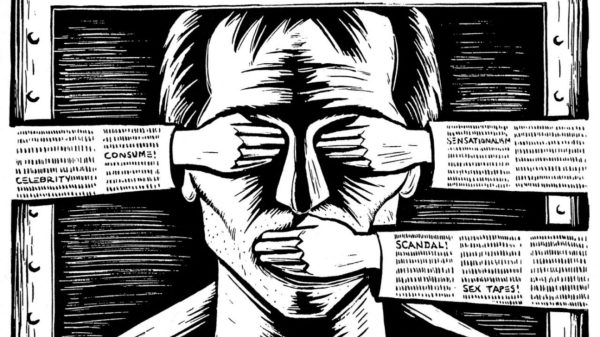
Disinformation and misinformation has been earmarked as a ‘global risk’, causing ‘information pollution’ that adversely impacts decision making and socio-economic and political stability. In light of this, Part – I of this Article aims to expplain the imperative and constitutionality of the Fact-Check Unit (FCU) under Rule 3(1)(b)(v) of the IT Rules, 2021, through a comparative study.
Deliberation as a Constitutional Requirement: Examining the Judicial Review of Legislative Process in India (Part II)
This article, in two parts examines the constitutional implications of non-deliberative legislative processes in India, focusing on recent controversial laws like the electoral bonds scheme. It argues that deliberation is integral to parliamentary democracy and proposes that courts should be empowered to review legislative processes on grounds of non-deliberativeness to uphold constitutional values and improve democratic outcomes.
Deliberation as a Constitutional Requirement: Examining the Judicial Review of Legislative Process in India (Part I)
This article, in two parts examines the constitutional implications of non-deliberative legislative processes in India, focusing on recent controversial laws like the electoral bonds scheme. It argues that deliberation is integral to parliamentary democracy and proposes that courts should be empowered to review legislative processes on grounds of non-deliberativeness to uphold constitutional values and improve democratic outcomes.
Unraveling the Chief Election Commissioner and the Other Election Commissioners Act, 2023: Implication and Challenges
The recent enactment of the Chief Election Commissioner and other Election Commissioners (Appointment, Conditions of Service, and Term of Office) Act, 2023 has gathered significant attention and controversy, particularly due to its apparent contradiction with a recent Supreme Court judgment. This article provides a comprehensive analysis of the Act, highlighting its significant provisions and exploring its legal and constitutional implications. By examining the Act in detail, the article explains the potential repercussions of the legislation and its alignment, or lack thereof, with constitutional principles. This analysis is essential to understand the broader impact of the Act on the electoral framework and democratic processes in India.
Federating Rights: Democracy, Federalism and Governance
The article is premised on the recent GNCTD Act and its impact on federalism. It takes a detour from the popular discourse and explores federalism through the lens of fundamental rights. It argues that the right to vote and self-governance can be considered fundamental rights under Article 19(1)(a) of the Indian Constitution.
Empowering District Judiciary: Ensuring Independence for Effective Justice
The author, in this piece, recognizes that, in addition to the SC and HCs, the district judiciary holds a constitutional stature and its autonomy, efficiency and effectiveness must be upheld through various reforms. Some of the areas of reform discussed are for financial independence, functional independence and the appointment process.
Discussing various facets of Laws on Freedom of Speech and Expression: Whether anti-hate Legislation would be an effective way to combat Hate Speech or is it the Counter Speech which acts as a Catalyst?
The authors, in this piece, argue that counter speech is a more viable way to curb hate speech rather than resorting to outright censorship. A perspective on hate speech in a global level is provided that gives a view of how other countries deal with this issue, while arguing that anti-hate legislation that is enacted by most countries may not be the best solution to hate speech. Contours of the counter-speech mechanism are provided justifying it as the best solution.
The Scrimmage of a Free Democracy: Is it time to bring the Sedition Law in line with the Republican Era?
The author in this piece has discussed the relativity of free speech in light of a free democracy by highlighting the challenges of sedition law in conjunction to the republican era. The author also explores the topic's intersectionality by highlighting facets of democratic function and comments of aspects of legal procedure and function.