‘Hard Look Review’ and Data Privacy – Providing an alternative to the Proportionality Test

Proportionality test has been used quite often in Indian constitutional law jurisprudence. In the absence of a clearly defined rule or standard, courts resort to proportionality standards, that is, balancing individual interests against broader public or state interests. This article will argue that while proportionality has been the dominant lens through which courts evaluate data privacy infringements, procedural doctrines like the hard look review can serve as a complement to proportionality tests.

Lost in Translation: The Constitutional Case Against Hindi Imposition

In recent years, the Union Government’s push for Hindi in governance and education, particularly through the National Education Policy, has triggered constitutional concerns. Though framed as promoting multilingualism, the policy's implementation effectively coerces non-Hindi speakers, especially in Tamil Nadu, into linguistic assimilation. This article argues that such imposition violates fundamental rights and fails the proportionality test outlined in Puttaswamy, undermining India’s federal structure and commitment to linguistic diversity.

Balancing between Tolerance and Reform: A Comparative Analysis of Freedom of Religion in India and the USA

This article attempts to understand the differences between the concept of religious freedom in India and the United States. It seeks to locate these differences in the context of the nature of religion in the two countries and its relationship with society. Moreover, it highlights the changing social realities which necessitate a review of the secularism in these countries.

The Doctrine of the Fruit of the Poisonous Tree: Relevance to the Digital Personal Data Protection Act, 2023 and the Right to Privacy

This article examines the "Fruit of the Poisonous Tree" doctrine in the Indian legal context, where courts have historically admitted illegally obtained evidence if deemed relevant. However, with the recognition of the right to privacy in K.S. Puttaswamy v. Union of India and the enactment of the Digital Personal Data Protection Act, 2023, there is a growing emphasis on protecting individual privacy over procedural leniency. This shift highlights the need for a well-defined legal framework that balances investigative authority with constitutional safeguards, ensuring that evidence obtained through unlawful means does not undermine fundamental rights and the rule of law.

Threats to Fundamental Rights in the Digital Era: Analysing Rule 4(2) of IT Rules 2021

This blog ais to analyse Rule 4(2) of the IT Rules, 2021 which mandates identification of the first originator of information. Wherein, It threatens user’s privacy, free speech, and intermediary’s immunity by breaking end-to end encryption, promotes chilling effects, creates arbitrary state actions and violates international principles. Thus, the need of reforms is necessary to balance regulation with fundamental rights in the digital age.

Battling Digital Disinformation: The Imperative of Fact-Checking in a Participatory Democracy (Part II)

Disinformation and misinformation has been earmarked as a ‘global risk’, causing ‘information pollution’ that adversely impacts decision making and socio-economic and political stability. Part – II intends to explore the evolving interpretation of the theory of ‘marketplace of ideas’ under Article 19(1)(a) to point out that disinformation and misinformation on government affairs distorts the foundation of democracy, i.e., truth. Accordingly, the article emphasises on the need to fact-check in order to ensure plurality of views based on factually true information, since discourse based on false information makes the citizen's participation in democracy a futile exercise.

Battling Digital Disinformation: The Imperative of Fact-Checking in a Participatory Democracy (Part I)

Disinformation and misinformation has been earmarked as a ‘global risk’, causing ‘information pollution’ that adversely impacts decision making and socio-economic and political stability. In light of this, Part – I of this Article aims to expplain the imperative and constitutionality of the Fact-Check Unit (FCU) under Rule 3(1)(b)(v) of the IT Rules, 2021, through a comparative study. 

Consent to Die: A Right or a Risk?

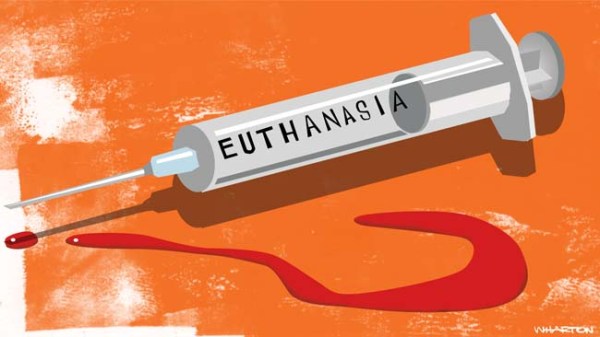
This article analyses the validity of consent given in euthanasia and Right to Die by discussing it through a philosophical and logical discourse. It also puts a spotlight on the lack of legislation and regulation on this regard, and analyses if Right to Die is a viable right.

Outlawing Marital Rape: A recurrently validated crime

Till date, marital rape is not considered a crime in India. Through the article, the Author aims to explain why the judiciary needs to urgently intervene and declare marital rape as unconstitutional. Taking the marital status of the perpetrator and the victim as a defence, the consent of a woman to sexual intercourse has been repeatedly de-prioritised by various High Courts in recent times. Further, the Author analyses some cases to show how consent cannot be easily detected, but a look into the totality of the circumstances helps determine the same. Lastly, the Author provides suggestions for dealing with marital rape as an offence.

Conserving Dialects: Bridging the Gap Amidst Law and Fact

Every person's life is shaped and defined by their use of language. It is a haven for culture and educational systems in addition to being an effective communication tool. Life's many activities and components are derived from one's mother tongue. By providing people and communities with the requisite skills, that have been accruing and developing over centuries, language helps them in becoming accustomed to their surroundings. The last few decades have borne witness to the disappearance and even extinction of some of these minority languages as a consequence of a lack of adequately formulated provisions and discrimination. The Article aims to decipher the philosophy of Commissions meant to protect linguistic minority rights and the repercussions it has on the education sector of vulnerable sections, especially the tribal people. It also contains certain recommendations in order to combat the problem of the endangerment of languages in hopes of safeguarding India's rich cultural heritage.

Up ↑