‘Hard Look Review’ and Data Privacy – Providing an alternative to the Proportionality Test

Proportionality test has been used quite often in Indian constitutional law jurisprudence. In the absence of a clearly defined rule or standard, courts resort to proportionality standards, that is, balancing individual interests against broader public or state interests. This article will argue that while proportionality has been the dominant lens through which courts evaluate data privacy infringements, procedural doctrines like the hard look review can serve as a complement to proportionality tests.

Deciphering Sub-Categorisation in Scheduled Castes: Redefining Equity or Reinforcing Division?

This blog critically examines the sub-categorisation of Scheduled Castes in India, highlighting its role in redefining equity and ensuring fairer distribution of affirmative action benefits. While it promises to empower the most marginalised, it also raises concerns about reinforcing caste divisions and political motivations behind such policy shifts.

Erosion of Safeguards: A Case against Section 187(3) of BNSS

The author critiques Section 187(3) of the Bharatiya Nagarik Suraksha Sanhita (BNSS), 2023, for diluting crucial procedural safeguards originally provided under Section 167 of the Code of Criminal Procedure. By removing key limitations on police custody, the provision enables detentions of up to 90 days, thereby threatening personal liberty and violating Articles 21 and 22 of the Constitution.

Lost in Translation: The Constitutional Case Against Hindi Imposition

In recent years, the Union Government’s push for Hindi in governance and education, particularly through the National Education Policy, has triggered constitutional concerns. Though framed as promoting multilingualism, the policy's implementation effectively coerces non-Hindi speakers, especially in Tamil Nadu, into linguistic assimilation. This article argues that such imposition violates fundamental rights and fails the proportionality test outlined in Puttaswamy, undermining India’s federal structure and commitment to linguistic diversity.

The Threat to Dissent: Kenya’s Assembly & Demonstration Bill 2024 and Lessons for India

This blog focuses on some of the controversial sections of the Kenyan “Assembly and Demonstration Bill 2024” and its effect on the right to peacefully assemble as provided by Article 37 of the Constitution of Kenya. It highlights three key concerns: the ban on wearing a mask during demonstrations, legal responsibility for the action of protest-related damage, and restrictions on meetings that can undermine the rights of others. The author draws parallels to similar challenges faced in India, particularly during anti-CAA and farmer protests, emphasizing the need for both nations to safeguard constitutional freedoms while balancing law and order.

Contradictions Unfolded: A Dive into Delimitation Dilemmas

Haryana’s 2024 elections exposed key delimitation challenges within India’s electoral framework. This article examines vote-share disparities, the North-South seat imbalance post-2026 delimitation, and judicial oversight in constituency mapping. Highlighting the Kishorechandra judgment’s implications, it advocates for autonomous delimitation, equitable representation, and judicial consistency to uphold democratic fairness and electoral integrity.

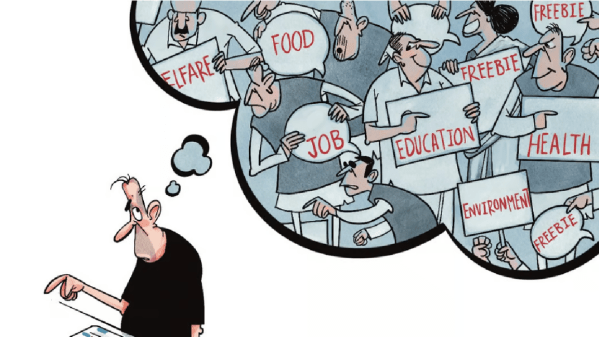
Freebies In Electoral Democracies: A Necessary Change Withheld by Major Challenges?

For a while now, an eternal debate has existed on the issue of freebies and welfarism. Their nature is so close that it becomes impossible to differentiate between the two and draw a clear line of demarcation. While welfare policies are deemed to be irreplaceable and for the goodwill of society, freebies are understood to be vicious and a method of manipulation used to win political support at the expense of fiscal prudence. Freebies or welfare policies as may be referred to by both sides of the argument undoubtedly have political, economic and social implications. The question that then arises is whether their benefits exerted on society are sufficient to overcome the looming dangers that hide behind the veil of welfare. As this discussion reaches the Supreme Court, this blog highlights a few challenges that lie ahead.

Laissez-Faire Meets Localism: Domicile Reservations in Karnataka’s Private Sector

The Karnataka government recently introduced a bill mandating substantial reservations for domiciled residents in private-sector jobs, which was swiftly put on hold amid widespread criticism. This blog explores the complex constitutional, legal, and economic ramifications of such domicile-based reservations. By examining judicial precedents and constitutional provisions, the Author highlights the tension between promoting local employment and upholding the principles of meritocracy and laissez-faire that govern private enterprises. Drawing comparisons with similar initiatives in Haryana and Andhra Pradesh, which faced judicial pushback, this analysis underscores the potential risks to Karnataka's economic landscape if the bill were to be implemented. The Author argues that while the intention to support local employment is commendable, it must be balanced with the need to maintain a business-friendly environment and respect for constitutional guarantees of free movement and equality across states.

Deliberation as a Constitutional Requirement: Examining the Judicial Review of Legislative Process in India (Part I)

This article, in two parts examines the constitutional implications of non-deliberative legislative processes in India, focusing on recent controversial laws like the electoral bonds scheme. It argues that deliberation is integral to parliamentary democracy and proposes that courts should be empowered to review legislative processes on grounds of non-deliberativeness to uphold constitutional values and improve democratic outcomes.

Unraveling the Chief Election Commissioner and the Other Election Commissioners Act, 2023: Implication and Challenges

The recent enactment of the Chief Election Commissioner and other Election Commissioners (Appointment, Conditions of Service, and Term of Office) Act, 2023 has gathered significant attention and controversy, particularly due to its apparent contradiction with a recent Supreme Court judgment. This article provides a comprehensive analysis of the Act, highlighting its significant provisions and exploring its legal and constitutional implications. By examining the Act in detail, the article explains the potential repercussions of the legislation and its alignment, or lack thereof, with constitutional principles. This analysis is essential to understand the broader impact of the Act on the electoral framework and democratic processes in India.

Breaking Bonds: Analysing the Supreme Court’s Verdict in Association for Democratic Reforms v. Union of India

The Supreme Court gave an historical verdict that ended the brief but significant era of the Electoral Bonds Scheme. This article aims to clarify the arguments presented by all parties involved and offers an accessible interpretation of the court's judgment. It also aims to delineate suggestions that may be considered as the next step in the overall mission of conducting free and fair elections in the world's largest democracy.

Up ↑