Doctrine of Manifest Arbitrariness: Moving Towards A Wider ‘Reasonableness’ Review [Part II]

This blog analyses the characterizstion of arbitrariness as an enemy to equality, contending that while the Classification Doctrine and the older Non-Arbitrariness Doctrine both operate primarily as formal, process-based rationality requirements, focused on the means-end connection, the Manifest Arbitrariness Doctrine introduces a more normative, effects-based evaluation of both ends and means.

Doctrine of Manifest Arbitrariness: Moving Towards A Wider ‘Reasonableness’ Review [Part I]

This blog analyses the characterizstion of arbitrariness as an enemy to equality, contending that while the Classification Doctrine and the older Non-Arbitrariness Doctrine both operate primarily as formal, process-based rationality requirements, focused on the means-end connection, the Manifest Arbitrariness Doctrine introduces a more normative, effects-based evaluation of both ends and means.

Is the Constituent Assembly Still Supreme? Revisiting the Bar of Article 329

The Constituent Assembly encapsulated the separation of power in numerous provisions to prevent the eclipse of liberties of the citizens. In this architecture, certain provisions like Article 329 stand as near-impenetrable walls, barring judicial scrutiny of electoral and delimitation matters. These provisions which once vanguard the liberties of citizens, now safeguards potential arbitrariness from challenge. The author interrogates this constitutional paradox and navigates the tension between reverence for founding texts and the evolving demands of constitutional morality.

‘Hard Look Review’ and Data Privacy – Providing an alternative to the Proportionality Test

Proportionality test has been used quite often in Indian constitutional law jurisprudence. In the absence of a clearly defined rule or standard, courts resort to proportionality standards, that is, balancing individual interests against broader public or state interests. This article will argue that while proportionality has been the dominant lens through which courts evaluate data privacy infringements, procedural doctrines like the hard look review can serve as a complement to proportionality tests.

Let Them Be Children: Religion, Coercion, and the Constitutional Duty to Protect Childhood

The article explores how children in India are often subjected to religious coercion—both at home and in educational settings—under the guise of cultural or parental authority. Through constitutional provisions, case law, and international conventions like the UNCRC, the piece argues for a more robust legal and policy framework to uphold children's rights to autonomy, dignity, and cognitive development. It delves into issues such as Bal Diksha, the quality of education in religious institutions like madrasas and gurukuls, and the urgent need for the State to fulfil its parens patriae role. The piece also makes forward-looking recommendations to ensure that religious freedom does not come at the cost of children’s welfare.

Tussle of Equality in National Awards

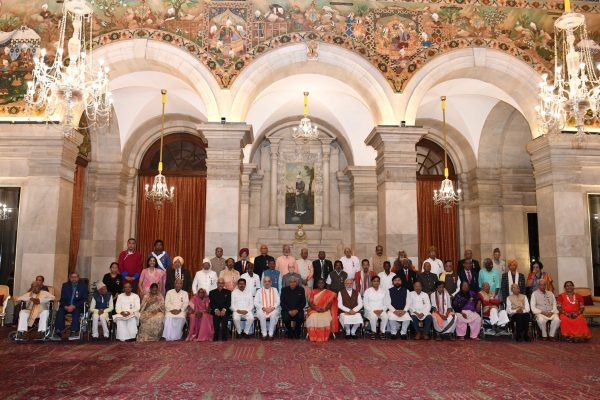
The Supreme Court in Balaji Raghavan upheld National Awards’ validity, ruling they aren’t “titles” under Article 18(1). However, applying the proportionality test reveals flaws – opaque selection risks bias, undermining equality. Reforms for transparency and inclusivity are needed to align awards with the Constitution’s egalitarian ethos.

Lost in Translation: The Constitutional Case Against Hindi Imposition

In recent years, the Union Government’s push for Hindi in governance and education, particularly through the National Education Policy, has triggered constitutional concerns. Though framed as promoting multilingualism, the policy's implementation effectively coerces non-Hindi speakers, especially in Tamil Nadu, into linguistic assimilation. This article argues that such imposition violates fundamental rights and fails the proportionality test outlined in Puttaswamy, undermining India’s federal structure and commitment to linguistic diversity.

Expanding Article 21: The Implied Incorporation of Substantive Due Process and its Challenges

This article explores Supreme Court's implied incorporation of due process within Article 21. Though the text of Article 21 merely mentions ‘procedure established by law,’ the author argues that the recognition of unenumerated rights can be justified through historical intent and the relationship between Fundamental Rights and DPSPs. The author however also shows the challenges with such an approach like excessive judicial discretion, lack of hierarchy among rights, and conflation of Articles 14, 19, and 21.

70 Years of Ram Jawaya Kapur: Analysing the Diminishing Influence of Indian Legislature in Contrast with ‘Executive Aggrandizement’ in Constitutional Governance

This article critically examines India's diluted separation of powers, stemming from the *Ram Jawaya Kapur* (1955) ruling that favored executive efficiency over strict separation. It argues that this model, particularly with majority and coalition governments, leads to legislative undermining through mechanisms like bypassing parliamentary scrutiny (guillotine, reduced committee referrals). The article concludes by advocating for strengthening legislative oversight mechanisms to counter this "silent shift" towards executive aggrandizement.

Balancing between Tolerance and Reform: A Comparative Analysis of Freedom of Religion in India and the USA

This article attempts to understand the differences between the concept of religious freedom in India and the United States. It seeks to locate these differences in the context of the nature of religion in the two countries and its relationship with society. Moreover, it highlights the changing social realities which necessitate a review of the secularism in these countries.

Up ↑