Introduction
The Supreme Court of India is empowered by Article 136 of the Indian Constitution to grant special permission to appeal against any judgement, decision, or decree made by any court or tribunal in the country, regardless of the subject or cause. However, the Supreme Court has repeatedly addressed the problem of misuse of the special leave petition privilege and has recognized and dealt with the potential abuse of the same in the case of Pritam Singh v. State. The decision suggested uniform standards for filing SLPs and limiting the use of Article 136 to extraordinary cases. Similar thoughts were echoed in the case, J.P. Builders v. A. Ramadas Rao. The court further indicated that special leave should not be granted by “this Court” unless there are proven “exceptional and special circumstances of substantial and grave injustice” warranting a review of the appealed decision. The Supreme Court is indeed the final holdout for justice as echoed by Justice Y.K. Sabharwal, the former Chief Justice of India, who believed that the Supreme Court is final but not infallible. The key aspect of finality is the primary feature of a Supreme court in every legal system and hence, SLPs should be adjudicated in a manner which is effective and efficient.
In this article, the author will examine the current status of special leave petitions, their adverse impacts, and, crucially, a review of past suggestions for reform and an attempt to propose a practical solution to reduce the improper use of SLPs.
Current Status and SC View in Matter of Frivolous SLPs
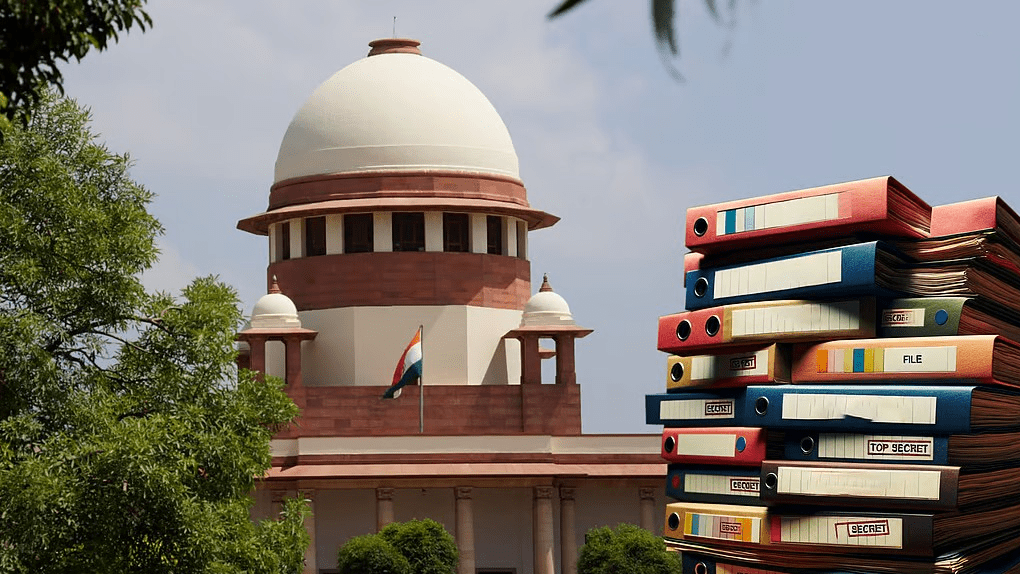
The SLP is not a right, but a privilege given by the Supreme Court exercising its power under Article 136, and the Court has the authority to make decisions in addition to the typical appeal process. There are currently more than 83,000 pending cases in the Supreme Court and more than 33,000 SLP cases in progress, including both criminal and civil cases. Additionally, there has been a rise in the number of Special Leave Petitions filed, resulting in a higher backlog of “regular matters”. Ascertaining the situation, Supreme Court in the case of Bengal Chemicals & Pharmaceutical works v. Their Workmen, limited the extent of, and restricted admission of SLPs, to instances of breaching principles of natural justice, resulting in significant and severe harm to the parties involved. One of the main reasons behind Supreme Court to limit the extent of SLPs is the backlog of cases.
The fundamental problem faced by the Supreme Court is the filing of unnecessary SLP cases. The admission of frivolous SLPs is similar to the excessive use of a limited resource (justice), resulting in reduced efficiency. About 80% of the new cases brought before the Supreme Court involved Special Leave Petitions, and the acceptance rate of these SLPs matter varies around 40%. These numbers are highly contradictory from the discretionary capacity acceptance rates in the US and Canada, which are 2.8% and 9%, respectively. Moreover, the reversal rate of SLPs in India is merely 44% , compared to US which have a reversal rate around 70%.
The persistent SLP problem is also attributed to its profitability and the Bar’s unwavering backing of it. Advocates cherish SLP cases to gain profits, which further acts as a lucrative business opportunity. Yet, Supreme Court in Mathai @ Joby v. George, declined to enforce any regulations on the utilization of this exceptional authority, given the ‘widest possible terms’ wording of Article 136. Because of these deficiencies of this broad provision, there is significant concern about the backlog of cases in the judiciary and the possibility of the Supreme Court serving as a typical appellate body.
Previously Proposed Reforms
Academics and legal professionals have proposed numerous reforms to tackle the issue of SLPs over the years. The Tenth Law Commission of India proposed the division of the Supreme Court into the Constitutional Division and the Legal Division. As per the proposal, the intended Constitutional Division would exclusively handle cases related to constitutional law. This idea was first suggested by Adv. Rajeev Dhawan in 1978 in his book “The Supreme Court Under Strain: The Challenge of Arrears” where he suggested the concept of splitting the Supreme Court into two divisions. Following this recommendation, Justice Venkataramaiah noted in P.N. Kumar v. Municipal Corporation of Delhi that “The Court is currently overburdened with cases falling under its exclusive jurisdiction. Numerous lawsuits have been pending for a decade or more, even though no new lawsuits have been initiated. Given the current quantity of judges on the bench, it could potentially require over 15 years to address all pending cases in this Court”.
In 1986, Justice Bhagwati suggested creation of National Court of Appeal for the hearing of SLPs in the case Bihar Legal Support Authority v. Chief Justice of India. This court, separate from the Supreme Court, would exclusively deal with constitutional and public law cases and shall have the authority to examine Special Leave Petition issues. Subsequently, in the 2016 Vasanthakumar v. Bhatia case, the Supreme Court considered a request for establishing a National Court of Appeal, addressing eleven important legal issues to address the longstanding necessity for reforms. The matter was later sent to a Constitution Bench, but as of now, it has not been heard. This proposal would help to alleviate a big problem for the Supreme Court but nevertheless, this separate judicial entity would also go against the concept of conclusiveness that is the key feature of the Supreme Court, as held in the Sampath Kumar v. Union of India case, which emphasized that another quasi-judicial body can only supplement the court but should not substitute the court. But, the National Court of Appeal, if established, will eventually replace the Supreme Court with a quasi-judicial body, which will individually adjudicate the SLP cases rather than the Supreme Court.
Another proposal was recommended in the 229th Law Commission Report (2009) for the establishment of four regional benches in Delhi, Chennai or Hyderabad, Kolkata, and Mumbai to deal with non-constitutional cases and one bench in Delhi for constitutional cases. This was another prominent suggestion made to enhance the Court’s accessibility. In 2021, Chief Justice N.V. Ramana also suggested, that the Delhi Bench should focus on constitutional matters, while regional benches of the Supreme Court could be set up to manage the appeal process, who referred to the suggestion made by former Attorney General of India, KK Venugopal. Although, this reform could enhance accessibility, reduce backlogs, and clarify the Supreme Court’s judicial role and function but such a reform would necessarily require an amendment to Article 130 which designates Delhi as the seat of the Supreme Court. Further, it would also make it easier for plaintiffs to file inexpensive, frivolous SLPs instead of the more expensive process of appearing before the Court in Delhi, which would eventually increase admission of frivolous SLPs.
Recommendations
The author proposes for creating a two-tier system within the Supreme Court to enhance its efficiency and effectiveness, instead of the aforementioned overhauling reform, that go against Article 130 by replacing the Court’s authority and jurisdiction. The author’s proposal includes establishment of a “body” or “board” with the objective of thoroughly analyzing SLPs before they are admitted to the Supreme Court, making sure that frivolous SLP cases are dismissed by the board mentioned herein.
The first tier would feature a board serving as a quasi-judicial body, consist of former Supreme Court and High Court judges, to assess and examine the SLP cases, which would decide whether to admit it or dismiss it, based solely on technicality and the necessity of the SLP. The board will also include senior Supreme Court lawyers and legal scholars who will assist judges in reviewing SLP cases that have been denied admission and are requested to be reconsidered by the petitioner. The Supreme Court can still intervene if it believes there has been a serious injustice toward the petitioner and their right to be heard is violated, meaning that the board’s decision is only advisory and not legally binding upon Supreme Court, and all the powers given under Article 136 shall be vested with Supreme Court. The Supreme Court held a similar proposition in L. Chandra Kumar v. Union of India, i.e., the Supreme Court powers cannot be substituted by any other body.
The second tier would involve the Supreme Court bench which will review the cases accepted by the board during the initial phase, as some of the SLP cases would be dismissed in initial stage itself. The SLP cases that were admitted and assessed by the board to be worthy of consideration will be further reviewed by the Supreme Court to determine whether to admit the case. Further, the Board will only supplement the authority of the Supreme Court and help reduce the court’s workload by handling technicalities and frivolous cases, allowing the Supreme Court to focus on other appeals.
The author’s proposed model helps the court to effectively to sift through cases, efficiently allocating time to adjudicate other appeals. It simply conserves the time of the Supreme Court which may otherwise be spent in dealing with frivolous SLP cases.
Conclusion
The growing piling up of cases in the Supreme Court, largely due to the abuse of Special Leave Petitions, requires urgent reform. Several proposals have been floated, including the setting up of a National Court of Appeal and the establishment of regional benches; however, these efforts face constitutional and practical challenges. The suggested two-tier system offers a balanced approach by creating a quasi-judicial board responsible for the rejection of frivolous SLPs, while at the same time protecting the jurisdiction granted to the Supreme Court under Article 136. This approach improves judicial efficiency, reduces delays, and ensures that only cases of exceptional importance are heard by the Supreme Court, thus maintaining the integrity and efficacy of India’s highest judicial body.
The Author is a third-year student at Institute of Law, Nirma University
Image Credit: Bar & Bench
 Constitutional Law Society
Leave a comment