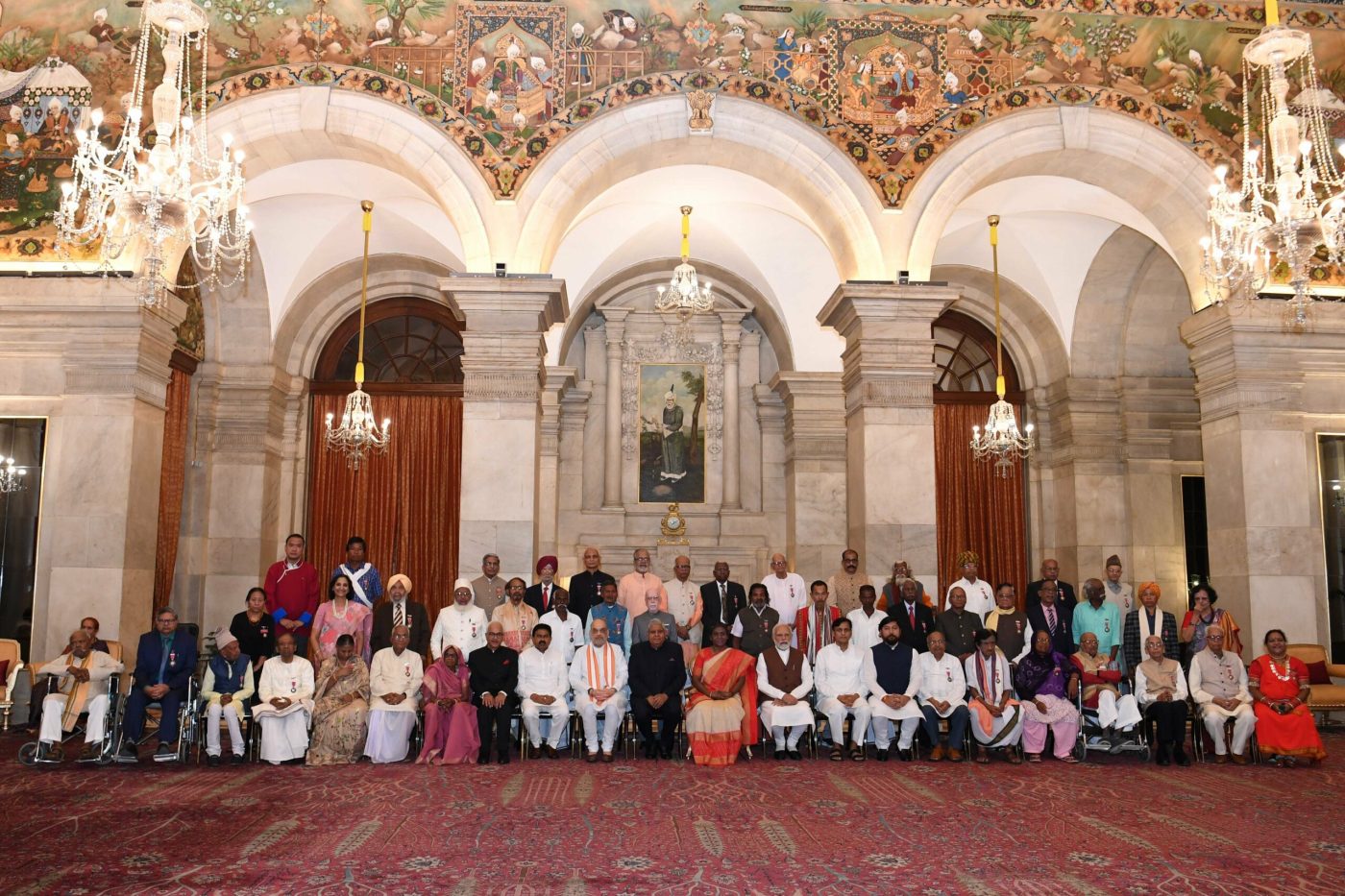
The central issue before the Supreme Court in the case of Balaji Raghavan and Ors. Vs. Union of India was whether the National Awards, namely Bharat Ratna, Padma Vibhushan, Padma Bhushan, and Padma Shri, are “Titles” within the meaning of Article 18(1) of the Constitution of India. The petitioners sought to prevent the government from conferring these awards, arguing that they violated the constitutional prohibition against the conferment of titles (except military and academic distinctions) and the principle of equality. In essence, the Court upheld the constitutional validity of the National Awards, clarifying that they are not “titles” prohibited by Article 18(1). It stressed the need for a more robust and transparent system for their conferment to maintain their national character, prestige, and dignity.
The test of proportionality has been a tool that jurists have used to decide if the acts of the State encroaching on fundamental rights are valid or not across various jurisdictions. It finds its roots primarily in Europe but has been re-interpreted in other countries, with slight alterations. The general structure of the test is comprised of four subtests that seek to inquire into the following: the impugned measure’s purpose, the relationship between the measure and the limitation on the right, the necessity of the measure to achieve its purpose, and the balance between the benefit gained by the measure and the loss suffered by an impact on the right. In India, while the principle behind the test was enshrined in constitutional jurisprudence quite early on, a structured test to analyse rights limitation began with Modern Dental College and Research Centre v. State of Madhya Pradesh. A clear-cut four-pronged proportionality test was observed in Justice K.S. Puttaswamy (Retd) v. Union of India:
- Legitimate aim
- Rational Connection
- Necessity
- Proportionality stricto sensu
The constitutional prohibition on “titles” in Article 18(1) of the Indian Constitution was motivated by the framers’ desire to dismantle established social hierarchies that distinguished between citizens, inherited from both colonial and feudal systems. Members such as Dr. B.R. Ambedkar and K.T. Shah distinctly said during the Constituent Assembly Debates that titles were essential for an egalitarian basis of the republic. Dr Ambedkar emphasized that abolishing titles was an important step “to level up” Indian society and eliminate artificial hierarchies introduced through honours conferred by a colonial state. It was not only a matter of abolishing British knighthoods. But it was to ensure that the new republic did not succumb to the cancer of state recognition and similar patterns of patronage and privilege followed by colonials.
National Awards: Bias, Politics, And The Erosion Of Article 18(1)
National awards at the highest level, which were mandated exclusively for conferring prestigious awards in exceptional cases of merit, such as the Bharat Ratna, stood charged with favouritism and politicisation, thus vanquishing the objective of egalitarian recognition as conceived in Article 18(1). For instance, Jawaharlal Nehru’s and Indira Gandhi’s self-awarding of the Bharat Ratna in 1955 and 1971 during their tenure as Prime Minister has given rise to allegations of favouritism over the years. However, even if such allegations are false, and they both were awarded on sole recommendation by the then president, the awarding system itself lacks a clear procedure. Unlike formalised systems, like the UK’s Honours Committee, having transparent criteria and procedures, and a lack of them, increases perceptions of arbitrariness. Attaching awards as titles is prohibited, according Balaji Raghavan. Still, awardees cite it frequently (e.g., “Padma Shri XYZ”) while there is no practical enforcement to prevent it despite formal prohibition. This blurring of recognition into titular status, as highlighted in the case, transforms awards into titles, undermining Article 18(1)’s intent to abolish state-endorsed hierarchies.
Grounding Proportionality
Article 18(1) extends the right to equality enshrined in Article 14 by prohibiting titles that could engender unequal status among citizens. In Puttaswamy, the Supreme Court observed that Article 21 (right to life and liberty) is “infused” by Article 14, asserting that equality is foundational to all fundamental rights. Although the proportionality test was applied to privacy under Article 21, its linkage to Article 14 via the Court’s recognition that Article 21 derives its vitality from equality extends its relevance to Article 18(1).
Applying the Proportionality Test to National Awards
Legitimate Aim
The state’s objective of recognizing exceptional contributions through awards like the Bharat Ratna and the Padma Vibhushan is ostensibly legitimate, aiming to promote excellence and national pride. This aligns with a public interest in celebrating merit. However, the legitimacy hinges on execution: does it foster a meritocracy, or does it perpetuate privilege, contrary to Article 18(1)’s anti-hierarchy ethos? The CADs reveal KT Shah’s concern that titles, even non-hereditary ones, risk creating a privileged class, a point Balaji Raghavan overlooked by accepting the aim without scrutiny.
Rational Connection
For awards to rationally connect to their aim, the selection process must be transparent and consistently reflect merit, free from arbitrary influence. There needs to be a rational connection between the measure in question – state-conferred awards – and the goal of recognising excellence. But some contemporary examples undercut this prong. The recent Padma Shri to Kangana Ranaut, an Indian actress who has been accused of giving hate speeches against Muslims, and her recent association with the ruling party raise doubts about the credibility of the National Awards becoming a “cleansing” award rather than a meritorious one. This is compared to the case of the UK’s Honours system, where an independent committee publishes detailed guidelines. The Abolition Bill, 1969 by JB Kriplani, criticised awards similarly, saying that they are not always given based on merit, given that the state is poorly equipped to judge eminence impartially. The Balaji Raghavan judgment brushed such concerns aside, blind to how opacity reiterates symbolic privilege contra the framers’ egalitarian vision. So, the means of awarding might reflect excellence, but such arbitrary awards dilute their reputation, creating an unjust class of people.
Necessity
Even if there is indeed a rational connection, is the awards system employed by the state the least restrictive means of recognising excellence without infringing Article 18(1)? This prong requires no less invasive alternative to accomplish the same ends. Decentralised recognition by professional bodies, such as the Indian Medical Association, instituted in 1928 would merit the awardees without the state bestowing prestige equivalent to colonial titles. A less hierarchical model, Canada’s Order of Canada, including public nominations and regional representation, inspires and impresses.
Proportionality Stricto Sensu (Balancing)
This prong weighs the awards’ benefits against their harm to Article 18(1)’s egalitarian spirit. Benefits include motivating achievement and promoting national pride, e.g., the Padma Shri awarded to social worker Jockin Arputham (2011) highlighted unsung heroes. However, these benefits are overshadowed by significant harms, such as state-conferred elitism and underrepresentation, of small states like Manipur or other north eastern states. An urban bias in Padma awards, characterized by the Bharat Ratna list of 2024, dominated by public figures, points to an imbalance in representation that favours prominent people. In Balaji Raghavan had already warned about how awards might “degenerate” into patronage power, which is a concern that reappears in the Abolition Bill, giving the award the capacity to create citizens who are “more equal” than others. The harm caused by raising some while pushing others aside is more substantial than the benefit, and offends the principle of equality found in Art 18(1). So, the Balaji Raghavan judgment never applied any tests to the existing award system or considered any other system, let alone this test or any constitutional principles. Proportionality has remained a feature of pre-existing Indian review models, but it was still ignored.
In the case of Chintaman Rao v The State of Madhya Pradesh, they emphasised the existence of a reasonable relationship between fundamental rights and social control, thereby implicitly invoking the “necessity” and the “balancing” aspects. It shows how Balaji Raghavan did not even apply a single aspect of the proportionality test, which was present in Indian jurisprudence, which Chintaman undoubtedly upholds. Thereby, it remained as an interpretive exercise without any significant application of pre-existing constitutional principles.
Conclusion
The makers of our Constitution conceived Article 18(1) as a shield to protect the guarantee of equality against the tyranny of institutionalised discrimination. In Puttaswamy, the Court enhanced the constitutional role of proportionality as a vital instrument of testing state action. When we look at the matter in this light, the allocation of national awards without an open and participatory process appears as a significant impediment to constitutional morality.
The court in Balaji Raghavan should not have passed up an opportunity to subject national awards to proportionality review. A recalibrated measure, one that strictly follows the proportionality principle, need not be abolished but reformed, with more specific criteria, independent oversight, and careful monitoring of title-like applications. That is when national awards can start to make sense in the egalitarian vein of Article 18 and the Constitution itself.
The Author is a third year student of National Law School of India University Bangalore.
Image Credits: Press Trust of India
 Constitutional Law Society
Leave a comment