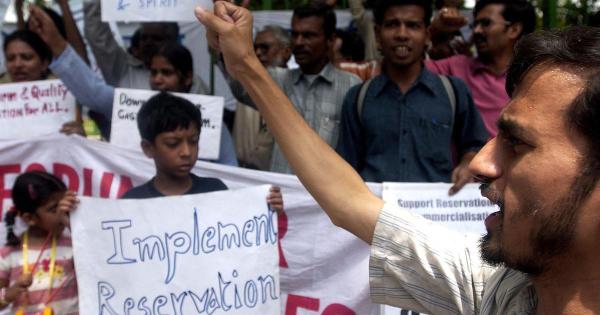
The author explores the state specificity doctrine with respect to reservations and argues that the reading of Article 341 of the Constitution to bar citizens from claiming benefit of reservation in states other than their states of origin as a misreading of the provision.
Pay Before You Plead: How India’s Court Fee Regime Undermines Equal Access to Justice [Part I]
This blog piece discusses the development of court fees in India and the implications it has on access to justice as a fundamental right of people, especially given the socioeconomic reality of the country.
The Politics of Belonging: Sovereignty, Exclusion and the Illusion of Accountability
This essay examines how states use citizenship as a tool of mass exclusion, as seen in Myanmar and Assam, for political and material gain. The humanitarian consequences of these scenarios are governed by the international order, which neutralizes the humanitarian crisis, but does not supervise the sovereign entity. The essay proposes a thought experiment "Sovereign Human Rights Risk Rating"(SHRR) to analyze the state of accountability. It poses the question as to whether a purely technical, monetary system could achieve such accountability. The essay posits that SHRR would fail. The act of exclusion in this instance is not merely a political choice; rather it is a fundamental act of political sovereignty. The absence of accountability is what this global arrangement is built upon.
Ethnic Cleansing: Within and Beyond Borders
Ethnic cleansing is a term that holds a multiplicity of meanings. It reflects humanity's recurring impulse to delete the distinctions. As children we fear that the crayons may colour beyond the lines, and as adults we fear that ethnicities may venture beyond borders. This essay explores the origins, psychological motives, and evolving legal interpretations of ethnic cleansing, analysing the impact of borders and territories on civilisations. It argues that borders are a deceptive justification for ethnic cleansing. Through comparative analysis, this essay evaluates how ethnic cleansing, continues to challenge notions of justice, identity, and belonging.
Can States conduct a census? A Critique of the Patna HCโs Order on the Stateโs Legislative Competence
This piece examines the Patna High Court decision in Youth for Equality v. State of Bihar. It argues against the Court's pronouncement of the Bihar state's legislature's competence to carry out a census and challenges the the manner in which the Court arrived at its decision.
Doctrine of Manifest Arbitrariness: Moving Towards A Wider โReasonablenessโ Review [Part II]
This blog analyses the characterizstion of arbitrariness as an enemy to equality, contending that while the Classification Doctrine and the older Non-Arbitrariness Doctrine both operate primarily as formal, process-based rationality requirements, focused on the means-end connection, the Manifest Arbitrariness Doctrine introduces a more normative, effects-based evaluation of both ends and means.
Doctrine of Manifest Arbitrariness: Moving Towards A Wider โReasonablenessโ Review [Part I]
This blog analyses the characterizstion of arbitrariness as an enemy to equality, contending that while the Classification Doctrine and the older Non-Arbitrariness Doctrine both operate primarily as formal, process-based rationality requirements, focused on the means-end connection, the Manifest Arbitrariness Doctrine introduces a more normative, effects-based evaluation of both ends and means.
Case Commentary on RIT Foundation v. Union Of India: About Intervention And Interference
The institution of marriage and the acts committed between a husband and a wife witnesses a dilution of the public-private divide. The article focuses on the offence of marital rape in the light of such divide by analysing the split verdict the Delhi High Court delivered in the case of RIT Foundation v. Union of India.
Tussle of Equality in National Awards
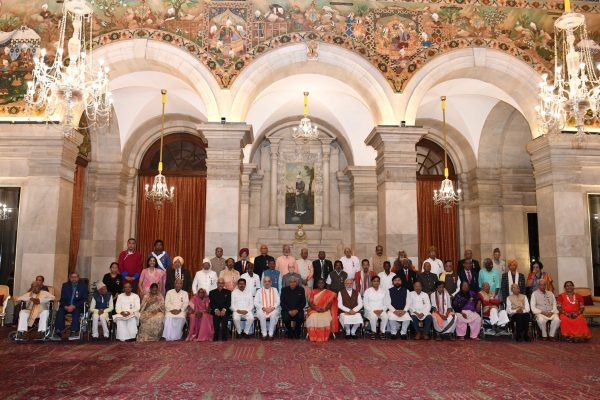
The Supreme Court in Balaji Raghavan upheld National Awardsโ validity, ruling they arenโt โtitlesโ under Article 18(1). However, applying the proportionality test reveals flaws โ opaque selection risks bias, undermining equality. Reforms for transparency and inclusivity are needed to align awards with the Constitutionโs egalitarian ethos.
Deciphering Sub-Categorisation in Scheduled Castes: Redefining Equity or Reinforcing Division?
This blog critically examines the sub-categorisation of Scheduled Castes in India, highlighting its role in redefining equity and ensuring fairer distribution of affirmative action benefits. While it promises to empower the most marginalised, it also raises concerns about reinforcing caste divisions and political motivations behind such policy shifts.
One Giant Leap for Intersectionality: Analysis of M. Sameeha Barvin v Joint Secretary
The concept of intersectionality continues to elude judges. While the concept has been applied in a few Supreme Court judgements such as Patan Jamal Valli and Navtej Johar, it is still not easy to understand โhowโ courts should apply intersectionality. In this article, the Author focuses on the M. Sameeha Barvin v Joint Secretary case from the Madras High Court that throws light on intersectionality. The Author argues that the case acts as an instructive manual on how courts can apply intersectionality in matters of discrimination.
Outlawing Marital Rape: A recurrently validated crime
Till date, marital rape is not considered a crime in India. Through the article, the Author aims to explain why the judiciary needs to urgently intervene and declare marital rape as unconstitutional. Taking the marital status of the perpetrator and the victim as a defence, the consent of a woman to sexual intercourse has been repeatedly de-prioritised by various High Courts in recent times. Further, the Author analyses some cases to show how consent cannot be easily detected, but a look into the totality of the circumstances helps determine the same. Lastly, the Author provides suggestions for dealing with marital rape as an offence.