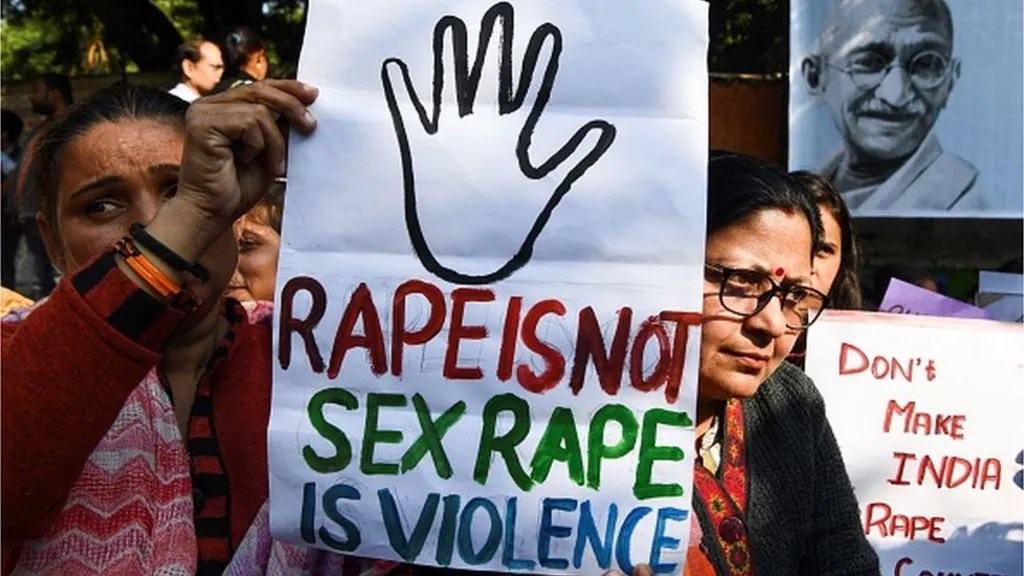
The public-private divide has been a focal point of critique in law. It has been argued to be incoherent in the evolving landscape of rights and obligations. One such sphere which witnesses a dilution of the divide is the institution of marriage and the acts committed between a husband and a wife. This article focuses on the offence of marital rape through the lens of such divide, and critically analyses the split verdict delivered by the Delhi High Court in RIT Foundation v. Union of India. The case emanated from four distinct writ petitions and brings to the fore the conceptual tension between the divide of the public and private domains.
Two of the petitions were filed as Public Interest Litigations, invoking the jurisdiction of the court to examine the constitutionality of the Marital Rape Exception (“MRE”). The third petition has been preferred by a wife who alleged that she has been subjected to sexual abuse, including rape, by her husband, but was barred from seeking redress due to the continued operation of the MRE. The fourth petition, was filed by a husband seeking the quashing of an FIR registered against him under the provisions of the erstwhile Indian Penal Code, 1860 (“IPC”) read with the Protection of Children from Sexual Offences Act, 2012 (“POCSO”), on the ground that his marital relationship was governed by the Shariat law, which he argued gave primacy to POCSO and thereby rendered the MRE inapplicable. Collectively, these petitions illustrate how MRE upholds a rigid boundary between the public and private sphere, which is further examined in the subsequent sections of this analysis.
The article is divided into four sections. Section I deals with the judgement delivered by C. Hari Shankar, J. which closely examines the presence of the public-private divide, and the political process of the court. Section II outlines the judgement by Rajiv Shakdher, J. which is in sharp contrast to Section I and focuses on the doctrine of Separation of Powers, and Judicial Restraint. Section III connects the issue in hand to the insufficiency of civil remedies, and Section IV concludes the article.
I. Judgement By C. Hari Shankar, J.
J. Shankar’s judgement is categorized into two heads, which evidences the presence of the strict divide in his opinion, and reflects an approach that stands in sharp contrast to the political process of the court:
A. The Public-Private Divide
The judgement subjected marital rape to the test under Art. 14, and held that an intelligible differentia due to the differing status of the perpetrator, i.e., a stranger and the husband, exists which further serves a rational nexus to the object of the statute, i.e., the preservation of the institution of marriage. The reasoning advanced by J. Shankar was that due to the peculiar demographics of the institution of marriage, it is not possible for a husband to commit rape on his wife.
The judgement reflects a stance of gendered bias wherein the possibility of marital rape is absolutely dismissed on the belief that marriage is a private sphere. The only cognizance of a marital rape being committed is confined to cases wherein the wife is below 18 years of age and is considered incapable of giving consent, thus amounting to statutory rape. The newly enacted Bharatiya Nyaya Sanhita, 2023 does not provide any relief to the aggravated position of law towards women. For instance, despite repealing the IPC which codified the MRE, the Legislature chose to retain the exception, justifying this decision by once again categorizing the institution of marriage as part of the private sphere.
The age of consent was deeply contested when associated with the legal age of marriage, which was regulated by the domain of personal laws. The Queen’s Proclamation in 1858, declaring that the British Government shall “abstain from all interference with the Religious Belief or Worship of any of Our Subjects” can be marked as the first instance of the public-private divide, wherein the State explicitly restrained from proceeding against the personal laws of Indians.
J. Shankar, like the State, sides with the defence that the inherent nature of a marriage, and its preservation, qualifies only for an external scrutiny by the State, and any other means would defeat the institution. The judgement considers the stigma and hardship associated with the husband if marital rape is recognized, without any consideration of a wife’s inherent rights. This is coupled with the notion of a healthy, happy, and private family, wherein there is no room for a public intervention for an offence of marital rape.
However, what is omitted is how a family is one of the main sites of male violence against women, thereby bolstering the argument that the rigidity of the public-private divide doesn’t hold water in the sphere of family and marriage. Instead, it makes room for the ‘privacy of domestic violence’. More so, the divide has indeed been diluted, and the State has been interacting with a marital relationship. However, the selective “action” and “inaction” on behalf of the State are reflected with the use of the terms “intervention” and “interference”, respectively.
Despite the State’s role in regulating matters such as child guardianship and property distribution within marriage, it maintains a legal exception whereby sexual intercourse with a wife over 18 is not classified as rape. The State constantly makes political choices, it is not neutral. The choices it is comfortable with is called an intervention, and others (like marital rape) are an interference.
Bennet Capers, in his article Reading Back, Reading Black,advocates for a reading practice of ‘reading black’ —a perspective rooted in the experiences of those aggrieved within power-imbalanced relationships owing to race. It suggests that judicial opinions are not neutral; rather, when read black, they reveal the reasoning employed in adjudicating power dynamics. Applying this lens to the present issue, and viewing the case from the standpoint of an aggrieved wife—had the judgement been ‘read black’, the reader would see that J. Shankar has given precedence to the privacy of a husband to have sexual intercourseover the rights of a woman.
B. Political Process of the Court
While holding the test satisfied under Art. 14, J. Shankar held that the doctrine of Separation of Powers (“SoP”) would stand obliterated if the court enquired further into the matter. He firmly concluded that since the Legislature is aware of the omission not to bring a husband under the ambit of marital rape, there is no reason for the Judiciary to venture into it further. His analysis was strictly confined to the doctrine of SoP and held it to be beyond the court’s jurisdiction to act further. This reflects what the judges ought not to do i.e., failing to exercise discretion and shunning of responsibility.
However, with regards to the reasoning advanced in (A), the judgement clearly reflects the personal bias and prejudice of the Judge towards women in marriage. The judgement mirrors the partial yet cognizant discretion exercised during the course of the decision i.e., while consciously exercising discretion to shield the husband, he ignored it when deferring the matter to the legislature, – thus, showcasing how judging is a political process and echoes the personal bias of a judge.
II. Judgement By Rajiv Shakdher, J.
J. Shakdher’s judgement can be broadly categorized into two heads to analyse how a court is involved in a political process and to contrast it with J. Shankar’s approach:
A. Separation of Powers
J. Shakdher rejected the argument that striking down the MRE would violate the doctrine of SoP. Instead, he held that omitting to do so would be a failure to recognize the concepts subsumed in the Constitution. He rightly referred to and held that the doctrine must not be reduced to its descriptive content. While delivering the judgement, J. Shakdher was cognizant of the powers conferred by Art. 226, and of his duty to deliver justice to the parties, as a judge of a Constitutional Court. In contrast to J. Shankar’s approach, J. Shakdher opined that the doctrine of SoP must play out in real terms in a constitutional democracy; thereby reflecting the ‘acceptance of responsibility’ in a judicial process- as the judges ought to do.
B. Judicial Restraint
While addressing the question of jurisdiction, J. Shakdher referred to Art. 226 of the Constitution which provides for the issuance of writs for ‘any other purpose,’ and held that it could not be concluded that the present issue can only be dealt with by the Legislature or the Executive. He took cognizance of the harm caused by the MRE over the years to address the issue. Further, he stated that the ‘shunning of responsibility’ by remanding the matter to the Legislature or Executive would abandon the duty conferred by the Constitution on Courts.
Thus, instead of choosing a confined approach, J. Shakdher exercised discretion to delve into the matter and strived to do justice, rather than waiting for the Legislature or Executive to act upon it. The exercise of such discretion reflects the political process of the court, and what the judges ought to do.
III. Connecting Civil Remedies
One of the major arguments advanced to defend marital rape is that a woman has sufficient remedies under civil law, which negates the rationale for its criminalization under the penal statute.
There is a fundamental fallacy in this argument: (i) it reflects the bias of the State while addressing sexual offences, as against other offences, which may be committed in a marital institution, but still culminates to a criminal offence; (ii) it works as an exception to reflect that a rape should only be prosecuted either, between complete strangers, or where the wife is below 18 years- which I submit is erroneous. The inconsistency between the remedy offered under civil and criminal law interrupts an aggrieved woman’s choice to choose a remedy suitable to her, reflecting the selective inaction i.e., an intervention claimed by the State.
IV. Conclusion
J. Shankar’s judgement mirrors the stance of the State, which is as ironic as it gets. Much like the State, it seeks to preserve the so-called privacy of a marriage in the nature of non-consensual sexual intercourse under the guise of furthering public interest. The repeated emphasis on the ‘privacy of the marriage’, ‘rights of the husband’, and the ‘public interest’ underscores the ironical stance of the State, and its selective intervention and interference. This stance ultimately reflects the privacy offered to a husband while he commits rape on his wife, while also holding that a husband cannot commit rape on his wife.
The argument that marriage is a private sphere is a belief of the State, while it constantly governs the interaction of such institution. The State chooses the extent to which it seeks to intervene, and the inaction on the residual areas is advocated as an ‘interference’ to the uniqueness of an institution of marriage. The State, has knowingly chosen to defend the husband in the case of a sexual offence committed in a marriage, while contending that it seeks to remain neutral. The neutrality of a State would have been to acknowledge that there is a possibility of marital rape being committed in a marriage, instead of incoherently arguing the existence of a public-private divide.
The Author is a final year student of School of Law, CHRIST (Deemed to be University), Bengaluru.
Image Credits: Getty Images
 Constitutional Law Society
Leave a comment