The Elusive Parliamentary Underpinnings of the Constitutional Relationship between the President and the Council of Ministers

The author, in this piece, attempts to illustrate the various complexities afflicting the precise determination of the powers of the President in relation to his Council of Ministers. The current text of the Indian Constitution fails to embody a model of parliamentary democracy in regards to the powers of the President and therefore, a comprehensive alteration becomes necessary.

Blasphemy: A Retrograde in Today’s World

The author asserts that the law of Blasphemy is essentially a bad law and has no place in today's world in light of legitimization of mob violence, infringement upon freedom of free speech and expression and the discourse about protecting religion. It is concluded that blasphemy laws need a serious relook in the modern era.

Constitutional Dialogue as a Solution to Excessive Judicial Intervention

The author in this article recognizes that quasi-legislative and quasi-executive functions of the Judiciary affect the separation of powers doctrine and therefore, proposes that Indian courts retrench their PIL jurisdiction by channeling public attention to the most outrageous failings of the executive and leaving the process of law-making to the legislature, drawing from the theories of constitutional dialogue.

Global Administrative Tribunal – A Dream too Good to be True?

The author, in this piece, makes a case for having a tribunal in the global arena that deals with administrative law disputes across the world. The article explores the challenges and feasibility of having such a tribunal in light of the differences between administrative laws in various countries, issues of accountability, regulations, enforcement, etc.

Freeing the Caged Parrot

The CBI, as the premier investigating agency of India, has time and again acted in a manner that has prompted various authorities to question its legitimacy, credibility, reliability and impartiality. This article explores instances in its functioning that imply towards such displeasure against it and also discusses the debate behind its constitutional status.

Essential Religious Practice Test: A Tale Of Interventionist Judiciary, Inversion Of Agency And Invisiblisation Of Freedom Of Religion

The author in this piece criticizes the present judicial approach to determine whether a practice is essential to the religion or not. Ramifications of Essential Religious Practice Test have been discussed in an elaborate manner. The author suggests that religious practices should be tested against constitutional morality instead of substantive aspects of religion.

On Preventive Detention and the Need for a Compensatory Framework in Constitutional Tort Cases.

The author in the article comments on a recent judgement of the Madras High Court (Sunitha v. Additional Chief Secretary) which has highlighted the callousness with which the state misuses preventive detention provisions in the law. Further, the article analyses the compensatory jurisprudence of the Court in constitutional tort cases and the need to develop a legislative framework for the same.

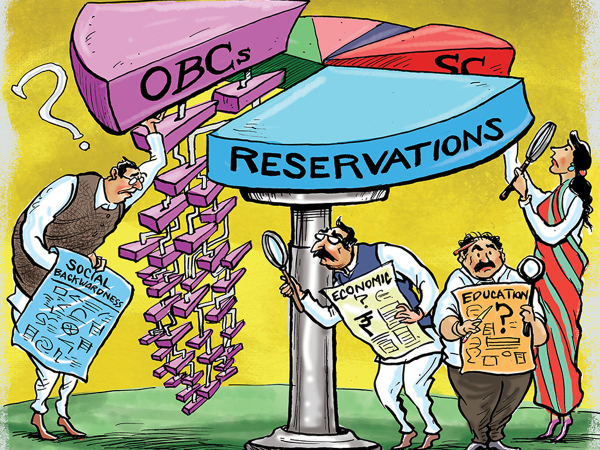
Reconsidering Reservations: Including Dalit Muslims and Dalit Christians Within the Ambit of Scheduled Castes

The author in this piece has analysed the Constitution (Scheduled Castes) Order 1950 as unconstitutional by exploring that it it excludes Dalit muslims and Christians under the ambit of the SC status. The author traces the historical overview of the order and put forths that given the transformative constitutionalism and constitutional morality the following have to included under the SC ambit.

Kosovo’s Ban on Islamic Headscarves in Schools

The author in this post has expressed his views on the ban on Islamic headscarves by Kosovo. The author also draws parallels with the governments of other Muslim- majority European countries who in order to conform to the western ideals of secularism, religion and neutrality impose such regulations.

WhatsApp Privacy Case: Does WhatsApp Perform A ‘Public Function’ Under Article 226 Of The Constitution?

Abhijeet Shrivastava & Anujay Shrivastava discuss the recent developments surrounding the change in WhatsApp’s privacy policy and explore the idea, whether the functions of the mega-giant qualify as ‘public function’ under the scheme of the Constitution. The authors further suggest a way forward to effectively address the concerns posed by the shift in the company’s privacy policy.

Up ↑