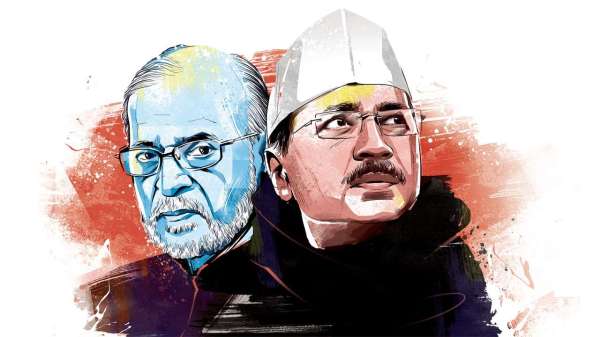
Anchal Bhatheja provides a brief background to the Government of NCT of Delhi Bill followed by examination of the bill from a constitutional perspective.
The Haryana State Employment of Local Candidates Act, 2021: A Critical Analysis
Aryan Birewar briefly tests the recent Haryana State Employment of Local Candidates Act in terms of its constitutionality and analyses the issues and challenges pertaining to this legislation.
Excessive Delegation and India’s New IT Rules 2021
Mr. Sourav Paul has spurred a debate around the need to maintain checks and balances upon the exercise of power by the executive and legislature. Through a critical analysis of landmark judgements and provisions from our constitution, the author brings to you an informative piece on the new IT rules to allow discussion through introspection of the powers exercised by our authorities over acts that concern the lives of the people of India.
A Comparative Analysis of Gandhian v. Nehruvian Philosophies in Directive Principles of State Policy
Anadi Tewari analyzes the Nehruvian and Gandhian philosophies directly impacting and leading to the development of Directive Principles of State Policy.
WhatsApp Privacy Case: Does WhatsApp Perform A ‘Public Function’ Under Article 226 Of The Constitution?
Abhijeet Shrivastava & Anujay Shrivastava discuss the recent developments surrounding the change in WhatsApp’s privacy policy and explore the idea, whether the functions of the mega-giant qualify as ‘public function’ under the scheme of the Constitution. The authors further suggest a way forward to effectively address the concerns posed by the shift in the company’s privacy policy.
Does Article 3 of India’s Constitution Reflect ‘Co-operative’ Federalism?
Abhijeet Shrivastava evaluates the scope of Article 3 of the Constitution of India, which relates, inter alia, to the power of the Parliament to re-organize State territories. He analyses the purview of Article 3 when viewed from the archetype model of ‘co-operative federalism’.
Internal and Judicial Review of Judicial Appointments
A gradual, but undeniable, progression has transitioned Indian judiciary from its positivist rigidity, to an era of fluid, pervasive involvement in governance and law-making. Through the course of this article, Sarthak Sethi establishes the same through an analysis of the facet of Judicial appointments.
Seniority as the Basis for Judicial Appointments – A Dubious and an Unjust Norm?
Praneeta Tiwari writes on the current system of judicial appointments and critically analyses it and poses an alternative of merit as the basis for judicial appointments.
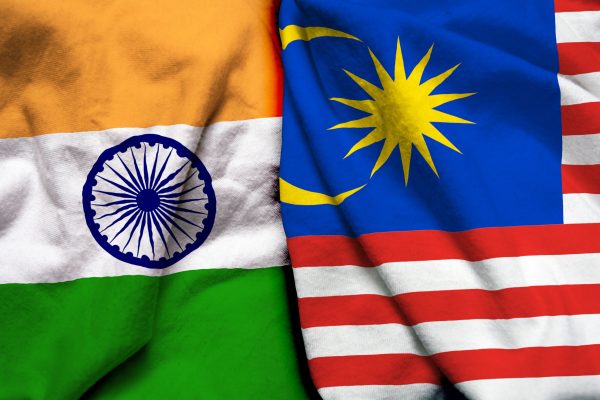
The Idea of State and Secularism in the Contemporary World: Through the Prism of Indian and Malaysian Constitution
Manudeep Kaur compares the constitutional framework accommodating multiculturalism in the respective constitutions of India and Malaysia.
Identification of Women via Husbands: A Mockery of Article 15
Debby Jain writes about the customary practice of a woman changing her surname upon marriage and how it consequently contravenes the basic principles enshrined under Article 15.
Enigma Of Virtual Courts In India: A Conundrum
Deveshi Madan and Shubhangi Agarwal critically analyse the legality, accessibility and feasibility of E-courts. They also discuss the challenges faced by virtual hearings.
Regulation v. Rights: The Tipping of the Scales qua the Epidemic Diseases Act, 1897
Preetham Jude Correa from Symbiosis Law School, Pune delineates the myriad of legal complexities that have arisen in India's approach in dealing with the pandemic.