In this Legislation Review, the Author has explained how Section 15 of the Hindu Succession Act violates Articles 14 and 15 of the Indian Constitution, rendering it unconstitutional. This has been done in light of a recent petition to the Supreme Court. While the Act claims that the order of inheritance is based on the proximity of the relationship, Section 15 does not adhere to this principle. This also goes against the principles of justice, equity, and good conscience. Thus a new scheme for Section 15 has been proposed.
Re-evaluating the U.S. Judgement on Affirmative Action: A need for reconsideration?
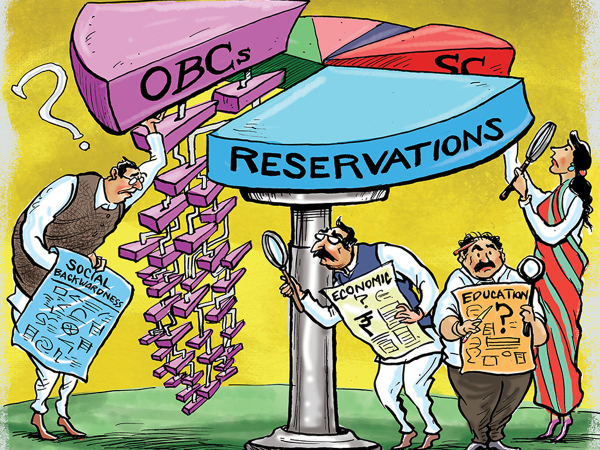
The recent US Supreme Court verdict asserting race-based reservation unconstitutional has ignited widespread criticism globally. The article delves into analyzing the implications of the judgment on American society and its education system. Drawing parallels with the trend of affirmative action in India, the authors suggest that the US Supreme Court should draw a comparison between the discrimination faced by untouchables and blacks in India and the US respectively. Hence, the authors advocate for reconsidering the recent judgment, arguing that the previous system of affirmative action aligns better with the principles of justice and equality.
Love Knows No Boundaries: A Comparative Analysis of Marriage Equality Litigation in India and Costa Rica
In this piece, the author makes an analytical comparison of marriage equality litigation in Costa Rica and India and argues why the court’s decision in India must follow a similar line of thought as that adopted by the Costa Rican Court while taking into account the approach adopted by the Indian Supreme Court in the Vishaka case.
On the Qualms of Secularism and Equality
In this article, the authors examine and critique the judgment of Hemant Gupta J. and his reasoning in the case of Aishat Shifa v. State of Karnataka. The piece also suggests that religious freedom and equality needs to be accompanied by a focus on reasonable accommodation.
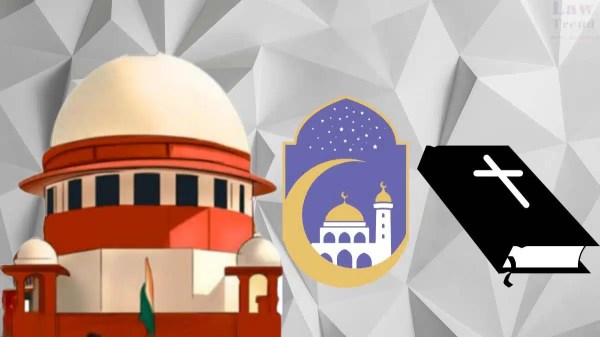
Reconsidering Reservations: Including Dalit Muslims and Dalit Christians Within the Ambit of Scheduled Castes
The author in this piece has analysed the Constitution (Scheduled Castes) Order 1950 as unconstitutional by exploring that it it excludes Dalit muslims and Christians under the ambit of the SC status. The author traces the historical overview of the order and put forths that given the transformative constitutionalism and constitutional morality the following have to included under the SC ambit.
EWS Judgement: Upholding the Cause of Social Justice
The authors in this piece have discussed the EWS judgement passed by the Supreme Court of India. They have analysed the EWS judgement to see if they ascertain to the Constitutional spirit and promote equality in the future scope of the society