Challenges and Prospects of Transgender Reservation: A Call for a Universal Approach

The article aims to address the issue of Transgender reservation. The Indian Constitution mandates affirmative measures for safeguarding the interests of vulnerable communities and preventing exploitation. Nevertheless, the author is of the opinion that legislative efforts regarding reservations for the transgender community have been fragmented and incoherent. The author suggests that it is now imperative to grant horizontal reservations for the transgender community. Furthermore, the author stresses the requirement for distinct reservations due to the unique challenges faced by the transgender community, advocating for horizontal reservation, that is flexible and self-adjusting. Finally, the article calls for acknowledging and upholding the legitimate claims of the transgender community to foster a fairer and more equitable society.

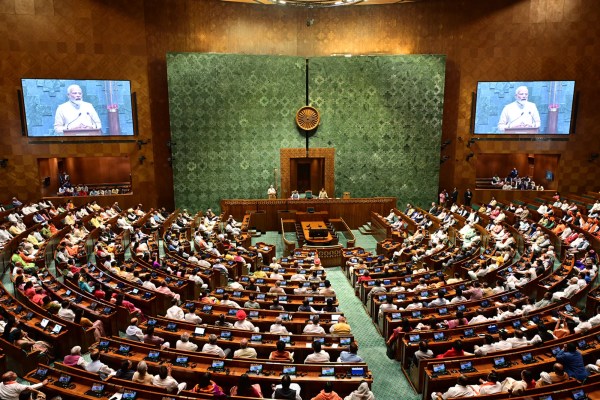
Democracy at Crossroads: Examining the Controversial Practice of Voice Votes in the Indian Parliament

The constitutionality of utilizing voice votes in parliamentary sessions amidst protests raises intricate questions at the intersection of procedural efficiency and democratic governance. Proponents assert that voice votes offer a swift mechanism for decision-making, crucial in the fluid dynamics of legislative proceedings, particularly during protests. They emphasize the necessity of adapting to challenging circumstances to maintain the functionality of the legislative body. To ascertain the constitutionality of voice votes amid protests, a nuanced examination of constitutional principles is imperative. In essence, resolving this issue requires a judicious weighing of competing constitutional values, striving to establish a parliamentary system that not only remains efficient but also upholds democratic ideals, even in the throes of dissent. It beckons a careful calibration to ensure that the mechanisms employed are both expedient and respectful of the democratic norms enshrined in the Constitution.

Navigating the ‘Neutrality’ Quagmire: Unpacking Subhash Desai v. Principal Secretary and the Nabam Rebia Conundrum  

The recent judgment of the Supreme Court in Subhash Desai v. Principal Secretary, Governor of Maharashtra & Ors has lately been in news due to its upcoming hearing before a 7-judge-bench. Subhash was set in the context of the political controversy regarding the intra-party dissent and subsequent alleged defections that took place within the Shiv Sena Legislative Party in Maharashtra. This article critically analyses the position propounded in Subhash regarding the reference of Nabam Rebia v. Deputy Speaker, Arunachal Pradesh Legislative Assembly to a larger bench. Ultimately, this article argues that there are several inconsistencies present in the application of the reasons specified for referring Nabam to a larger bench. Further, it contends that the interim measure proposed in Subhash is unconstitutional in nature and thus, should be set aside.

Unmasking Dark Patterns: Preserving Cognitive Liberty and Safeguarding Informational Privacy

The author, while recognizing the increased functioning of dark patterns to allude consumers, seeks to delve into the psychological intricacies associated with those and the data protection implications that arise from the employment of such designs. The article also provides an insight into how the Personal Data Protection Bill, 2023 can protect the data privacy rights of users whose choices are unethically manipulated.

Is Volksgeist Ready for recognition of Same-Sex Marriage in India?

In this article, the author brings forth several arguments to display that even though, same sex marriage upholds equal rights of every citizen, owing to India's diverse public opinion landscape, the people are not entirely ready to deal with the issues that can arise as a result of such recognition. Numerous existing laws will require major amendments, a Uniform Civil Code must be in place and customary religious beliefs shall face conflict. So the author opines the need for such recognition but only when volksgeist is ready to accept it.

Blasphemy: A Retrograde in Today’s World

The author asserts that the law of Blasphemy is essentially a bad law and has no place in today's world in light of legitimization of mob violence, infringement upon freedom of free speech and expression and the discourse about protecting religion. It is concluded that blasphemy laws need a serious relook in the modern era.

Analyzing the Pattern of Arbitrary Visa Revocation of Non-Citizens by the Indian Union Government

The authors in this piece argue that there is an emergence of trend by the Union Government of denying renewal of visas or out-rightly revoking visas of non-citizens without providing an opportunity of being heard, providing any reasoned order, or listing out substantial reasons for the same. The authors have also analysed the legal position under the Passports Act and provisions of the Indian Constitution guaranteeing fundamental rights in light of established judicial precedents to argue that the pattern is arbitrary and needs to be rectified.

Res Extra Commercium: A Wrong Import in Article 19(1)(g) Jurisprudence

The author in this essay has argued that the SC judgement in State of Bombay v. R.M.D. Chamarbaugwala incorrectly interpreted and applied the doctrine of Res Extra Commercium to constrict the scope of Article 19(1)(g). The essay examines how application of the instant doctrine has intertwined with the U.S. Law doctrine of police powers to have negative implications for Indian Jurisprudence.

Up ↑