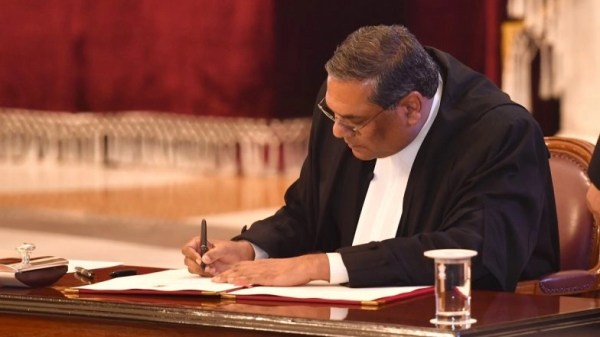
The Judiciary is frequently criticised for keeping judicial appointments an opaque affair. However, the process is facing a silent crisis of executive delay. Recently, the Supreme Court released a list of candidates who were recommended by the Supreme Court Collegium, but were not appointed as High Court Judges by the Ministry of Law and Justice since 2022. This systemic issue was further underscored by research conducted by the Supreme Court Observer, which found that the Central Government did not accept 24% of all recommendations by Justice Sanjiv Khannaโs Collegium. This piece aims to argue that this unnecessary practice of the Central Government not only exacerbates the predicament of vacancies in the High Courts, but also constitutes a grave violation of the principle of Separation of Powers.
70 Years of Ram Jawaya Kapur:ย Analysing the Diminishing Influence of Indian Legislature in Contrast with โExecutive Aggrandizementโ in Constitutional Governance
This article critically examines India's diluted separation of powers, stemming from the *Ram Jawaya Kapur* (1955) ruling that favored executive efficiency over strict separation. It argues that this model, particularly with majority and coalition governments, leads to legislative undermining through mechanisms like bypassing parliamentary scrutiny (guillotine, reduced committee referrals). The article concludes by advocating for strengthening legislative oversight mechanisms to counter this "silent shift" towards executive aggrandizement.
Pardon the interruption: Silencing of judicial review by ยง472(7) of BNSS, 2023 [Part II]
This two-part essay examines Section 472(7) of the Bhartiya Nagarik Suraksha Sanhita, 2023, which seems to bar judicial review of constitutional pardon powers of the executive. It highlights how the provision undermines constitutional principles, including separation of powers, rule of law, and fundamental rights. The first part discusses the current, pre-BNSS, judicial and constitutional framework, emphasizing the need for a limited judicial review to prevent executive arbitrariness. The second part critiques the new provision and proposes a harmonized interpretation to preserve judicial oversight and safeguard democratic principles against executive overreach.
Pardon The Interruption: Silencing Of Judicial Review By ยง472(7) Of BNSS, 2023 [Part I]
This two-part essay examines Section 472(7) of the Bhartiya Nagarik Suraksha Sanhita, 2023, which seems to bar judicial review of constitutional pardon powers of the executive. It highlights how the provision undermines constitutional principles, including separation of powers, rule of law, and fundamental rights. The first part discusses the current, pre-BNSS, judicial and constitutional framework, emphasizing the need for a limited judicial review to prevent executive arbitrariness. The second part critiques the new provision and proposes a harmonized interpretation to preserve judicial oversight and safeguard democratic principles against executive overreach.