Conserving Dialects: Bridging the Gap Amidst Law and Fact

Every person's life is shaped and defined by their use of language. It is a haven for culture and educational systems in addition to being an effective communication tool. Life's many activities and components are derived from one's mother tongue. By providing people and communities with the requisite skills, that have been accruing and developing over centuries, language helps them in becoming accustomed to their surroundings. The last few decades have borne witness to the disappearance and even extinction of some of these minority languages as a consequence of a lack of adequately formulated provisions and discrimination. The Article aims to decipher the philosophy of Commissions meant to protect linguistic minority rights and the repercussions it has on the education sector of vulnerable sections, especially the tribal people. It also contains certain recommendations in order to combat the problem of the endangerment of languages in hopes of safeguarding India's rich cultural heritage.

Unraveling the Chief Election Commissioner and the Other Election Commissioners Act, 2023: Implication and Challenges

The recent enactment of the Chief Election Commissioner and other Election Commissioners (Appointment, Conditions of Service, and Term of Office) Act, 2023 has gathered significant attention and controversy, particularly due to its apparent contradiction with a recent Supreme Court judgment. This article provides a comprehensive analysis of the Act, highlighting its significant provisions and exploring its legal and constitutional implications. By examining the Act in detail, the article explains the potential repercussions of the legislation and its alignment, or lack thereof, with constitutional principles. This analysis is essential to understand the broader impact of the Act on the electoral framework and democratic processes in India.

Javed Ahmad v. State of Maharashtra: The Intriguing Nexus Between Art. 21 and the Right to Dissent

The right to freedom of speech and expression under Art.19(1)(a) of the Constitution, one of the three stars in the ‘Golden Triangle’ of the Constitution, occupies a climacteric position in the Indian constitutional discourse. However, this right has always been linked to Art.19 of the Constitution, and seldom has this been seen in onjunction with one’s right to life and personal liberty under Art.21. In a recent decision of the Supreme Court, such an intriguing nexus between Art.21 and the right to dissent is brought up. Based on this decision, the article seeks to analyse the possibility and the pertinence of such a nexus.

Turning Gavels into Papal Ferula: Unravelling the essential religious practices doctrine

The article examines the Essential Religious Practices Doctrine in India, tracing its evolution, implications, and critiques. It explores how the doctrine, first derived with the intention to protect religious practices with secular and economic connotations, has evolved into an anathema for religious freedom, empowering the Court to decide people’s faith for them. Analysing its impact, the article suggests alternative approaches, emphasizing individual rights and deference to religious groups. It argues for reconsideration of the ERP doctrine due to its potential to undermine religious freedoms and the judiciary's authority, emphasizing the need for the same.

Democracy at Crossroads: Examining the Controversial Practice of Voice Votes in the Indian Parliament

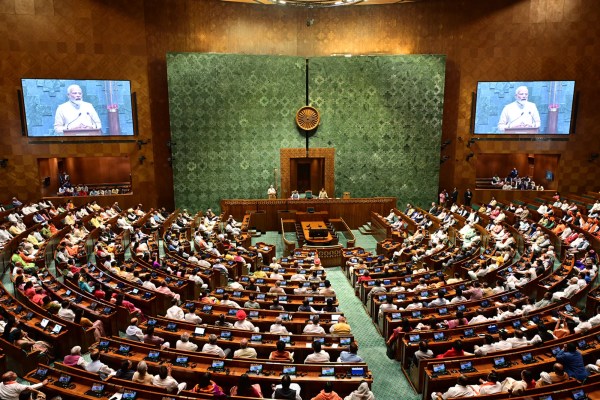
The constitutionality of utilizing voice votes in parliamentary sessions amidst protests raises intricate questions at the intersection of procedural efficiency and democratic governance. Proponents assert that voice votes offer a swift mechanism for decision-making, crucial in the fluid dynamics of legislative proceedings, particularly during protests. They emphasize the necessity of adapting to challenging circumstances to maintain the functionality of the legislative body. To ascertain the constitutionality of voice votes amid protests, a nuanced examination of constitutional principles is imperative. In essence, resolving this issue requires a judicious weighing of competing constitutional values, striving to establish a parliamentary system that not only remains efficient but also upholds democratic ideals, even in the throes of dissent. It beckons a careful calibration to ensure that the mechanisms employed are both expedient and respectful of the democratic norms enshrined in the Constitution.

Navigating the ‘Neutrality’ Quagmire: Unpacking Subhash Desai v. Principal Secretary and the Nabam Rebia Conundrum  

The recent judgment of the Supreme Court in Subhash Desai v. Principal Secretary, Governor of Maharashtra & Ors has lately been in news due to its upcoming hearing before a 7-judge-bench. Subhash was set in the context of the political controversy regarding the intra-party dissent and subsequent alleged defections that took place within the Shiv Sena Legislative Party in Maharashtra. This article critically analyses the position propounded in Subhash regarding the reference of Nabam Rebia v. Deputy Speaker, Arunachal Pradesh Legislative Assembly to a larger bench. Ultimately, this article argues that there are several inconsistencies present in the application of the reasons specified for referring Nabam to a larger bench. Further, it contends that the interim measure proposed in Subhash is unconstitutional in nature and thus, should be set aside.

Unmasking Dark Patterns: Preserving Cognitive Liberty and Safeguarding Informational Privacy

The author, while recognizing the increased functioning of dark patterns to allude consumers, seeks to delve into the psychological intricacies associated with those and the data protection implications that arise from the employment of such designs. The article also provides an insight into how the Personal Data Protection Bill, 2023 can protect the data privacy rights of users whose choices are unethically manipulated.

Discussing various facets of Laws on Freedom of Speech and Expression: Whether anti-hate Legislation would be an effective way to combat Hate Speech or is it the Counter Speech which acts as a Catalyst?

The authors, in this piece, argue that counter speech is a more viable way to curb hate speech rather than resorting to outright censorship. A perspective on hate speech in a global level is provided that gives a view of how other countries deal with this issue, while arguing that anti-hate legislation that is enacted by most countries may not be the best solution to hate speech. Contours of the counter-speech mechanism are provided justifying it as the best solution.

Blasphemy: A Retrograde in Today’s World

The author asserts that the law of Blasphemy is essentially a bad law and has no place in today's world in light of legitimization of mob violence, infringement upon freedom of free speech and expression and the discourse about protecting religion. It is concluded that blasphemy laws need a serious relook in the modern era.

Analyzing the Pattern of Arbitrary Visa Revocation of Non-Citizens by the Indian Union Government

The authors in this piece argue that there is an emergence of trend by the Union Government of denying renewal of visas or out-rightly revoking visas of non-citizens without providing an opportunity of being heard, providing any reasoned order, or listing out substantial reasons for the same. The authors have also analysed the legal position under the Passports Act and provisions of the Indian Constitution guaranteeing fundamental rights in light of established judicial precedents to argue that the pattern is arbitrary and needs to be rectified.

Constitutionality of Tracking Web Searches Vis-A-Vis Right to Privacy: An Analysis

The piece anatomizes and critiques the recent steps implemented by the Uttar Pradesh Police to curb the use or watching of pornography by implementing mechanisms which include tracking web-searches as well as storing private data. The author has analyzed these steps in light of Constitutional provisions and former judicial precedents to highlight that not only are these measures unconstitutional, but also go beyond the scope of permissible State action in stymieing individual autonomy of citizens.

Up ↑