Battling Digital Disinformation: The Imperative of Fact-Checking in a Participatory Democracy (Part I)

Disinformation and misinformation has been earmarked as a ‘global risk’, causing ‘information pollution’ that adversely impacts decision making and socio-economic and political stability. In light of this, Part – I of this Article aims to expplain the imperative and constitutionality of the Fact-Check Unit (FCU) under Rule 3(1)(b)(v) of the IT Rules, 2021, through a comparative study. 

Bizarre Bail: The Rise of Unconventional Conditions in Indian Jurisprudence

This article attempts to explore the growing trend of unconventional bail conditions in Indian courts, focusing on two key cases: Frank Vitus v. Narcotics Control Bureau and Faizal v. State of Madhya Pradesh. It analyzes the latter on the basis of principles of fairness, proportionality, and justice established in the former, urging the judiciary to re-evaluate its approach.

Deliberation as a Constitutional Requirement: Examining the Judicial Review of Legislative Process in India (Part II)

This article, in two parts examines the constitutional implications of non-deliberative legislative processes in India, focusing on recent controversial laws like the electoral bonds scheme. It argues that deliberation is integral to parliamentary democracy and proposes that courts should be empowered to review legislative processes on grounds of non-deliberativeness to uphold constitutional values and improve democratic outcomes.

One Giant Leap for Intersectionality: Analysis of M. Sameeha Barvin v Joint Secretary

The concept of intersectionality continues to elude judges. While the concept has been applied in a few Supreme Court judgements such as Patan Jamal Valli and Navtej Johar, it is still not easy to understand ‘how’ courts should apply intersectionality. In this article, the Author focuses on the M. Sameeha Barvin v Joint Secretary case from the Madras High Court that throws light on intersectionality. The Author argues that the case acts as an instructive manual on how courts can apply intersectionality in matters of discrimination.

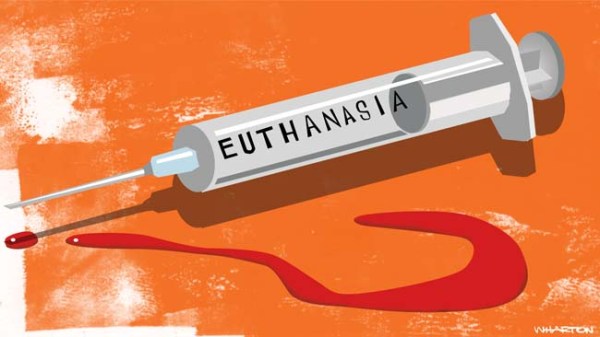
Consent to Die: A Right or a Risk?

This article analyses the validity of consent given in euthanasia and Right to Die by discussing it through a philosophical and logical discourse. It also puts a spotlight on the lack of legislation and regulation on this regard, and analyses if Right to Die is a viable right.

Outlawing Marital Rape: A recurrently validated crime

Till date, marital rape is not considered a crime in India. Through the article, the Author aims to explain why the judiciary needs to urgently intervene and declare marital rape as unconstitutional. Taking the marital status of the perpetrator and the victim as a defence, the consent of a woman to sexual intercourse has been repeatedly de-prioritised by various High Courts in recent times. Further, the Author analyses some cases to show how consent cannot be easily detected, but a look into the totality of the circumstances helps determine the same. Lastly, the Author provides suggestions for dealing with marital rape as an offence.

Conserving Dialects: Bridging the Gap Amidst Law and Fact

Every person's life is shaped and defined by their use of language. It is a haven for culture and educational systems in addition to being an effective communication tool. Life's many activities and components are derived from one's mother tongue. By providing people and communities with the requisite skills, that have been accruing and developing over centuries, language helps them in becoming accustomed to their surroundings. The last few decades have borne witness to the disappearance and even extinction of some of these minority languages as a consequence of a lack of adequately formulated provisions and discrimination. The Article aims to decipher the philosophy of Commissions meant to protect linguistic minority rights and the repercussions it has on the education sector of vulnerable sections, especially the tribal people. It also contains certain recommendations in order to combat the problem of the endangerment of languages in hopes of safeguarding India's rich cultural heritage.

The Delhi Water Crisis Case: Activism or Overreach?

The Supreme Court gave a landmark decision in the Delhi water crisis case. The Author attempts to decode certain aspects of the judgement, focusing on its directive to release Yamuna river water amid acute scarcity in the capital. It examines the legal intricacies surrounding the Court's jurisdiction, the implications for water management, and the dynamics of inter-state water disputes. Central to the discussion is the debate over whether the Court's intervention signifies judicial activism or exceeds its constitutional mandate. By analyzing these complexities, the Article underscores the judiciary's role in ensuring equitable outcomes and protecting fundamental rights in critical public interest matters.

Unraveling the Chief Election Commissioner and the Other Election Commissioners Act, 2023: Implication and Challenges

The recent enactment of the Chief Election Commissioner and other Election Commissioners (Appointment, Conditions of Service, and Term of Office) Act, 2023 has gathered significant attention and controversy, particularly due to its apparent contradiction with a recent Supreme Court judgment. This article provides a comprehensive analysis of the Act, highlighting its significant provisions and exploring its legal and constitutional implications. By examining the Act in detail, the article explains the potential repercussions of the legislation and its alignment, or lack thereof, with constitutional principles. This analysis is essential to understand the broader impact of the Act on the electoral framework and democratic processes in India.

Javed Ahmad v. State of Maharashtra: The Intriguing Nexus Between Art. 21 and the Right to Dissent

The right to freedom of speech and expression under Art.19(1)(a) of the Constitution, one of the three stars in the ‘Golden Triangle’ of the Constitution, occupies a climacteric position in the Indian constitutional discourse. However, this right has always been linked to Art.19 of the Constitution, and seldom has this been seen in onjunction with one’s right to life and personal liberty under Art.21. In a recent decision of the Supreme Court, such an intriguing nexus between Art.21 and the right to dissent is brought up. Based on this decision, the article seeks to analyse the possibility and the pertinence of such a nexus.

Turning Gavels into Papal Ferula: Unravelling the essential religious practices doctrine

The article examines the Essential Religious Practices Doctrine in India, tracing its evolution, implications, and critiques. It explores how the doctrine, first derived with the intention to protect religious practices with secular and economic connotations, has evolved into an anathema for religious freedom, empowering the Court to decide people’s faith for them. Analysing its impact, the article suggests alternative approaches, emphasizing individual rights and deference to religious groups. It argues for reconsideration of the ERP doctrine due to its potential to undermine religious freedoms and the judiciary's authority, emphasizing the need for the same.

Challenges and Prospects of Transgender Reservation: A Call for a Universal Approach

The article aims to address the issue of Transgender reservation. The Indian Constitution mandates affirmative measures for safeguarding the interests of vulnerable communities and preventing exploitation. Nevertheless, the author is of the opinion that legislative efforts regarding reservations for the transgender community have been fragmented and incoherent. The author suggests that it is now imperative to grant horizontal reservations for the transgender community. Furthermore, the author stresses the requirement for distinct reservations due to the unique challenges faced by the transgender community, advocating for horizontal reservation, that is flexible and self-adjusting. Finally, the article calls for acknowledging and upholding the legitimate claims of the transgender community to foster a fairer and more equitable society.

Up ↑