Unraveling the Chief Election Commissioner and the Other Election Commissioners Act, 2023: Implication and Challenges

The recent enactment of the Chief Election Commissioner and other Election Commissioners (Appointment, Conditions of Service, and Term of Office) Act, 2023 has gathered significant attention and controversy, particularly due to its apparent contradiction with a recent Supreme Court judgment. This article provides a comprehensive analysis of the Act, highlighting its significant provisions and exploring its legal and constitutional implications. By examining the Act in detail, the article explains the potential repercussions of the legislation and its alignment, or lack thereof, with constitutional principles. This analysis is essential to understand the broader impact of the Act on the electoral framework and democratic processes in India.

Javed Ahmad v. State of Maharashtra: The Intriguing Nexus Between Art. 21 and the Right to Dissent

The right to freedom of speech and expression under Art.19(1)(a) of the Constitution, one of the three stars in the ‘Golden Triangle’ of the Constitution, occupies a climacteric position in the Indian constitutional discourse. However, this right has always been linked to Art.19 of the Constitution, and seldom has this been seen in onjunction with one’s right to life and personal liberty under Art.21. In a recent decision of the Supreme Court, such an intriguing nexus between Art.21 and the right to dissent is brought up. Based on this decision, the article seeks to analyse the possibility and the pertinence of such a nexus.

Turning Gavels into Papal Ferula: Unravelling the essential religious practices doctrine

The article examines the Essential Religious Practices Doctrine in India, tracing its evolution, implications, and critiques. It explores how the doctrine, first derived with the intention to protect religious practices with secular and economic connotations, has evolved into an anathema for religious freedom, empowering the Court to decide people’s faith for them. Analysing its impact, the article suggests alternative approaches, emphasizing individual rights and deference to religious groups. It argues for reconsideration of the ERP doctrine due to its potential to undermine religious freedoms and the judiciary's authority, emphasizing the need for the same.

Challenges and Prospects of Transgender Reservation: A Call for a Universal Approach

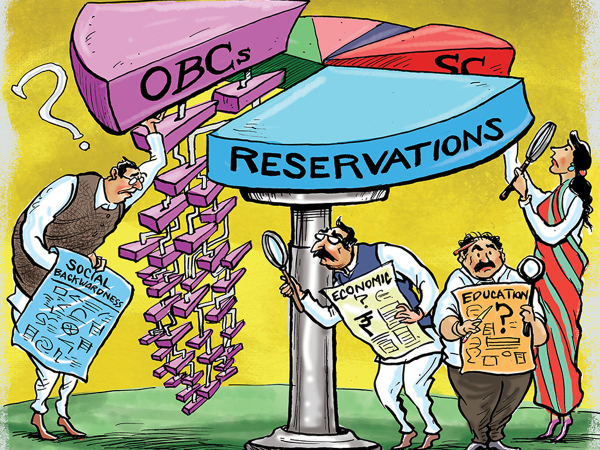
The article aims to address the issue of Transgender reservation. The Indian Constitution mandates affirmative measures for safeguarding the interests of vulnerable communities and preventing exploitation. Nevertheless, the author is of the opinion that legislative efforts regarding reservations for the transgender community have been fragmented and incoherent. The author suggests that it is now imperative to grant horizontal reservations for the transgender community. Furthermore, the author stresses the requirement for distinct reservations due to the unique challenges faced by the transgender community, advocating for horizontal reservation, that is flexible and self-adjusting. Finally, the article calls for acknowledging and upholding the legitimate claims of the transgender community to foster a fairer and more equitable society.

Unconstitutionality of Section 15 of the Hindu Succession Act, 1956- Discrimination in the Order of Inheritance

In this Legislation Review, the Author has explained how Section 15 of the Hindu Succession Act violates Articles 14 and 15 of the Indian Constitution, rendering it unconstitutional. This has been done in light of a recent petition to the Supreme Court. While the Act claims that the order of inheritance is based on the proximity of the relationship, Section 15 does not adhere to this principle. This also goes against the principles of justice, equity, and good conscience. Thus a new scheme for Section 15 has been proposed.

Critiquing The Existing Literature By Analyzing The ‘Surname’ Debate

The author in this article highlights the Hon'ble Apex Court's interpretation of the Hindu Minority and Guardianship Act, 1956 and the Hindu Adoption and Maintenance Act, 1956, with regard to the biological mother’s right to decide the child's surname. The article also addresses the question of whose surname will prevail in light of a judgment of Italian Constitutional Court and critiques existing pieces on the Akella verdict.

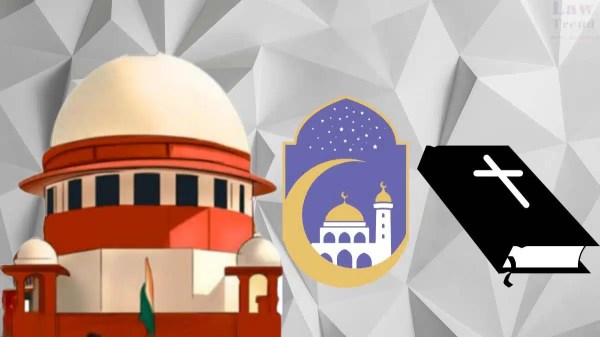
Reconsidering Reservations: Including Dalit Muslims and Dalit Christians Within the Ambit of Scheduled Castes

The author in this piece has analysed the Constitution (Scheduled Castes) Order 1950 as unconstitutional by exploring that it it excludes Dalit muslims and Christians under the ambit of the SC status. The author traces the historical overview of the order and put forths that given the transformative constitutionalism and constitutional morality the following have to included under the SC ambit.

Up ↑