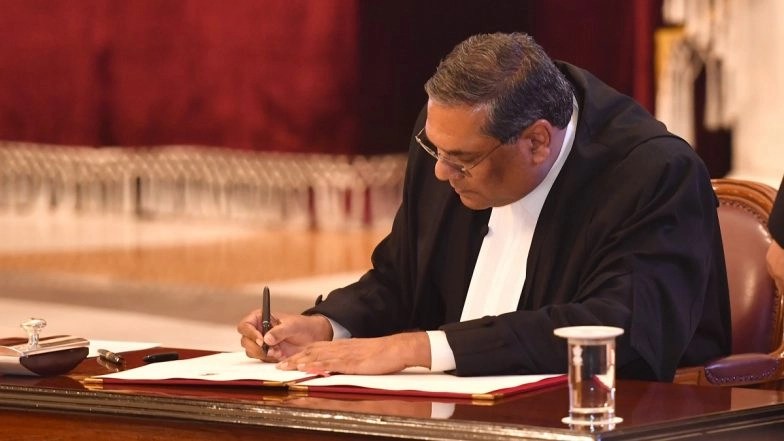
The Judiciary is frequently criticised for keeping judicial appointments an opaque affair. However, the process is facing a silent crisis of executive delay. Recently, the Supreme Court released a list of candidates who were recommended by the Supreme Court Collegium but were not appointed as High Court Judges by the Ministry of Law and Justice since 2022. This systemic issue was further underscored by research conducted by the Supreme Court Observer, which found that the Central Government did not accept 24% of all recommendations by Justice Sanjiv Khanna’s Collegium. This piece aims to argue that this unnecessary practice of the Central Government not only exacerbates the predicament of vacancies in the High Courts, but also constitutes a grave violation of the principle of Separation of Powers.
The Constitutional Mandate
The Supreme Court, while striking down the 99th Constitutional Amendment, held that the primacy in appointment of judges within the Judiciary is part of the basic structure of the Constitution. The Supreme Court has echoed this sentiment in multiple cases by further clarifying that Separation of Powers forms a part of the Basic Structure of the Constitution. In India, primacy of the Judiciary in the appointment of Judges is one of the most unique methods in which Separation of Powers has been guaranteed. The role of the executive in this regard is extremely proscribed.
Recently, while taking suo moto to consider the issues of granting bail, the Supreme Court observed, “The Central Government needs to act and ensure that the recommendations made by the Supreme Court collegium for judge appointments are cleared expeditiously.” This substantiates two points: firstly, the Central Government is not sending these names back to the Supreme Court for reconsideration; secondly, it is keeping these names with itself for an indeterminate period of time. What this eventually results in is not a reasonable advisory power that the government is restricted to, but an overreaching tactic, essentially “pocket vetoing” the recommendations made by the Collegium.
Pocket veto is simply defined as “inordinate delay”. This phrase is generally used to describe gubernatorial and presidential powers; however, in this specific circumstance, it proves remarkably apt. The Central Government’s role is limited primarily to a thorough background check of the candidates recommended by the collegium. When in the public interest, they have to raise some contentions against a candidate, they can at most send it back to the Supreme Court for reconsideration.
In State of U.P. v. Jeet S. Bisht, the Court held that the doctrine of separation of powers limits the “active jurisdiction” of each branch of Government. However, even when the active jurisdiction of an organ of the State is not challenged, the doctrine allows for methods to be used to prod and communicate to an institution either its shortfalls or excesses in discharging its duty. The Court recognised that fundamentally, the purpose of the doctrine is to act as a scheme of checks and balances over the activities of other organs. The modern concept of separation of powers subscribes to the understanding that it should not only demarcate the area of functioning of various organs of the State, but should also, to some extent, define the minimum content in that delineated area of functioning.
By holding off these names without a justification, they are, at their very core, interfering with the independence of the Judiciary. This significantly breaches the boundaries in which the Constitution confines the organs of the State. Therefore, the principle of Separation of Powers is violated.
Functional Issues for the Judiciary
The practice of “pocket vetoing” creates a few functional issues for the Judicial System in India:
- Vacancies: According to research conducted by the India Justice Report, it was found that the Allahabad High Court had a staggering 50.6% vacancy rate. Moreover, states like Haryana, Odisha, Punjab, and West Bengal had a vacancy rate of over 40%. In the case of PLR Projects (P) Ltd. v. Mahanadi Coalfields Ltd. it was observed that “The High Courts are in a crisis situation. There are almost 40% vacancies in the High Courts, with many of the larger High Courts working under 50% of their sanctioned strength.” “Pocket Vetoing” further exacerbates these already concerning numbers of judicial vacancies, further delaying the process of justice delivery, and increasing the number of backlogs in these Courts. The number of benches is severely limited because of which cases that focus on pivotal subject matters like Constitutional questions do not receive the essential attention that is fundamentally required for their proper adjudication.
- Pendency: It was further reported that 51% of cases in all 25 High Courts have been pending for more than 5 years. The High Courts of Allahabad and Punjab & Haryana perform the worst on this criterion, with over 60% of cases languishing for more than five years, while in contrast, Tripura, Sikkim, and Meghalaya perform better. This is indeed an exceptionally grave concern. The High Courts are already under immense pressure to decide the burgeoning number of pending cases. A practice like this, therefore, increases the chances of judges not meticulously analysing the complex socio-legal circumstances of a case. Rather, they may expedite the process for an early clearance but sacrifice the essence of a well-thought-out judgment.
- Opaqueness in the Process: The Memorandum of Procedure (MoP),which guides the appointment of a High Court Judge stipulates that the Ministry of Law and Justice, after its due diligence, can send back the proposals to the Supreme Court for reconsideration. However, it was held in the All-India Judges Association case that if the Supreme Court reiterates its recommendations, the Centre is mandated to accept and notify them. However, the list released by the Supreme Court reveals a different reality. The Supreme Court Collegium recommendations for High Court judges are still pending with the Central Government. The central contention is not that the Central Government is taking its time to vet a candidate’s profile, but an opaque system of this process leaves them in a limbo. It is to be further noted that these names are not sent back to the Supreme Court for reconsideration but are kept in abeyance for an undetermined period of time. This can be further substantiated by a catena of Supreme Court directives to the Central Government, where it is urged that these recommendations be cleared.
Way Forward
In order to prevent this amorphous delay by the Government in approving and notifying Judicial Appointments, the Court ought to prescribe a specific time-period for the government to conduct its due diligence and notify the appointments. In case the appointment(s) need to be sent back for reconsideration to the Supreme Court in the interest of the public, the Central Government should be mandated to do that in an expedient manner.
The proposition of settling time-periods for the processes of the Central Government has been a contentious issue for the Supreme Court, with some terming it judicial overreach. However, there is a settled precedent for the same. In the case of PLR Projects (P) Ltd. v. Mahanadi Coalfields Ltd, the Supreme Court recommended specific timelines for the IB and the Central Government to submit their reports and inputs for a candidate’s recommendation. Therefore, the Supreme Court has already given directions that ought to expedite the notification process. The Court did not specify any time-period for the Central Government to notify appointments when they are recommended for the first time, however, in the interest of justice, it would be fruitful to do so. Further, if the Government is not notifying the appointment of a candidate, then a list of reasons for not notifying the name should be sent to the government. It would significantly achieve two goals, firstly, the communication between the Government and the Supreme Court would be transparent, allowing more productive deliberations and perspective in appointing a judge; and secondly, it would result in a more principled and timely process of appointment, thereby fostering the selection of judges of superior quality and integrity. In conclusion, the practice of “pocket vetoing” by the Central Government is overloading the already-strained judicial system. It directly threatens the core of the Constitution, undermining Independence of Judiciary and Separation of Powers. This not only affects the meticulousness of judgments by the High Courts but also creates unnecessary delay in the delivery of justice. Hence, a prescribed time-limit for notification would be a pivotal step towards an expedient justice system.
The author is a third year student of The Rajiv Gandhi National University of Law, Patiala.
Image Credits: Rashtrapati Bhavan
 Constitutional Law Society
Leave a comment