Jigyasa and Rohit Sharma
Introduction
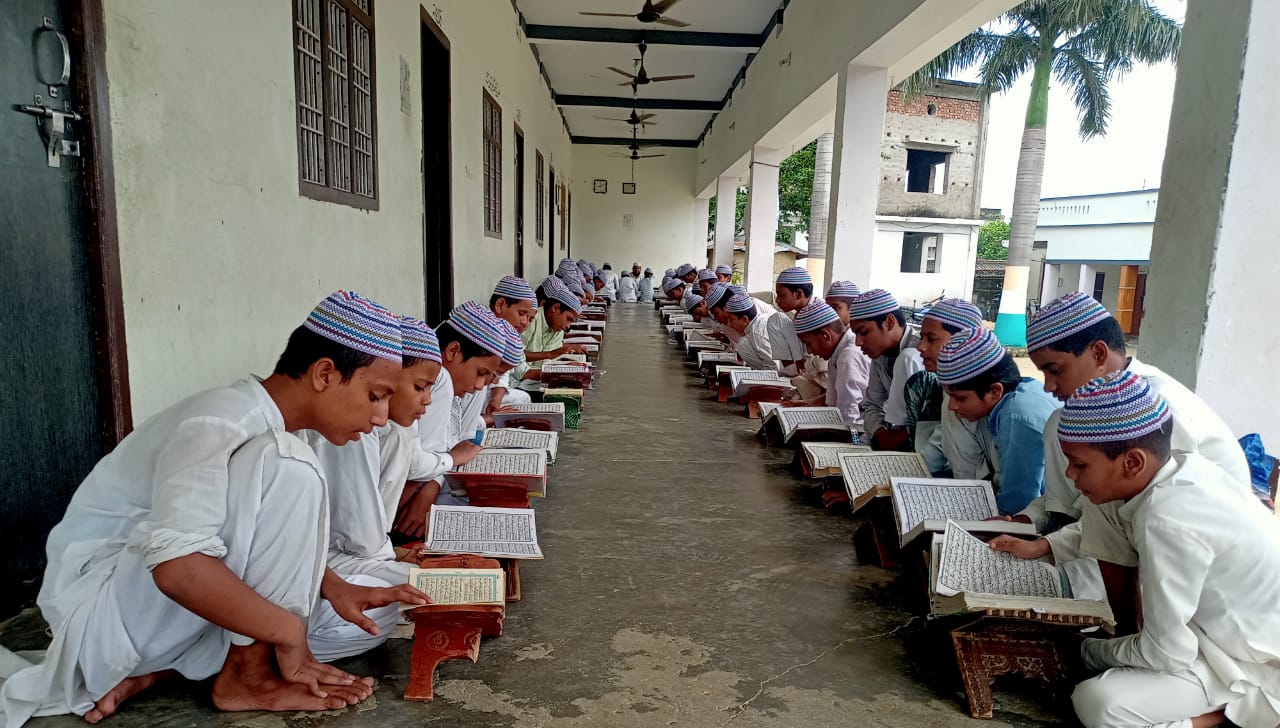
The Chief Minister of Uttarakhand, Mr Pushkar Singh Dhami, after the passage of the Uttarakhand Minority Education Act, 2025 (UMEA), stated that the objective of UMEA was to ensure every child has equal opportunities and access to education, irrespective of their religion. The statement of objects and reasons of UMEA also states that the act aims to provide quality education in minority education. The State’s way of achieving this objective is through abolishing the Madarsa Board in the State and integrating minority educational institutions into the mainstream education system. CM Dhami described this as a historic step towards creating a uniform and modern education system. This is not a standalone action, but one in a long line of various recent attempts to obliterate the Madarsa education system. The justification for these actions is always grounded in concepts like secularism and equality. Uniformity is portrayed as a cure-all.
In this piece, we argue that minority educational institutions in India play a crucial role in ensuring equality. However, UMEA tries to remove the agency of the minority institutions, especially Madarsas, and infringes on their right to administer educational institutions. First, we give a brief account of the temporal environment in which UMEA is set. We will also highlight the main contentious provisions of UMEA. Second, we highlight the fundamental irrationality present in the UMEA. Lastly, we conclude by saying that this act goes beyond oversight for achieving quality education, secularity, and equality and tries to control minority institutions; hence, it should be read down.
The Madarsa Files: What is Going Around?
The Central Government, in the last decade, has repeatedly pronounced directives for the homogenisation of the curriculum of educational institutes. State-level actions across India have placed Madarsa institutions under heightened scrutiny and regulatory pressure. In May 2022, the Uttar Pradesh government brought in a rule requiring daily singing of the national anthem in all Madarsas. The government framed it as a patriotic exercise, leaving out this mandate for other educational institutions. Following this rhetoric of patriotism, the state mandated a chapter on ‘Operation Sindoor’ in the Madarsa curriculum.
Before 2021, Madarsa and waqf funding amounted to around 174 crore rupees, but now it has dropped to 0.01 crore rupees. Several Madarsas themselves have started shutting down or relinquishing government recognition due to a lack of government support and funding. The courts have explicitly acknowledged the correlation between access to quality teachers and standard education. Salaries, allowances, and other conditions of service which ensure security, contentment and decent living standards for teachers will consequently enable them to render better service to the institution. The reduction in funds seems contradictory to the current claims by CM Dhami about their attempt to provide quality education. These measures represent systematic attempts by the current regime to reshape Muslim /minority educational institutes and reshape their identities within a homogenised mainstream national narrative.
Uttarakhand Minority Education Act: A Harbinger of Change?
UMEA was passed in the monsoon session of the legislative assembly and signifies a decisive shift in the governance of educational institutions in Uttarakhand. Before the conceptualisation of UMEA, Madarsas in the state operated under the Uttarakhand Madarsa Education Board Act, 2016 and the Uttarakhand Non-Government Arabic and Persian Madarsa Recognition Rules, 2019 (Madarsa Acts). The Madarsa Acts were enacted to establish and regulate a board for Madarsa education.
UMEA effectively dismantles the Madarsa board and transfers authority to the newly constructed Uttarakhand State Authority for Minority Education (USAME). UMEA, in addition to Muslims, endeavours to regulate Christians, Sikhs, Buddhists, Jains, and Zoroastrians. Section 3(1) mandates that every minority-established education institute that aims to impart religious knowledge must be registered, and gives USAME the authority to grant registration. Further, according to section 3(2), minority educational institutions are required to conform to standards and content laid down by USAME for subjects specific to theirs religion. Section 12(6) gives a wide ambit to USAME to “do such other acts and things as may be necessary, incidental or conducive to the attainment of all or any of the objects of the Authority”.
The Madarsa Board established under the Madarsa Acts consists of 13 members, of whom at least 9 must be Muslim. Whereas, section 6 of UMEA, which is in reference to the composition of the USAME, does not ensure any Muslim representation whatsoever. UMEA collates all the minorities under an umbrella act. UMEA reserves only 6 seats out of 11 for people from minority groups, when the topic in question itself is inherent to their identity.
Limited State Oversight in Minority Education
Article 30 gives all religious and linguistic minorities the right to establish and administer educational institutions. The Supreme Court in TMA Pai Foundation v. State of Karnataka (TMA Pai) explained that ‘administration’ includes admitting students, setting up a reasonable fee structure, constituting a governing body, appointing staff and taking action against employees for dereliction of duty. As discussed above, the powers of USAME clearly infringe on this.
The Supreme Court, in Sidhajbhai Sabhai and Ors. v. State of Bombay and Anr., has held that the state may impose regulations on the operations of minority institutions, but these regulations must be (1) reasonable and rational; (2) Conducive to making the institution an effective vehicle of education of the minority; and (3) must be directed towards maintaining excellence of education.
Reasonableness of regulation can be ascertained by calculating whether the regulation will serve the purpose of recognition or affiliation. We argue that the regulation here is not reasonable and rational.
Section 6 of UMEA states that ideally, there should be at least one person from each community who will comprise the six reserved seats. However, the ostensibly impartial rule is indirectly discriminatory. In a state like Uttarakhand, where 11.3% of the people are Muslims and other minority religious groups mentioned in UMEA constitute only 2.3% of the people, this fails miserably. Essentially, after the termination of Madarsa’s regulation and curriculum, the setting of minority Muslim schools is under the ambit of the state and academicians from other minority religious groups. Muslim academicians or social workers have been entirely excluded from consultation and would essentially have no say in standards, quality, or content that would be used to teach religion-specific subjects. This fails the second leg of the test, which is conducive to helping the education of the minority. Hence, it fails the test, even if we consider that the state’s objective for bringing this act was directed towards improving educational quality.
Collation of minorities is extremely irrational in the sense that UMEA constitutes the USAME board to cater for the needs of six different minority groups, one of which has quadrupled the population of the rest. This consolidation overlooks religious differences and treats ‘minority’ as a homogenous unit despite their vast historical contexts and divergent needs. Hence, it fails the idea of substantive equality.
This attempt mirrors the attempt for revivalism in the 19th century. Hindi journalism and textbooks were used to manufacture a Hindu upper-caste cultural identity. Textbooks provide legitimacy to mainstream knowledge. Now, the same is being attempted, but by homogenising and controlling all the institutions in India. The government, with the UMEA, has gone a step beyond. They are not only trying to bring amnesia to mainstream ideas but also in minority institutions.
Secularism, Equality, and the Misuse of Constitutional Language
In SR Bommai v Union of India, the Supreme Court laid out the ingredients of “secularism”. It said that the state is not to identify itself or favour any particular religion. The state is obliged to accord equal treatment to all religions and religious sects. However, it does not mean an anti-god or atheist society.
Article 30(1) underscores the minority’s right to establish and administer educational institutions of their choice. The objective was to recognise and preserve communities with diverse languages and diverse beliefs. In TMA Pai, the Supreme Court assessed this in relation to equality. The Court stated that our country is depicted in the form of a mother, caring for the welfare of the family. However, not all members have the same constitution; hence, it is natural for the mother to give extra attention to the weaker child to uplift him. Article 30 is a special right given to religious and linguistic minorities to instill a sense of security and confidence in them. It is a guarantee to preserve their heritage even if there is a storm of homogenisation. In order to treat some people equally, we must treat them differently.
TMA Pai shifted the understanding of Article 30 as a special right tracing it to the right to establish educational institutions for all citizens (including the majority) under Article 19(1)(g) and Article 26. This shift was made to prevent ‘reverse discrimination’ against the majority. The essence of Article 30(1), under this view, is to ensure equal treatment between majority and minority institutions, placing them on the same pedestal.
TMA Pai has resulted in increased regulatory control. Article 19(1)(g) allows the State to impose “reasonable restrictions” in the “public interest”. Restrictions that were limited to non-minority institutions were extended to minority institutions. Regulations affecting minorities are justified based on the larger interest of the state. Because the right is now partially located within Article 19(1)(g), it is exposed to the nationalisation exception of that Article. This means that, theoretically, an educational institution could be nationalised by the State like any other industry. This vulnerability did not exist when the right was viewed as an absolute protection under Article 30(1).
However, subsequent smaller benches like Pramati Educational & Cultural Trust v Union of India have returned to the special rights view. This has created confusion about the nature of the right. This shows the precarious situation of Article 30, which has lowered the protection of minority institutions. However, one thing that is constant among all the judgments is the recognition of danger to minorities and the understanding of substantive equality. Additionally, it must be highlighted that TMA Pai did not explicitly overrule previous judgments. Thus, the previous judgments are still good law. We must see the ‘reasonable restriction’ in Article 19 in this context. Hence, if the state is trying to impose restrictions under UMEA, they must comply with it accordingly.
Conclusion
UMEA’s method of deciding religious curriculum and the representation of Muslims in the same is detrimental to their right under Article 30 (1). Hence, UMEA should be read down. Equality and secularism cannot be the basis for homogenisation. The Indian state was made on the understanding that all religions and linguistic minorities will be preserved. However, a formal equality between all minority education institutions and an attempt for it with majority institutions will go against the guarantee of equality. Modernity is subjective, and the dominant sect will always have the power to shape what is desirable modernity. UMEA may fulfil some vision of ‘modernity’, but it fails to move towards an egalitarian society by bringing back the old communal divide.
The authors are second year students of the National Law School of India University, Bangalore.
Image Credits: Wikimedia Commons
 Constitutional Law Society
Leave a comment