Uttarakhand Minority Education Act, 2025: Takeover of Minority Rights in the Name of Quality Education

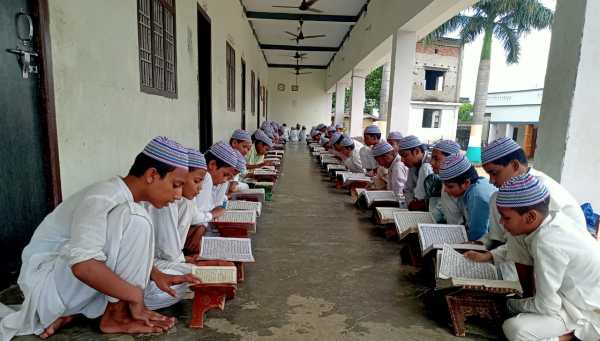
In this blog, the authors analyse the recently passed Uttarakhand Minority Education Act, 2025. It is argued that this act is detrimental to constitutionally protected rights of equality and secularism. They argue that what is framed as an emancipatory tool is a way to impose an age-old communal divide.

Citizenship and Exclusion: The Dynamics of Electoral Roll Revision and Disenfranchisement in India, 2025

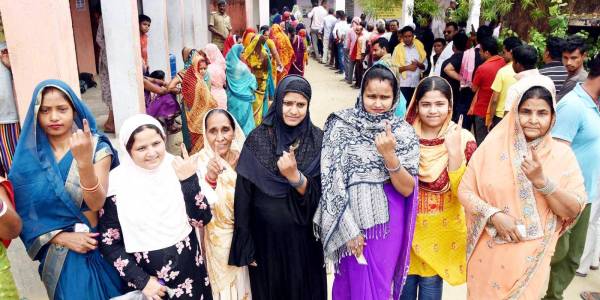
The authors explore the usage of disenfranchisement as a tool for political exclusion, particularly of groups likely to vote against political order belonging to minority or historically discriminated groups. The piece questions the legitimacy of the Election Commission's discretionary powers to refuse electoral right on the basis of citizenship, being a body not expressly authorised to determine citizenship, in the face of the constitutionally guaranteed mandate of electoral rights.

โ€˜Hard Look Reviewโ€™ and Data Privacy โ€“ Providing an alternative to the Proportionality Test

Proportionality test has been used quite often in Indian constitutional law jurisprudence. In the absence of a clearly defined rule or standard, courts resort to proportionality standards, that is, balancing individual interests against broader public or state interests. This article will argue that while proportionality has been the dominant lens through which courts evaluate data privacy infringements, procedural doctrines like the hard look review can serve as a complement to proportionality tests.

Erosion of Safeguards: A Case against Section 187(3) of BNSS

The author critiques Section 187(3) of the Bharatiya Nagarik Suraksha Sanhita (BNSS), 2023, for diluting crucial procedural safeguards originally provided under Section 167 of the Code of Criminal Procedure. By removing key limitations on police custody, the provision enables detentions of up to 90 days, thereby threatening personal liberty and violating Articles 21 and 22 of the Constitution.

Lost in Translation: The Constitutional Case Against Hindi Imposition

In recent years, the Union Governmentโ€™s push for Hindi in governance and education, particularly through the National Education Policy, has triggered constitutional concerns. Though framed as promoting multilingualism, the policy's implementation effectively coerces non-Hindi speakers, especially in Tamil Nadu, into linguistic assimilation. This article argues that such imposition violates fundamental rights and fails the proportionality test outlined in Puttaswamy, undermining Indiaโ€™s federal structure and commitment to linguistic diversity.

The Threat to Dissent: Kenya’s Assembly & Demonstration Bill 2024 and Lessons for India

This blog focuses on some of the controversial sections of the Kenyan โ€œAssembly and Demonstration Bill 2024โ€ and its effect on the right to peacefully assemble as provided by Article 37 of the Constitution of Kenya. It highlights three key concerns: the ban on wearing a mask during demonstrations, legal responsibility for the action of protest-related damage, and restrictions on meetings that can undermine the rights of others. The author draws parallels to similar challenges faced in India, particularly during anti-CAA and farmer protests, emphasizing the need for both nations to safeguard constitutional freedoms while balancing law and order.

Contradictions Unfolded: A Dive into Delimitation Dilemmas

Haryanaโ€™s 2024 elections exposed key delimitation challenges within Indiaโ€™s electoral framework. This article examines vote-share disparities, the North-South seat imbalance post-2026 delimitation, and judicial oversight in constituency mapping. Highlighting the Kishorechandra judgmentโ€™s implications, it advocates for autonomous delimitation, equitable representation, and judicial consistency to uphold democratic fairness and electoral integrity.

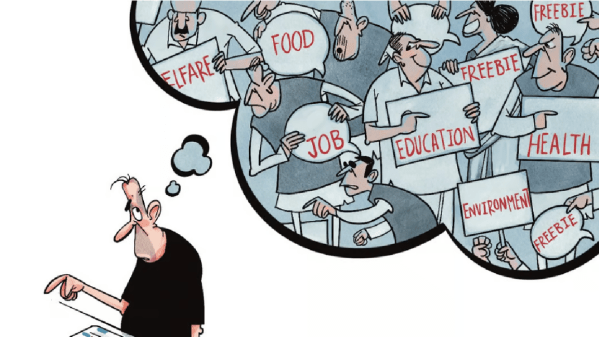
Freebies In Electoral Democracies: A Necessary Change Withheld by Major Challenges?

For a while now, an eternal debate has existed on the issue of freebies and welfarism. Their nature is so close that it becomes impossible to differentiate between the two and draw a clear line of demarcation. While welfare policies are deemed to be irreplaceable and for the goodwill of society, freebies are understood to be vicious and a method of manipulation used to win political support at the expense of fiscal prudence. Freebies or welfare policies as may be referred to by both sides of the argument undoubtedly have political, economic and social implications. The question that then arises is whether their benefits exerted on society are sufficient to overcome the looming dangers that hide behind the veil of welfare. As this discussion reaches the Supreme Court, this blog highlights a few challenges that lie ahead.

Up ↑