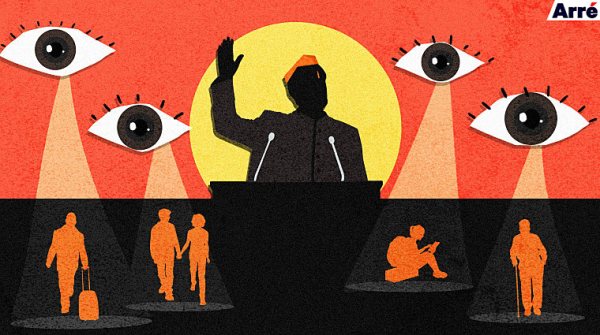
Shubhangi Agarwal and Harsh Singh The Parliament passed the Unlawful Activities (Prevention) Amendment Act, 2019 (“UAPA”) and the National Investigation Agency (Amendment) Act, 2019 (“NIA”) amidst a lot of controversies last year in July. The amendment acts raised serious questions of human rights violation and erosion of federal character. In lieu of the same, the... Continue Reading →
The Constitutional Question of Privacy in the Pandemic
Anchal Bhateja Rights like the right to life under Article 21 are so cardinal that they cannot be subjected to derogations even during exigencies. The right to life has a wide amplitude and has been interpreted to include a plethora of rights within its ambit. The right to privacy which was read into Article 21... Continue Reading →
Measures Combating COVID-19 Complicates Privacy Concerns
Khushi Sharma and Aarushi Kapoor The Coronavirus outbreak has been devastating to the extent of raising the fears of superpowers like the US which, despite being the claimant of an extremely developed health infrastructure in the world, is experimenting novel methods to put up a tough fight against COVID-19. Belonging to the genus of severe... Continue Reading →
A Life for a Life: A Discordant Anachronism in Indian Jurisprudence
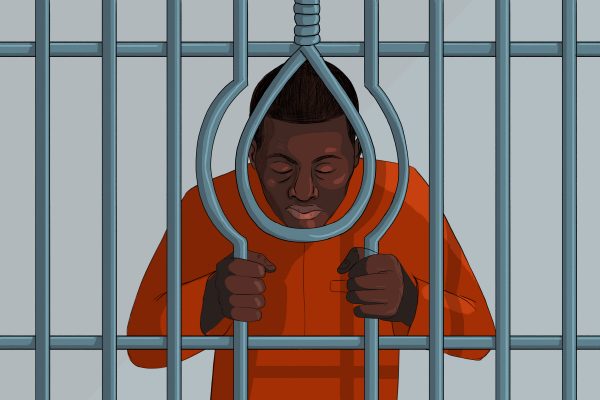
Rahul Nair For the first time in the history of independent India, capital punishment was meted out to four convicts simultaneously, in a seven-year-old case[1] of gangrape and murder of a young medical student of Delhi. This has sparked several debates regarding the constitutional validity and application of death penalty in India. In this post,... Continue Reading →
A Constitutional Critique of The Personal Data Protection Bill, 2019
Randeep Dahiya Since 1991, India has seen a meteoric rise in the field of digital technology including modalities of surveillance. Such modalities include technological advancements in the form of genetic, biometric, financial and physical monitoring. Augmented by the advent of social media, an urgent need for the establishment of a data protection mechanism in order... Continue Reading →
The Prorogation Enigma: A Comparative Perspective of Prorogation in the United Kingdom and India
Akshat Trivedi The recent decision of the UK Supreme Court in R v. The Prime Minister[i] was a landmark judgement in terms of common law jurisprudence on Parliamentary prorogation and its judicial review. Herein, the Supreme Court was called on to examine the constitutionality of the advice tendered by Prime Minister Boris Johnson to Her... Continue Reading →
Protection or Humiliation? An Analysis of the Transgender Persons (Protection of Rights) Bill, 2019
Utkarsh Krishna After gathering ubiquitous criticism for its previous bills pertaining to transgender rights, the Government has yet again come up with a new Transgender Persons (Protection of Rights) Bill, 2019 (the Bill from herein).[i] One of the many commonalities between the Bill and its predecessors is that all of them in the name of... Continue Reading →
Rationalizing the Curb on Subversive Speech in a Modern Democracy
Meghna Bhaskar Introduction Dissent has been iterated by Justice D.Y. Chandrachud in the Bhima Koregaon case as the safety valve of a democracy. It is asserted by left-leaning civil liberty activists that the curb on freedom of speech and expression has become an institutional mechanism to police the opinions and curb lively debate and a... Continue Reading →
RTI Amendment Bill: An Attempt to Curtail the Right
Juned Akhter This is for the second time in a span of two years when the Government has endeavoured to pass legislation pertaining to Right to Information Act, 2005 which also comes under the scope of Freedom of Speech and Expression.[i] In 1986, the Supreme Court in the famous case of Mr. Kunwar v.... Continue Reading →
Drops of Federalism
Anmol Mittal A spate of floods in a self-declared water-stressed country has shed light on the governance of water ‘resources’ in India. The assumption of control over Water by the Union is an encouraging sign. India, already a self-declared water-stressed country, faces an immense challenge.[1] Behaviorally, there is not too much evidence to suggest that... Continue Reading →
Can Reasonable Expectation of Privacy be a ‘Buffer’ Legislation for India
Anjani Kumar Srivastava and Ashit Kumar Srivastava On 24th August 2017, the Indian Supreme Court shredded away the lethargic cloak of original(ism) and embraced privacy with both its hand. However, the functionality of privacy demands more than just an acceptance; there has to be an intricate surgery to imbibe criteria of applications; one such application... Continue Reading →
Analyzing the Constitutionality of S 33 (7), Representation of People Act, 1951: Proposing Remedies
Deeksha Sharma Recent trends in Indian electoral politics have seen the emergence of an increasing number of candidates contesting from more than one constituency. This article highlights how the apex court of India, had already erroneously upheld the Constitutionality of this provision and also suggests some solutions for the same. This system of parliamentary elections... Continue Reading →