The Delhi Water Crisis Case: Activism or Overreach?

The Supreme Court gave a landmark decision in the Delhi water crisis case. The Author attempts to decode certain aspects of the judgement, focusing on its directive to release Yamuna river water amid acute scarcity in the capital. It examines the legal intricacies surrounding the Court's jurisdiction, the implications for water management, and the dynamics of inter-state water disputes. Central to the discussion is the debate over whether the Court's intervention signifies judicial activism or exceeds its constitutional mandate. By analyzing these complexities, the Article underscores the judiciary's role in ensuring equitable outcomes and protecting fundamental rights in critical public interest matters.

Wading Through the Fog – Discretionary Clubbing of Cases in India and the Right to a Fair Trial

The article delves into the contentious issue of case transfer and clubbing within the Indian judicial system, highlighting concerns of impartiality and procedural fairness. Justice Hilary Charlesworth underscores the need to eliminate non-legal considerations influencing judgments, echoing international human rights standards. Divergent judgments and discretionary powers raise alarms of potential violations of Article 21 of Indiaโ€™s Constitution and ICCPR Article 14. Drawing insights from international jurisprudence, the article advocates for well-defined criteria to govern case consolidation, ensuring judicial economy and alignment of interests. Upholding procedural fairness is imperative to mitigate arbitrariness and uphold human rights standards in Indiaโ€™s legal landscape.

Uniform Civil Code: Delayed but still Necessary

The discourse over the Uniform Civil Code (hereinafter UCC) was rekindled post its inclusion in the manifesto of BJP for 2019, andhas intensified as we near the 2024 elections. The long-awaited dream of realizing the UCC seems to be in touching distance now, which was once subjected to much clamor and contestation in the Constituent Assembly (CA). The judicial and political environment is more favorable presently than ever before. The article is written with the twin motive to explain why the UCC has remained unenforced for so long; and the need for enforcing it today, while looking at the contemporary successful examples of UCC

Navigating the โ€˜Neutralityโ€™ Quagmire: Unpacking Subhash Desai v. Principal Secretary and the Nabam Rebia Conundrumย ย 

The recent judgment of the Supreme Court in Subhash Desai v. Principal Secretary, Governor of Maharashtra & Ors has lately been in news due to its upcoming hearing before a 7-judge-bench. Subhash was set in the context of the political controversy regarding the intra-party dissent and subsequent alleged defections that took place within the Shiv Sena Legislative Party in Maharashtra. This article critically analyses the position propounded in Subhash regarding the reference of Nabam Rebia v. Deputy Speaker, Arunachal Pradesh Legislative Assembly to a larger bench. Ultimately, this article argues that there are several inconsistencies present in the application of the reasons specified for referring Nabam to a larger bench. Further, it contends that the interim measure proposed in Subhash is unconstitutional in nature and thus, should be set aside.

Unconstitutionality of Section 15 of the Hindu Succession Act, 1956- Discrimination in the Order of Inheritance

In this Legislation Review, the Author has explained how Section 15 of the Hindu Succession Act violates Articles 14 and 15 of the Indian Constitution, rendering it unconstitutional. This has been done in light of a recent petition to the Supreme Court. While the Act claims that the order of inheritance is based on the proximity of the relationship, Section 15 does not adhere to this principle. This also goes against the principles of justice, equity, and good conscience. Thus a new scheme for Section 15 has been proposed.

Re-evaluating the U.S. Judgement on Affirmative Action: A need for reconsideration?

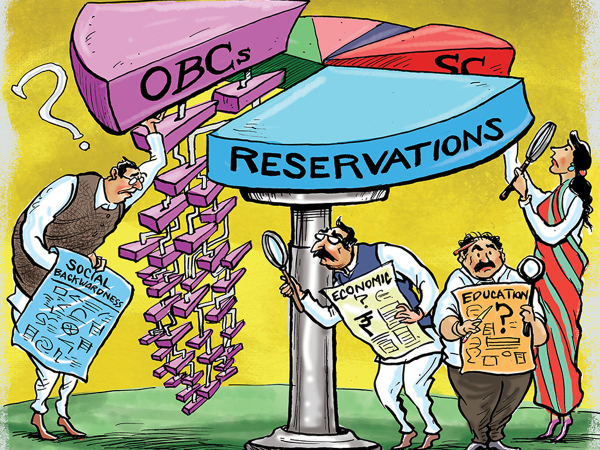
The recent US Supreme Court verdict asserting race-based reservation unconstitutional has ignited widespread criticism globally. The article delves into analyzing the implications of the judgment on American society and its education system. Drawing parallels with the trend of affirmative action in India, the authors suggest that the US Supreme Court should draw a comparison between the discrimination faced by untouchables and blacks in India and the US respectively. Hence, the authors advocate for reconsidering the recent judgment, arguing that the previous system of affirmative action aligns better with the principles of justice and equality.

On the Qualms of Secularism and Equality

In this article, the authors examine and critique the judgment ofย Hemant Gupta J. and his reasoning in the case of Aishat Shifa v. State of Karnataka. The piece also suggests that religious freedom and equality needs to be accompanied by a focus on reasonable accommodation.

Reconsidering Reservations: Including Dalit Muslims and Dalit Christians Within the Ambit of Scheduled Castes

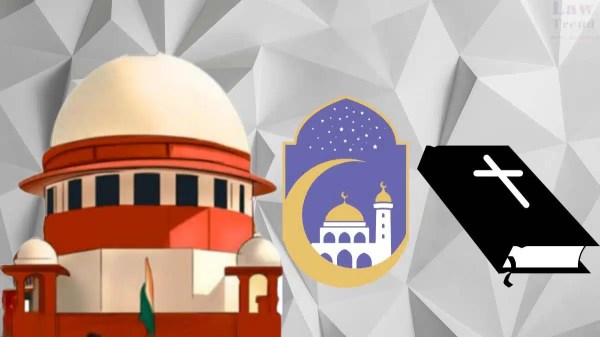
The author in this piece has analysed the Constitution (Scheduled Castes) Order 1950 as unconstitutional by exploring that it it excludes Dalit muslims and Christians under the ambit of the SC status. The author traces the historical overview of the order and put forths that given the transformative constitutionalism and constitutional morality the following have to included under the SC ambit.

Up ↑