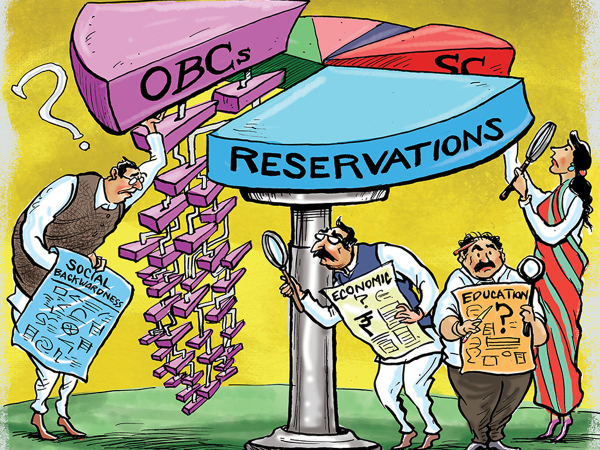
This piece examines the Patna High Court decision in Youth for Equality v. State of Bihar. It argues against the Court's pronouncement of the Bihar state's legislature's competence to carry out a census and challenges the the manner in which the Court arrived at its decision.
Challenges and Prospects of Transgender Reservation: A Call for a Universal Approach
The article aims to address the issue of Transgender reservation. The Indian Constitution mandates affirmative measures for safeguarding the interests of vulnerable communities and preventing exploitation. Nevertheless, the author is of the opinion that legislative efforts regarding reservations for the transgender community have been fragmented and incoherent. The author suggests that it is now imperative to grant horizontal reservations for the transgender community. Furthermore, the author stresses the requirement for distinct reservations due to the unique challenges faced by the transgender community, advocating for horizontal reservation, that is flexible and self-adjusting. Finally, the article calls for acknowledging and upholding the legitimate claims of the transgender community to foster a fairer and more equitable society.
EWS Judgement: Upholding the Cause of Social Justice
The authors in this piece have discussed the EWS judgement passed by the Supreme Court of India. They have analysed the EWS judgement to see if they ascertain to the Constitutional spirit and promote equality in the future scope of the society
Examining the Constitutional Validity of The Constitution (Scheduled Castes) Order, 1950
The authors in this piece have argued against the Constitutionality of the Constitution (Scheduled Castes Order) of 1950 on grounds of non-discrimination and arbitrariness. The article argues that denial of affirmative action benefits to SC converts goes against the letter and spirit of the Indian Constitution and Equality Jurisprudence.
Revisiting Air India v. Nergesh Meerza – From a Feminist and Intersectional Prism
This piece revisits the 1981 case of Air India v. Nergesh Meerza and argues that while the final judgement upheld the Right to Equality in terms of employment for Air India hostesses, the judgment left a glaring error while narrowly interpreting the scope of Article 15 to only classify sex discrimination and not expressly recognizing gender discrimination.
Tracing The Development Of The Right To Education In India Through A Dworkinian Lens
The philosophy of Luck Egalitarianism propounded by eminent jurist Ronald Dworkin argues that social and economic inequality negatively contributes to the achievement of justice and equality. The article traces how this political philosophy has, over the years, driven the development of Right to Education in India.
Recognition Of Indirect Discrimination: An Analysis Of Lt. Col. Nitisha v. UOI
This piece analyses the recent judgement of the SC in Lt. Col. Nitisha v. Union of India and traces the development of the doctrine of indirect discrimination over the world, and in India.