The Doctrine of the Fruit of the Poisonous Tree: Relevance to the Digital Personal Data Protection Act, 2023 and the Right to Privacy

This article examines the "Fruit of the Poisonous Tree" doctrine in the Indian legal context, where courts have historically admitted illegally obtained evidence if deemed relevant. However, with the recognition of the right to privacy in K.S. Puttaswamy v. Union of India and the enactment of the Digital Personal Data Protection Act, 2023, there is a growing emphasis on protecting individual privacy over procedural leniency. This shift highlights the need for a well-defined legal framework that balances investigative authority with constitutional safeguards, ensuring that evidence obtained through unlawful means does not undermine fundamental rights and the rule of law.

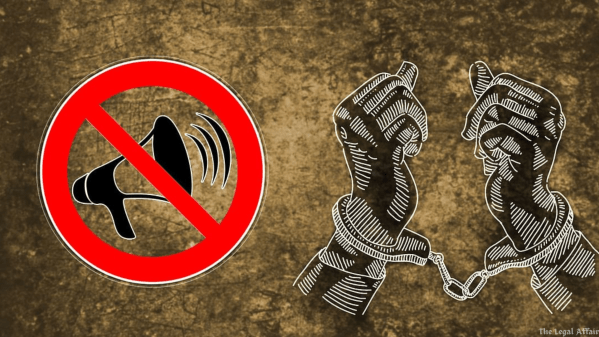
The Boundless โ€˜Indiaโ€™: Why Section 152 May Silence More Than Section 124A

This blog piece examines the implications of Section 152 of the Bharatiya Nyaya Sanhita, India's new sedition law, which replaces "Government established by law; with the amorphous concept of 'India'. It critiques the potential for increased censorship and arbitrary interpretation, posing threats to free speech and democratic dissent.

Threats to Fundamental Rights in the Digital Era: Analysing Rule 4(2) of IT Rules 2021

This blog ais to analyse Rule 4(2) of the IT Rules, 2021 which mandates identification of the first originator of information. Wherein, It threatens userโ€™s privacy, free speech, and intermediaryโ€™s immunity by breaking end-to end encryption, promotes chilling effects, creates arbitrary state actions and violates international principles. Thus, the need of reforms is necessary to balance regulation with fundamental rights in the digital age.

Pardon the interruption: Silencing of judicial review by ยง472(7) of BNSS, 2023 [Part II]

This two-part essay examines Section 472(7) of the Bhartiya Nagarik Suraksha Sanhita, 2023, which seems to bar judicial review of constitutional pardon powers of the executive. It highlights how the provision undermines constitutional principles, including separation of powers, rule of law, and fundamental rights. The first part discusses the current, pre-BNSS, judicial and constitutional framework, emphasizing the need for a limited judicial review to prevent executive arbitrariness. The second part critiques the new provision and proposes a harmonized interpretation to preserve judicial oversight and safeguard democratic principles against executive overreach.

Pardon The Interruption: Silencing Of Judicial Review By ยง472(7) Of BNSS, 2023 [Part I]

This two-part essay examines Section 472(7) of the Bhartiya Nagarik Suraksha Sanhita, 2023, which seems to bar judicial review of constitutional pardon powers of the executive. It highlights how the provision undermines constitutional principles, including separation of powers, rule of law, and fundamental rights. The first part discusses the current, pre-BNSS, judicial and constitutional framework, emphasizing the need for a limited judicial review to prevent executive arbitrariness. The second part critiques the new provision and proposes a harmonized interpretation to preserve judicial oversight and safeguard democratic principles against executive overreach.

India’s Fiscal Federalism: Challenges and Path Forward

This article examines the constitutional architecture governing the regulation of state borrowing in India by studying Article 293 of the Indian Constitution. It looks at court decisions and fiscal federalism as well as using examples such as the Kerala case to underscore the extent of the control of the central government on matters related to borrowing. The article then turns to a discussion on striking an optimal balance between state financial autonomy and national economic stability.

On the line between judicial activism and judicial legislation

Judicial activism can be broadly perceived as judicial interpretation and review of statutes or other state action. Judicial legislation, on the other hand, lays down new in case of a legislative insufficiency. The relation and conflict between the two can be studied in the context of the call for a liberal interpretation of the Special Marriage Act, applicability of judicial review in money bills or even in the electoral practice of freebies and whether it is akin to a corrupt practice.

Battling Digital Disinformation: The Imperative of Fact-Checking in a Participatory Democracy (Part II)

Disinformation and misinformation has been earmarked as aย โ€˜global riskโ€™,ย causing โ€˜information pollutionโ€™ย that adversely impacts decision making and socio-economic and politicalย stability.ย Part โ€“ II intends to explore the evolving interpretation of the theory of โ€˜marketplace of ideasโ€™ under Article 19(1)(a) to point out that disinformation and misinformation on government affairs distorts the foundation of democracy, i.e., truth. Accordingly, the article emphasises on the need to fact-check in order to ensure plurality of views based on factually true information, since discourse based on false information makes the citizen's participation in democracy a futile exercise.

Battling Digital Disinformation: The Imperative of Fact-Checking in a Participatory Democracy (Part I)

Disinformation and misinformation has been earmarked as aย โ€˜global riskโ€™,ย causing โ€˜information pollutionโ€™ย that adversely impacts decision making and socio-economic and politicalย stability. In light of this, Part โ€“ I of this Article aims to expplain the imperative and constitutionality of the Fact-Check Unit (FCU) underย Rule 3(1)(b)(v) of the IT Rules, 2021, through a comparativeย study.ย 

Up ↑