This article analyses the proliferation of misinformation in light of growth in technology and its implications on the erosion of the democratic process. It highlights the constitutional aspects involved and the vacuum in the current regulatory framework. The article proposes reforms to counter the challenges posed by the digital era.
Battling Digital Disinformation: The Imperative of Fact-Checking in a Participatory Democracy (Part II)
Disinformation and misinformation has been earmarked as aย โglobal riskโ,ย causing โinformation pollutionโย that adversely impacts decision making and socio-economic and politicalย stability.ย Part โ II intends to explore the evolving interpretation of the theory of โmarketplace of ideasโ under Article 19(1)(a) to point out that disinformation and misinformation on government affairs distorts the foundation of democracy, i.e., truth. Accordingly, the article emphasises on the need to fact-check in order to ensure plurality of views based on factually true information, since discourse based on false information makes the citizen's participation in democracy a futile exercise.
Battling Digital Disinformation: The Imperative of Fact-Checking in a Participatory Democracy (Part I)
Disinformation and misinformation has been earmarked as aย โglobal riskโ,ย causing โinformation pollutionโย that adversely impacts decision making and socio-economic and politicalย stability. In light of this, Part โ I of this Article aims to expplain the imperative and constitutionality of the Fact-Check Unit (FCU) underย Rule 3(1)(b)(v) of the IT Rules, 2021, through a comparativeย study.ย
Bizarre Bail: The Rise of Unconventional Conditions in Indian Jurisprudence
This article attempts to explore the growing trend of unconventional bail conditions in Indian courts, focusing on two key cases: Frank Vitus v. Narcotics Control Bureau and Faizal v. State of Madhya Pradesh. It analyzes the latter on the basis of principles of fairness, proportionality, and justice established in the former, urging the judiciary to re-evaluate its approach.
Speakerโs Inaction No Longer Immune: Telangana High Courtโs Purposive Lens on Judicial Review Over Speakerโs Delay in Anti-Defection Pleas
In its recent verdict, the Telangana High Court directed the Telangana Legislative assembly speaker to decide the disqualification petitions pending against the defecting Bharatiya Rashtra Samiti (BRS) MLAs into the ruling Congress Party within four weeks. The judgment, Kuna Pandu Vivekanand v. State of Telangana, pronounced by a Single-judge bench of Honโble Justice Vijaysen Reddy underscored that a complete abdication of judicial review concerning the inaction of speaker, as a constitutional functionary, is an anathema and repugnant to the greater democratic values. This article analyses this judgement.
FRMB Act 2003: A Source of Fiscal Anxiety, not Prudence
Here, the Author examines the FRBM framework post 2009. It starts with a discussion of the evolution of the Act. It then discusses the logic of fiscal federalism adopted in the Indian constitution - along with its statutory contortions. It problematises the erosion of state fiscal autonomy in the context of the FRBM Act. Finally the piece speaks of the feasibility of balancing fiscal prudence with sub-national fiscal autonomy within the constitutional framework.
Deliberation as a Constitutional Requirement: Examining the Judicial Review of Legislative Process in India (Part II)
This article, in two parts examines the constitutional implications of non-deliberative legislative processes in India, focusing on recent controversial laws like the electoral bonds scheme. It argues that deliberation is integral to parliamentary democracy and proposes that courts should be empowered to review legislative processes on grounds of non-deliberativeness to uphold constitutional values and improve democratic outcomes.
Deliberation as a Constitutional Requirement: Examining the Judicial Review of Legislative Process in India (Part I)
This article, in two parts examines the constitutional implications of non-deliberative legislative processes in India, focusing on recent controversial laws like the electoral bonds scheme. It argues that deliberation is integral to parliamentary democracy and proposes that courts should be empowered to review legislative processes on grounds of non-deliberativeness to uphold constitutional values and improve democratic outcomes.
One Giant Leap for Intersectionality: Analysis of M. Sameeha Barvin v Joint Secretary
The concept of intersectionality continues to elude judges. While the concept has been applied in a few Supreme Court judgements such as Patan Jamal Valli and Navtej Johar, it is still not easy to understand โhowโ courts should apply intersectionality. In this article, the Author focuses on the M. Sameeha Barvin v Joint Secretary case from the Madras High Court that throws light on intersectionality. The Author argues that the case acts as an instructive manual on how courts can apply intersectionality in matters of discrimination.
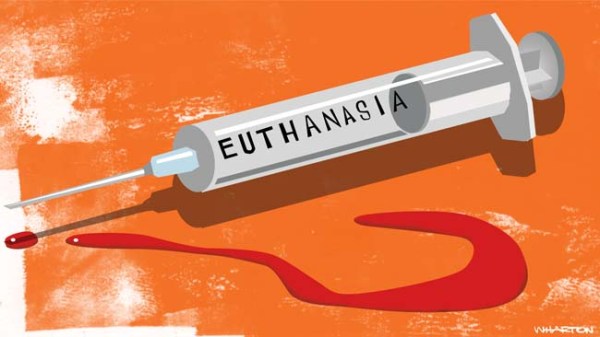
Consent to Die: A Right or a Risk?
This article analyses the validity of consent given in euthanasia and Right to Die by discussing it through a philosophical and logical discourse. It also puts a spotlight on the lack of legislation and regulation on this regard, and analyses if Right to Die is a viable right.
Outlawing Marital Rape: A recurrently validated crime
Till date, marital rape is not considered a crime in India. Through the article, the Author aims to explain why the judiciary needs to urgently intervene and declare marital rape as unconstitutional. Taking the marital status of the perpetrator and the victim as a defence, the consent of a woman to sexual intercourse has been repeatedly de-prioritised by various High Courts in recent times. Further, the Author analyses some cases to show how consent cannot be easily detected, but a look into the totality of the circumstances helps determine the same. Lastly, the Author provides suggestions for dealing with marital rape as an offence.
Conserving Dialects: Bridging the Gap Amidst Law and Fact
Every person's life is shaped and defined by their use of language. It is a haven for culture and educational systems in addition to being an effective communication tool. Life's many activities and components are derived from one's mother tongue. By providing people and communities with the requisite skills, that have been accruing and developing over centuries, language helps them in becoming accustomed to their surroundings. The last few decades have borne witness to the disappearance and even extinction of some of these minority languages as a consequence of a lack of adequately formulated provisions and discrimination. The Article aims to decipher the philosophy of Commissions meant to protect linguistic minority rights and the repercussions it has on the education sector of vulnerable sections, especially the tribal people. It also contains certain recommendations in order to combat the problem of the endangerment of languages in hopes of safeguarding India's rich cultural heritage.