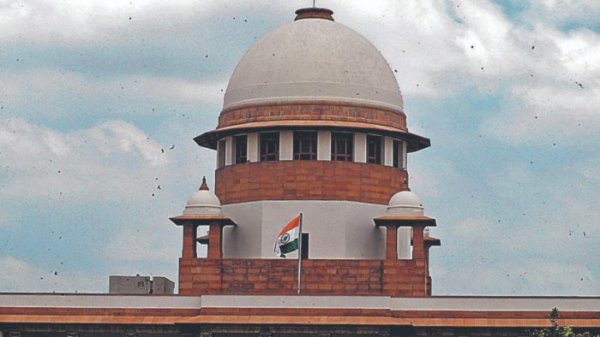
Judicial activism can be broadly perceived as judicial interpretation and review of statutes or other state action. Judicial legislation, on the other hand, lays down new in case of a legislative insufficiency. The relation and conflict between the two can be studied in the context of the call for a liberal interpretation of the Special Marriage Act, applicability of judicial review in money bills or even in the electoral practice of freebies and whether it is akin to a corrupt practice.
Battling Digital Disinformation: The Imperative of Fact-Checking in a Participatory Democracy (Part I)
Disinformation and misinformation has been earmarked as aย โglobal riskโ,ย causing โinformation pollutionโย that adversely impacts decision making and socio-economic and politicalย stability. In light of this, Part โ I of this Article aims to expplain the imperative and constitutionality of the Fact-Check Unit (FCU) underย Rule 3(1)(b)(v) of the IT Rules, 2021, through a comparativeย study.ย
Bizarre Bail: The Rise of Unconventional Conditions in Indian Jurisprudence
This article attempts to explore the growing trend of unconventional bail conditions in Indian courts, focusing on two key cases: Frank Vitus v. Narcotics Control Bureau and Faizal v. State of Madhya Pradesh. It analyzes the latter on the basis of principles of fairness, proportionality, and justice established in the former, urging the judiciary to re-evaluate its approach.
Speakerโs Inaction No Longer Immune: Telangana High Courtโs Purposive Lens on Judicial Review Over Speakerโs Delay in Anti-Defection Pleas
In its recent verdict, the Telangana High Court directed the Telangana Legislative assembly speaker to decide the disqualification petitions pending against the defecting Bharatiya Rashtra Samiti (BRS) MLAs into the ruling Congress Party within four weeks. The judgment, Kuna Pandu Vivekanand v. State of Telangana, pronounced by a Single-judge bench of Honโble Justice Vijaysen Reddy underscored that a complete abdication of judicial review concerning the inaction of speaker, as a constitutional functionary, is an anathema and repugnant to the greater democratic values. This article analyses this judgement.
Horizontal Application of Privacy Rights: A Constiutional Tort Framework
This post discusses the critical role of privacy rights in todayโs digital landscape, emphasizing enforcement challenges due to privacyโs dual recognition as a fundamental and common law right. Drawing on the Supreme Courtโs recent Kaushal Kishor ruling, it advocates for a constitutional tort framework that allows horizontal application of privacy rights within a unified legal structure.
Balancing Rights and Justice: The Constitutionality of Psycho-Analysis Tests
This article delves into the constitutionality of psycho-analysis tests within criminal investigations in India. It critically examines the conflict between these investigative tools and the fundamental rights against self-incrimination (Article 20(3)) and the right to privacy (Article 21) under the Indian Constitution. The author argues that justice should be served while balancing state interests with individualย freedoms.
The Delhi Water Crisis Case: Activism or Overreach?
The Supreme Court gave a landmark decision in the Delhi water crisis case. The Author attempts to decode certain aspects of the judgement, focusing on its directive to release Yamuna river water amid acute scarcity in the capital. It examines the legal intricacies surrounding the Court's jurisdiction, the implications for water management, and the dynamics of inter-state water disputes. Central to the discussion is the debate over whether the Court's intervention signifies judicial activism or exceeds its constitutional mandate. By analyzing these complexities, the Article underscores the judiciary's role in ensuring equitable outcomes and protecting fundamental rights in critical public interest matters.
Unraveling the Chief Election Commissioner and the Other Election Commissioners Act, 2023: Implication and Challenges
The recent enactment of the Chief Election Commissioner and other Election Commissioners (Appointment, Conditions of Service, and Term of Office) Act, 2023 has gathered significant attention and controversy, particularly due to its apparent contradiction with a recent Supreme Court judgment. This article provides a comprehensive analysis of the Act, highlighting its significant provisions and exploring its legal and constitutional implications. By examining the Act in detail, the article explains the potential repercussions of the legislation and its alignment, or lack thereof, with constitutional principles. This analysis is essential to understand the broader impact of the Act on the electoral framework and democratic processesย inย India.
Breaking Bonds: Analysing the Supreme Court’s Verdict in Association for Democratic Reforms v. Union of India
The Supreme Court gave an historical verdict that ended the brief but significant era of the Electoral Bonds Scheme. This article aims to clarify the arguments presented by all parties involved and offers an accessible interpretation of the court's judgment. It also aims to delineate suggestions that may be considered as the next step in the overall mission of conducting free and fair elections in the world's largest democracy.
Turning Gavels into Papal Ferula: Unravelling the essential religious practices doctrine
The article examines the Essential Religious Practices Doctrine in India, tracing its evolution, implications, and critiques. It explores how the doctrine, first derived with the intention to protect religious practices with secular and economic connotations, has evolved into an anathema for religious freedom, empowering the Court to decide peopleโs faith for them. Analysing its impact, the article suggests alternative approaches, emphasizing individual rights and deference to religious groups. It argues for reconsideration of the ERP doctrine due to its potential to undermine religious freedoms and the judiciary's authority, emphasizing the need for the same.
Challenges and Prospects of Transgender Reservation: A Call for a Universal Approach
The article aims to address the issue of Transgender reservation. The Indian Constitution mandates affirmative measures for safeguarding the interests of vulnerable communities and preventing exploitation. Nevertheless, the author is of the opinion that legislative efforts regarding reservations for the transgender community have been fragmented and incoherent. The author suggests that it is now imperative to grant horizontal reservations for the transgender community. Furthermore, the author stresses the requirement for distinct reservations due to the unique challenges faced by the transgender community, advocating for horizontal reservation, that is flexible and self-adjusting. Finally, the article calls for acknowledging and upholding the legitimate claims of the transgender community to foster a fairer and more equitable society.