The Delhi Water Crisis Case: Activism or Overreach?

The Supreme Court gave a landmark decision in the Delhi water crisis case. The Author attempts to decode certain aspects of the judgement, focusing on its directive to release Yamuna river water amid acute scarcity in the capital. It examines the legal intricacies surrounding the Court's jurisdiction, the implications for water management, and the dynamics of inter-state water disputes. Central to the discussion is the debate over whether the Court's intervention signifies judicial activism or exceeds its constitutional mandate. By analyzing these complexities, the Article underscores the judiciary's role in ensuring equitable outcomes and protecting fundamental rights in critical public interest matters.

Unraveling the Chief Election Commissioner and the Other Election Commissioners Act, 2023: Implication and Challenges

The recent enactment of the Chief Election Commissioner and other Election Commissioners (Appointment, Conditions of Service, and Term of Office) Act, 2023 has gathered significant attention and controversy, particularly due to its apparent contradiction with a recent Supreme Court judgment. This article provides a comprehensive analysis of the Act, highlighting its significant provisions and exploring its legal and constitutional implications. By examining the Act in detail, the article explains the potential repercussions of the legislation and its alignment, or lack thereof, with constitutional principles. This analysis is essential to understand the broader impact of the Act on the electoral framework and democratic processesย inย India.

Breaking Bonds: Analysing the Supreme Court’s Verdict in Association for Democratic Reforms v. Union of India

The Supreme Court gave an historical verdict that ended the brief but significant era of the Electoral Bonds Scheme. This article aims to clarify the arguments presented by all parties involved and offers an accessible interpretation of the court's judgment. It also aims to delineate suggestions that may be considered as the next step in the overall mission of conducting free and fair elections in the world's largest democracy.

Javed Ahmad v. State of Maharashtra: The Intriguing Nexus Between Art. 21 and the Right to Dissent

The right to freedom of speech and expression under Art.19(1)(a) of the Constitution, one of the three stars in the โ€˜Golden Triangleโ€™ of the Constitution, occupies a climacteric position in the Indian constitutional discourse. However, this right has always been linked to Art.19 of the Constitution, and seldom has this been seen in onjunction with oneโ€™s right to life and personal liberty under Art.21. In a recent decision of the Supreme Court, such an intriguing nexus between Art.21 and the right to dissent is brought up. Based on this decision, the article seeks to analyse the possibility and the pertinence of such a nexus.

Wading Through the Fog – Discretionary Clubbing of Cases in India and the Right to a Fair Trial

The article delves into the contentious issue of case transfer and clubbing within the Indian judicial system, highlighting concerns of impartiality and procedural fairness. Justice Hilary Charlesworth underscores the need to eliminate non-legal considerations influencing judgments, echoing international human rights standards. Divergent judgments and discretionary powers raise alarms of potential violations of Article 21 of Indiaโ€™s Constitution and ICCPR Article 14. Drawing insights from international jurisprudence, the article advocates for well-defined criteria to govern case consolidation, ensuring judicial economy and alignment of interests. Upholding procedural fairness is imperative to mitigate arbitrariness and uphold human rights standards in Indiaโ€™s legal landscape.

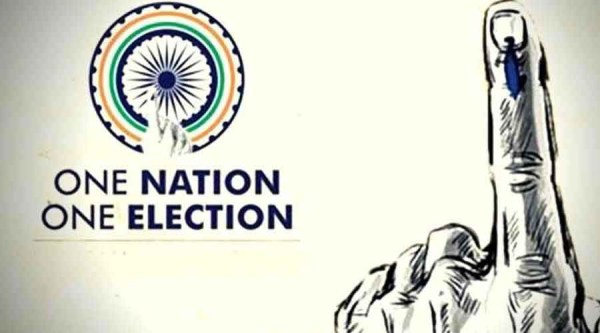
Diverse Realities, Single Ballot: Examining the Limitations of One Nation One Election

The main idea behind โ€˜One Nation, One Electionโ€™ (ONOE) is to hold elections for both the Lok Sabha and state assemblies together every five years. Reports present that states often have 5 to 7 elections separately throughout the year, leading to disruptions in the development and governance processes. The group supporting this principle states that frequent elections create a disturbed legislative schedule which further affects the smooth functioning of parliamentary proceedings. However, the authors advocateagainst the idea of ONOE. The ONOE reform could result in an intensified and overwhelming campaign season, overshadowing critical regional issues amidst the far-reaching national concerns. The potential sidelining of regional voices and local concerns in comparison with the mainstream national discourse will adversely impact voter engagement and representation.

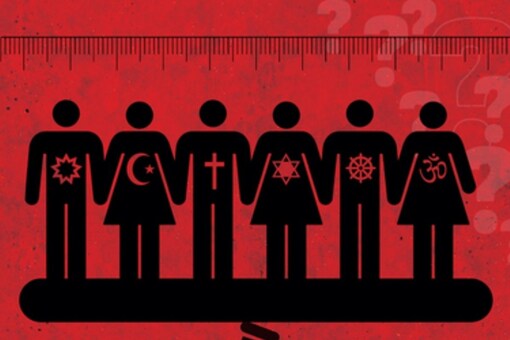
Uniform Civil Code: Delayed but still Necessary

The discourse over the Uniform Civil Code (hereinafter UCC) was rekindled post its inclusion in the manifesto of BJP for 2019, andhas intensified as we near the 2024 elections. The long-awaited dream of realizing the UCC seems to be in touching distance now, which was once subjected to much clamor and contestation in the Constituent Assembly (CA). The judicial and political environment is more favorable presently than ever before. The article is written with the twin motive to explain why the UCC has remained unenforced for so long; and the need for enforcing it today, while looking at the contemporary successful examples of UCC

The Best of No Worlds: The Digital Personal Data Protection Act 2023

Before the commencement of the Digital Personal Data Protection Act, 2023, data protection was a concern of a patchwork of other laws including the Information Technology Act. The entire point of introducing a singular separate organic body of law regarding data protection was to reduce the unconsented digital footprint remaining after a person goes offline so as to protect that data from all hands, regardless of the owner of the hands and their purpose. Not only does the Act provide no provision for the automatic deletion of personal data, but it also detaches the state from any such obligation as well.

Challenges and Prospects of Transgender Reservation: A Call for a Universal Approach

The article aims to address the issue of Transgender reservation. The Indian Constitution mandates affirmative measures for safeguarding the interests of vulnerable communities and preventing exploitation. Nevertheless, the author is of the opinion that legislative efforts regarding reservations for the transgender community have been fragmented and incoherent. The author suggests that it is now imperative to grant horizontal reservations for the transgender community. Furthermore, the author stresses the requirement for distinct reservations due to the unique challenges faced by the transgender community, advocating for horizontal reservation, that is flexible and self-adjusting. Finally, the article calls for acknowledging and upholding the legitimate claims of the transgender community to foster a fairer and more equitable society.

Democracy at Crossroads: Examining the Controversial Practice of Voice Votes in the Indian Parliament

The constitutionality of utilizing voice votes in parliamentary sessions amidst protests raises intricate questions at the intersection of procedural efficiency and democratic governance. Proponents assert that voice votes offer a swift mechanism for decision-making, crucial in the fluid dynamics of legislative proceedings, particularly during protests. They emphasize the necessity of adapting to challenging circumstances to maintain the functionality of the legislative body. To ascertain the constitutionality of voice votes amid protests, a nuanced examination of constitutional principles is imperative. In essence, resolving this issue requires a judicious weighing of competing constitutional values, striving to establish a parliamentary system that not only remains efficient but also upholds democratic ideals, even in the throes of dissent. It beckons a careful calibration to ensure that the mechanisms employed are both expedient and respectful of the democratic norms enshrined in the Constitution.

From Bench to Society: Assessing the Impact of Judicial Ideology

The article explores the concept of judicial ideology and the three distinct methods employed to measure it, emphasizing the significance of addressing this issue in contemporary legal discourse. Judicial ideology, defined as the set of beliefs and principles guiding judges' decision- making, is a critical factor influencing legal interpretations and decisions. While proxy measures, behavioral assessment, and the transplanting of ideology measures offer ways to gauge judicial ideology, their applicability and limitations vary across different legal systems. As judicial ideologies evolve, the integrity of an independent judiciary is at stake, prompting a call for acknowledgment and definition of these ideologies to ensure fairness and equal protection of rights within the justice system. Ultimately, a comprehensive understanding of judicial ideology is essential to create a legal system that serves all members of society.

Navigating the โ€˜Neutralityโ€™ Quagmire: Unpacking Subhash Desai v. Principal Secretary and the Nabam Rebia Conundrumย ย 

The recent judgment of the Supreme Court in Subhash Desai v. Principal Secretary, Governor of Maharashtra & Ors has lately been in news due to its upcoming hearing before a 7-judge-bench. Subhash was set in the context of the political controversy regarding the intra-party dissent and subsequent alleged defections that took place within the Shiv Sena Legislative Party in Maharashtra. This article critically analyses the position propounded in Subhash regarding the reference of Nabam Rebia v. Deputy Speaker, Arunachal Pradesh Legislative Assembly to a larger bench. Ultimately, this article argues that there are several inconsistencies present in the application of the reasons specified for referring Nabam to a larger bench. Further, it contends that the interim measure proposed in Subhash is unconstitutional in nature and thus, should be set aside.

Up ↑