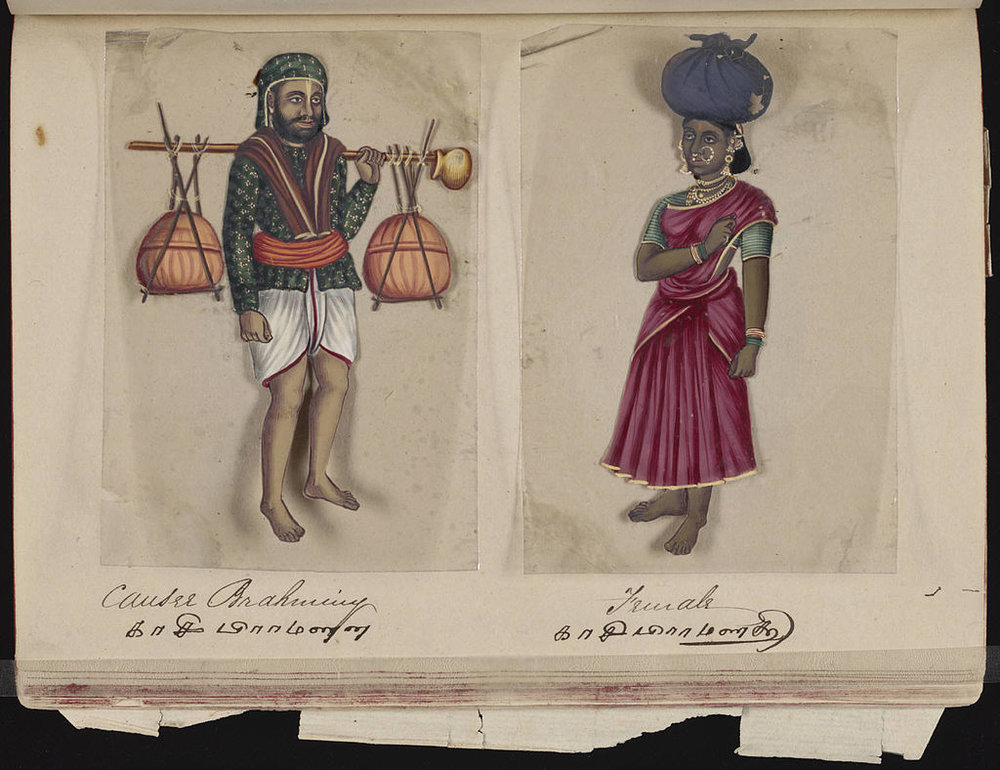
The Indian Constitution enshrines specific protections for the Scheduled Castes, aligning with its broader vision of fostering ‘equality of status and of opportunity’ for all citizens. The policy of affirmative action, particularly through reservations in education, employment and political representation has contributed to the upliftment of segments within these historically marginalised communities.
However, the broader objective envisioned by the Constitution’s makers, that is the complete eradication of caste-based inequality and upliftment of all the Dalits, remains only partially fulfilled as they continue to experience systemic disadvantage. Their socio-economic position today mirrors the marginalisation of their forebears, raising critical questions about the adequacy and implementation of current policies.
It is often contended that in order to ensure equitable access to social welfare measures for all individuals, it is imperative to create avenues of opportunity for every member. At the same time, the benefits of affirmative action, particularly reservation policies, are disproportionately concentrated in the hands of a relatively privileged group, resulting in the systemic exclusion and continued deprivation of the more vulnerable segments. Therefore, there arises a compelling need to recalibrate the distribution of benefits under such policies to prioritise and uplift the most disadvantaged sections within marginalised communities. Justice Krishna Iyer in State of Kerala v. NM Thomas (a seven-judge constitutional bench judgement), also cautioned against benefits of reservations being cornered by affluent individuals from backward castes.
Concept of ‘Creamy Layer’
The concept of ‘creamy layer’ for the first time was introduced by a nine-judge bench of the apex court in Indra Sawhney & Ors. v. Union of India. The court emphasised that the ‘creamy layer’ amongst the OBCs should be excluded from the reservation policy, as particular segments of such communities had achieved a certain degree of social and economic advancement. Therefore, the benefits of affirmative action should now be extended to the more vulnerable sections within the community to ensure inclusive development.
However, the critical question of who is designated as part of the ‘creamy layer’ within the community remains in question. Ambiguities surrounding its criteria and implementation continue to persist.
Why is the Concept of ‘Creamy Layer’ not applied to Scheduled Castes?
The concept of the ‘creamy layer’ cannot be readily applied to the Scheduled Castes or Scheduled Tribes. The standard criteria, such as family income or the occupational status of parents, are inadequate in this context as they do not account for the persistent issue of ‘social acceptance’. Caste-based discrimination continues to endure in both overt and covert forms across rural and urban India. The principle of creamy layer risks interchanging economic progress with comprehensive social upliftment. For many within these communities, including those considered part of the “creamy layer,” the stigma attached to caste or tribe does not dissipate with financial advancement.
Moreover, the socio-economic diversity within these groups is huge and a uniform economic threshold may fail to capture the nuanced realities of different sub-castes across regions. Such a ‘one-size-fits-all’ approach may exacerbate intra-community disparities, penalising the relatively better-off who, nonetheless, remain disadvantaged when compared to the general population.
What is Sub-Categorisation in Scheduled Castes?
‘Sub-categorisation’ refers to the process of dividing a broad category into smaller, more distinct and internally coherent sub-groups. The rationale is to ensure equitable distribution of welfare benefits, allowing the most marginalised within a broad group to access opportunities often dominated by its advanced sections.
Within the SC communities, relatively advanced groups have overshadowed the more vulnerable ones, as they continue to grapple with social marginalisation and exclusion. Thus, there arose a pressing need to reasonably classify the communities based on their varying degrees of vulnerability. Initially, in E.V. Chinnaiah v. State of Andhra Pradesh, the Supreme Court ruled against any form of sub-classification among the Scheduled Castes. However, nearly two decades later, the apex court in State of Punjab v. Davinder Singh recognised the evolving realities, ruling in favour of sub-classification. The Court acknowledged that without such measures, opportunities would continue to be monopolised by relatively advanced sections, and emphasised that sub-categorisation is essential to achieve true social justice and substantive equality.
However, it is important to understand that while the concept of the ‘creamy layer’ is individual-oriented, the principle of ‘sub-classification’ is group-oriented. Therefore, sub-classification provides a more effective framework for addressing the structural inequalities and ensuring the targeted upliftment of the most disadvantaged segments within the Scheduled Castes.
Constitutional Validity of Sub-Categorisation
The apex court in Davinder Singh case observed that sub-categorisation within Scheduled Castes do not violate any constitutional provisions. The Court held that Articles 15 and 16 empower the government to extend special treatment among the Scheduled Castes by recognising their internal heterogeneity and providing for separate reservations. It must be done to achieve the harm identified due to homogenous form of policies and ensure substantive equality. . The court held that Article 341 does not stop from further sub-classification and merely provides for identification of castes for sub-classification.
The apex court ruled that the state can sub-categorise the Scheduled Castes on the basis of ‘intelligible differentia’ for the purpose of creating a homogenous class through policies of government. The Court also took into consideration the concurring opinion of Justice O. Chinnappa Reddy in the K.C. Vasanth Kumar & Anr. v. State of Karnataka case, wherein he observed that sub-classification within a reserved category could be upheld as valid, particularly when one segment within the class lags significantly behind its more advanced counterparts.
Redefining Equity
The Indian Constitution under Article 16(4) enables the State to make special provisions for promotion of social equity and justice for welfare of backward communities. While reservation policies were introduced to uplift marginalised communities, the internal dynamics of these groups as well as the caste system itself have undergone significant changes over time. Acknowledging this, former CJI, Y.V. Chandrachud emphasised the need for reviewing the reservation policies every five years or so.
In 2005, the Hukam Singh Committee in Uttar Pradesh brought attention to the internal disparities among the depressed classes, revealing that the community of Yadavs disproportionately dominated reserved job quotas. The committee recommended sub-categorisation within the Scheduled Castes and OBCs to ensure fairer distribution based on social equity and justice. Reflecting this concern, the apex court in Davinder Singh acknowledged the evolving socio-political realities and, by redefining the concept of equity, endorsed sub-categorisation among SCs to achieve substantive equality.
Recently, on 14th April 2025, Telangana became the first Indian state to implement sub-categorisation amongst SCs by enacting Telangana Scheduled Castes (Rationalisation of Reservations) Act 2025. This came after recommendations from Justice Akhtar Commission headed by retired Justice Shameem Akhtar, where the commission recommended for sub-categorisation of 59 Scheduled Castes for the purpose of reservation of SCs.
| Group | Total Sub-Castes | Reservation | Population | Report |
| Group I | 15 | 1% | 3.28% | Most disadvantaged |
| Group II | 18 | 9% | 62.78% | Moderately benefitted |
| Group III | 26 | 5% | 33.96% | Most benefitted |
The commission undertook a comprehensive review of sub-caste classification models in states like Punjab, Haryana, and Tamil Nadu, and sought legal counsel from the State Law Secretary and Advocate General. Acting on its findings, the committee recommended that recruitment to government jobs be structured around the internal categorisation of SC communities, for benefiting the most marginalised sub-castes that had historically been underrepresented.
By aligning affirmative action with the internal realities of caste-based deprivation, such reforms promise to advance substantive equity, ensuring that benefits reach those most in need within the SC category. The commission effectively redefined the notion of equity in contemporary terms, emphasising that preferential treatment will ensure that the most disadvantaged sub-groups are not left behind.
Will it in Any Way Reinforce Division?
India is a diverse country and while talking about the SC category, it is also not a homogeneous group as it is marked by cultural diversity, geographical dispersion, linguistic variation, and distinct political affiliations. While sub-categorisation aims to ensure equitable distribution of benefits, critics argue that it risks deepening internal divisions by introducing sub-quotas, potentially undermining inter-caste solidarity. Such administrative fragmentation may intensify caste-based identity assertions, posing a challenge to those who envision a casteless society. It is important to recall Dr. B.R. Ambedkar’s foundational belief that the annihilation of caste is imperative for realising social democracy and for fostering the constitutional ideals of liberty, equality, and fraternity. Thus, many critics argue that the proposed sub-classification risks undermining the foundational vision of caste annihilation. Rather than fostering social harmony, it may deepen existing divisions within marginalised groups, potentially compromising the constitutional ideals of equality and fraternity.
The sub-categorisation may also carry underlying political motives. It has been alleged that the Congress-led government under CM Reddy in Telangana pursued this policy, in part, to consolidate OBC and SC voters ahead of municipal elections, as these communities join constitute nearly 70% of the state’s electorate. Simultaneously, such measures may inadvertently lend credence to the ideological narrative advanced by groups like the RSS, which contend that untouchability has ceased to exist in contemporary India, potentially diluting the case for continued affirmative action. Furthermore, in the context of the national reluctance to release caste census data, the Telangana initiative has emerged as a model for the Congress party to position itself as a proponent of empirically grounded social justice, while drawing attention to the BJP’s perceived hesitance in embracing caste-based data transparency.
Conclusion
While political agendas are often cyclical and may hinder long-term solutions, it is essential to recognise, as observed in N.M. Thomas case that the Scheduled Castes constitute a socially disadvantaged yet constitutionally recognised homogenous group. The need for social advancement of the more disadvantaged sections within the Scheduled Castes, which was disregarded in the E.V. Chinnaiah judgment, found recognition in the Davinder Singh case, where the Supreme Court upheld sub-classification as a means to uphold the principles of equity and substantive equality. Sub-categorisation, rather than fragmenting this unity, seeks to strengthen it by ensuring that every sub-group within the community is equally empowered. By addressing internal disparities, such a measure enhances the collective upliftment of the SCs and furthers the broader constitutional goal of inclusive social justice.
The Author is a fourth year student of Rajiv Gandhi National University of Law.
Image Credits: Seventy-two Specimens of Castes in India by T. Vardapillay
 Constitutional Law Society
Leave a comment